
With the end of the tax year rapidly approaching, many business owners in the UK find themselves in a race against the clock. At Felix & Co. Chartered Accountants we are all about tax savings and we know that the difference between a “good” financial year and a “great” one often comes down to the small, strategic moves made in these final weeks.
Whether you are running a limited company, operating as a sole trader, or simply looking to protect your personal wealth, the 2025-26 tax year offers several avenues for relief. However, these opportunities disappear after April 5th. This guide breaks down the essential steps you must take to ensure you aren’t leaving money on the table.
1. Limited Company Strategies: Dividends and Payroll
If you are a limited company director, your remuneration strategy is one of your most powerful tax-saving tools.
The Dividend Allowance
Every individual has a dividend allowance. For the current tax year, it is vital to ensure you have utilized your £500 dividend allowance. If you haven’t drawn this amount yet, doing so before the deadline allows you to take that income tax-free. For further details on how dividends are taxed, you can refer to the HMRC Guidance on Tax on Dividends.
Director’s Payroll and Trivial Benefits
Reviewing your salary levels is equally important. Ensure your salary is optimized for National Insurance purposes while remaining tax-efficient. Additionally, don’t forget Trivial Benefits. Directors can receive non-cash gifts (up to £50 each, capped at £300 annually for directors of “close” companies) that are exempt from tax and NI. You can check the eligibility criteria at the HMRC Employment Income Manual on Trivial Benefits.
Expert Tip: If you’re feeling overwhelmed by the paperwork, check out our Last-Minute Tax Saving Checklist for Small Business Owners for a streamlined workflow.

2. Capital Investments and Equipment
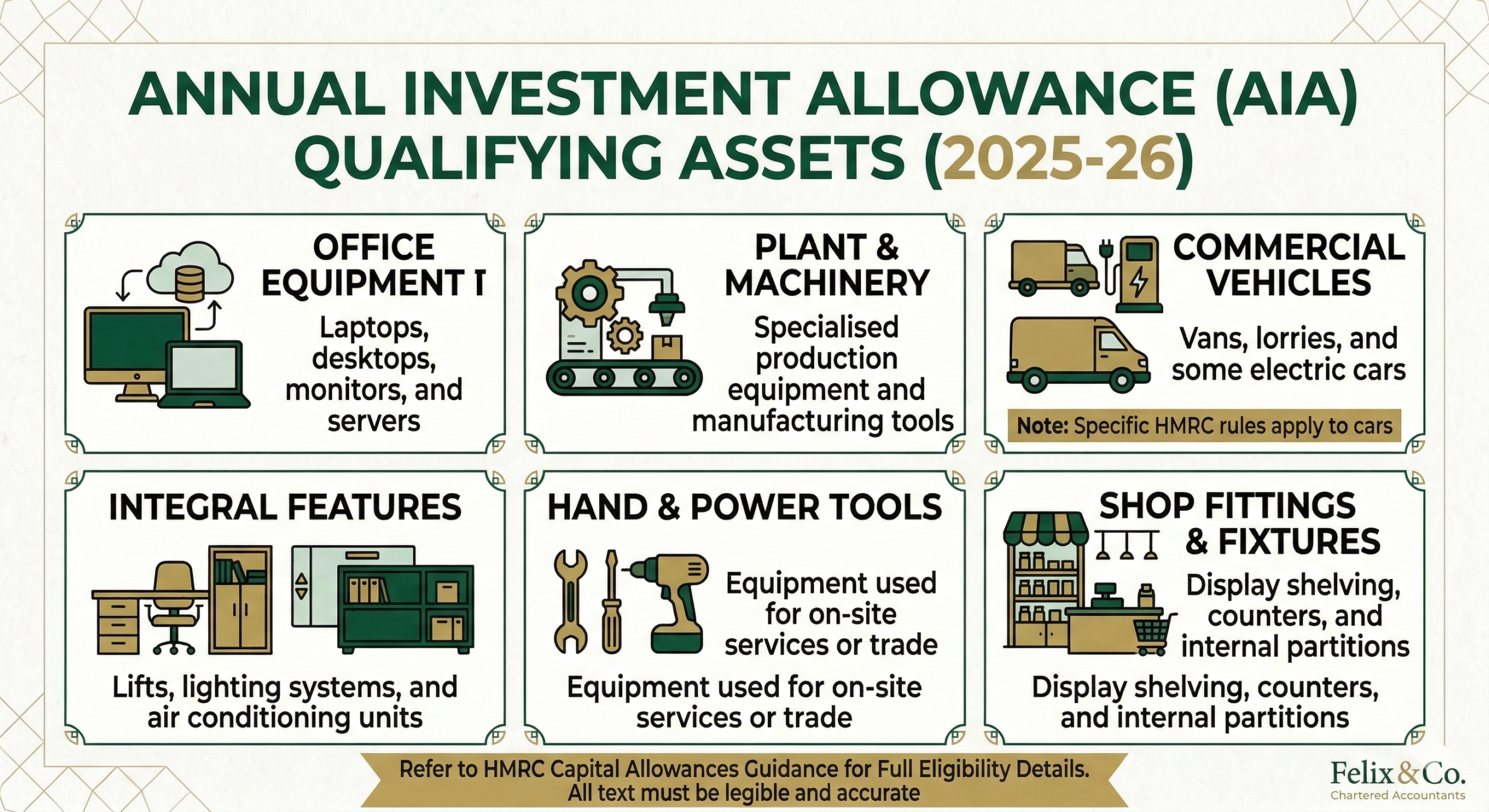
The end of the tax year is the ideal time to look at your business’s physical needs. If you were planning to upgrade your office technology, machinery, or vehicles in the summer, consider bringing those purchases forward.
Under the Annual Investment Allowance (AIA), most businesses can claim 100% tax relief on qualifying plant and machinery investments. By making these purchases before the tax year ends, you can reduce your taxable profits for this period rather than waiting another year to see the benefit. View the full list of qualifying items on the HMRC Capital Allowances page.
3. The Shift to ‘Making Tax Digital’ (MTD)
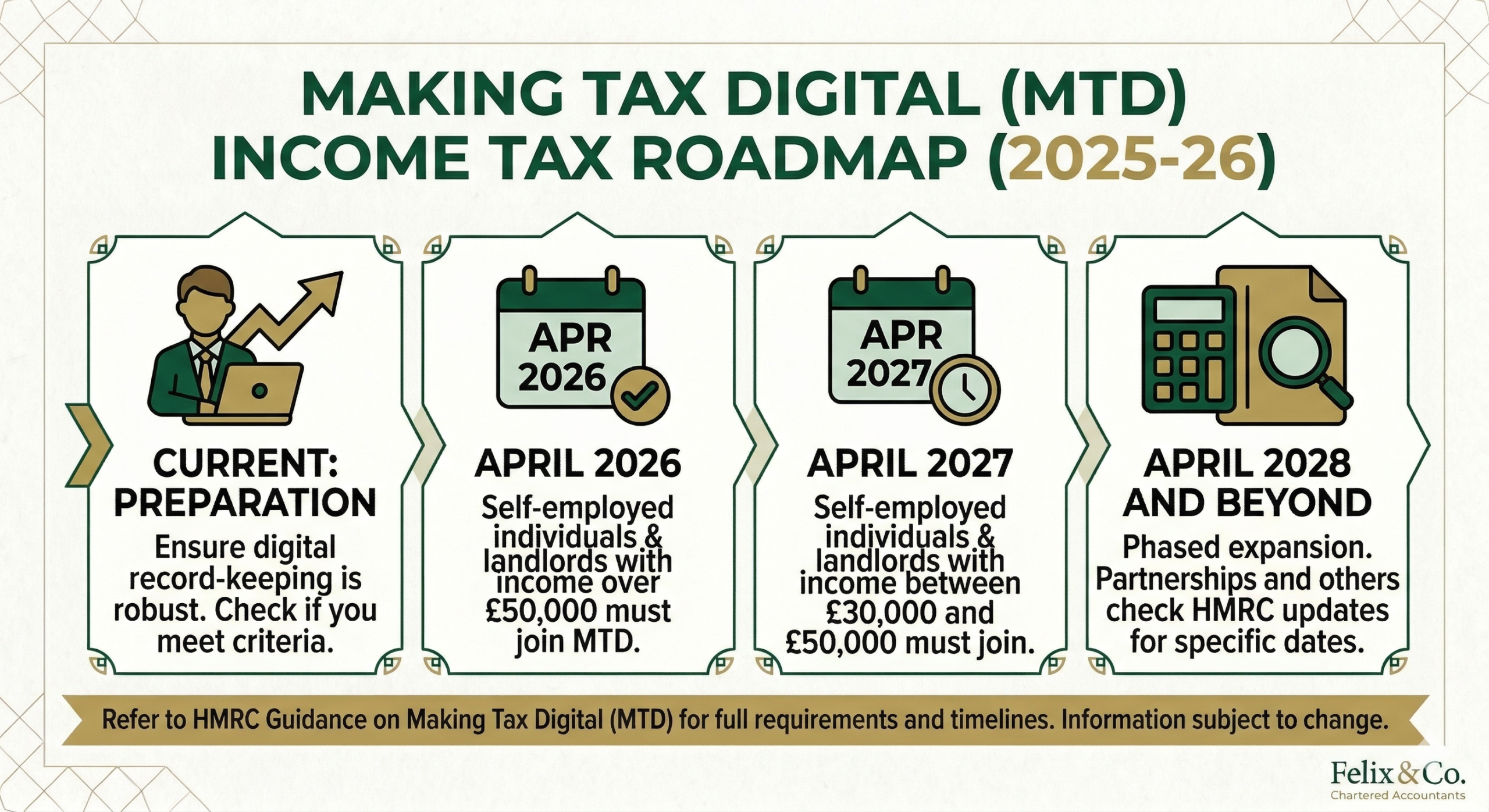
Digital transformation is no longer optional. Under the new HMRC roadmap, many landlords and sole traders are now required to report their income quarterly.
If your income exceeds the current thresholds, you must ensure your record-keeping is compliant with MTD-compatible software. Failing to transition can lead to penalties. You can check if you are required to join the scheme via the HMRC Making Tax Digital overview.
4. Personal Tax Planning: Protecting Your Wealth
Tax planning isn’t just for your business; it’s for your household.
Personal Allowances and ISA Limits
Most UK taxpayers have a standard Personal Allowance of £12,570, which is the amount of income you do not have to pay tax on. Furthermore, ensure you have maximized your ISA (Individual Savings Account) allowance. You can save up to £20,000 across various ISAs each year, and any interest or capital gains earned within the ISA are tax-free. Learn more at HMRC’s Individual Savings Accounts (ISAs) guide.
Capital Gains and Gift Aid
Capital Gains Tax (CGT): Consider using your annual CGT allowance. If you have assets (like shares or property) that you intend to sell, doing so before the deadline could utilize this year’s tax-free threshold.
Gift Aid: Donations to charity are not only a social good but also tax-efficient. If you are a higher-rate taxpayer, you can claim back the difference between the tax the charity recovers and the higher rate of tax you paid. Details are available on the HMRC Tax relief when you donate to a charity page.
5. Marriage Allowance and Family Claims
Are you and your partner making the most of your joint status? The Marriage Allowance allows you to transfer a portion of your unused personal allowance to your husband, wife, or civil partner, potentially reducing their tax bill by up to £252.

Additionally, high-income households should review any Child Benefit claims. If one partner earns over a certain threshold, the High Income Child Benefit Charge may apply. Use the HMRC Child Benefit Tax Calculator to see how this affects you.
Don’t Wait Until April 6th
The “Heelan Herald” recently noted that this time of year is hectic, but speaking with an advisor is the only way to ensure you are maximizing these benefits. At Felix & Co., we specialize in helping small businesses in Maidenhead and beyond navigate these complexities with ease.
Ready to secure your tax savings?
Don’t leave your financial health to chance. Book a consultation with our expert team today to review your 2025-26 position.
👉 Book Your 30-Minute Tax Review via Calendly
Frequently Asked Questions (FAQs)
What is the deadline for the 2025-26 tax year? The UK tax year ends on April 5th, 2026. All investments, dividend payments, and pension contributions must be processed by this date to count toward the 2025-26 period.
How much can I put into my pension to save on tax?
Most people can contribute up to £60,000 (the Annual Allowance) into their pension and receive tax relief, provided it doesn’t exceed their total earnings. You can verify your specific limits on the HMRC Pension Tax Relief page.
Can I still claim the Marriage Allowance if we are retired?
Yes, as long as one of you has an income below the Personal Allowance and the other is a basic-rate taxpayer.
What happens if I miss the Making Tax Digital deadline? HMRC has a points-based penalty system for late submissions and payments. It is best to switch to compatible software as soon as possible to avoid these charges.
Contact Felix & Co. Chartered Accountants
Address: Belix House, 19 Raymill Road East, Maidenhead, SL6 8SW
Phone: 01895 348 097 | Mobile: 07877 284 111
Email: accounts@felixaccountants.com