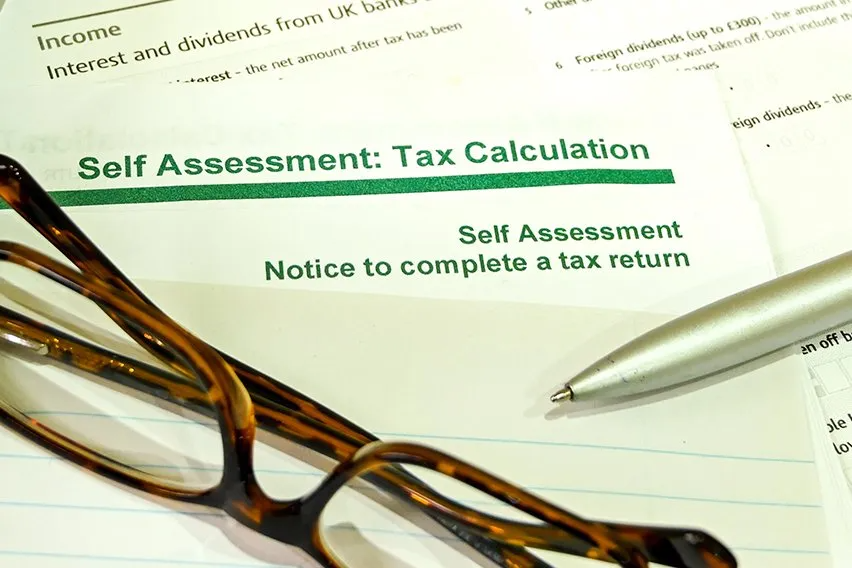
Living abroad doesn’t mean you’re out of reach for HM Revenue & Customs (HMRC). In fact, in 2026, the digital trail left by overseas landlords is easier than ever for the UK tax office to follow. Whether you’re a UK expat working in Dubai, a retiree in Spain, or a foreign investor, if you receive income from a UK property, you generally owe UK tax. Expat Tax Rules
Many overseas landlords mistakenly believe that because they pay tax in their country of residence, or because their UK letting agent deducts tax at source, they have no further obligations. At Felix Accountants, we specialize in the Non-Resident Landlord Scheme (NRLS) and helping overseas owners regularize their past through the Let Property Campaign (LPC).
1. What is the Non-Resident Landlord Scheme (NRLS)?
The NRLS is a tax regulation designed to ensure HMRC gets its cut of rental income from landlords whose “usual place of abode” is outside the UK (typically staying abroad for 6 months or more).
Under the scheme, there are two ways tax is collected:
Withholding at Source: Your letting agent (or your tenant, if they pay over £100/week) must deduct 20% basic rate tax from your rent and pay it directly to HMRC.
Gross Payment: You can apply to HMRC using Form NRL1 to receive your rent in full. If approved, you are responsible for paying the tax yourself via a Self Assessment tax return.
The Common Trap: Receiving rent “gross” does not mean the rent is tax-free. It simply means you’ve promised HMRC you will handle the paperwork yourself. If you receive rent gross but fail to file a return, you are in breach of the scheme.
2. Why Overseas Landlords are “High Risk” for HMRC
In 2026, HMRC’s Connect system is linked to global exchange agreements. HMRC now receives data from banks in over 100 countries. If you are transferring funds from a UK letting agent to an overseas account, or if you have a UK mortgage but a foreign address, the system flags you.
Common reasons overseas landlords fall behind:
Assuming the Letting Agent handles it: They only deduct 20%; they don’t file your personal tax return or claim your personal allowance.
Double Taxation Confusion: Thinking you only pay tax where you live. (Most treaties state property income is taxed first in the country where the property is located).
The “Mortgage Wash” Myth: Thinking that if the rent just covers the mortgage, there is no profit to declare.
3. How the Let Property Campaign Works for Expats
If you’ve realized you have years of undeclared UK income, the Let Property Campaign (LPC) is your best route to safety. It is open to non-resident individuals (but not companies or trusts).
The Advantage for Expats:
If you come forward voluntarily, we can often argue that being “out of the country” or “confused by international rules” constitutes Reasonable Care or a Non-Deliberate error.
By using the LPC, you can:
Secure lower penalties (often 0% to 20%).
Avoid a formal, intrusive tax enquiry that might look into your other global assets.
Clean up your UK record before you decide to sell the property or move back.
4. Capital Gains Tax: The “Exit” Trap
If you are an overseas landlord looking to sell your UK property in 2026, you face a strict Non-Resident Capital Gains Tax (NRCGT) regime.
You must report the sale to HMRC within 60 days of completion.
You must pay the tax within that same 60-day window.
The Problem: If your rental income history isn’t clean, HMRC may hold up the sale or use the sale notification to trigger an audit of the last 20 years of rent.
Using the Let Property Campaign before you list the property for sale is a vital strategic move.
5. Claiming Your Personal Allowance
Even as a non-resident, many people (including UK citizens and EEA nationals) are still entitled to the UK Personal Allowance (£12,571 in 2026).
If your UK rental profit is £10,000, and you have no other UK income, you owe £0 in tax.
However, you must still file a return to claim this allowance. If your agent has been deducting 20% tax, you can actually use your tax return to claim a refund of every penny they took.
6. How Felix Accountants Supports Global Landlords
Distance shouldn’t be a barrier to compliance. We offer a digital-first service for overseas clients:
Remote Consultation: Video calls in your time zone.
Digital Disclosure: We handle the entire LPC submission through HMRC’s Digital Disclosure Service.
NRL1 Applications: We help you apply to receive rent gross for the future.
Refund Management: If you’ve overpaid via withholding tax, we get your money back.
Frequently Asked Questions (FAQs)
Q1: I pay tax in the USA/Dubai/Australia. Do I still pay in the UK?
Yes. The UK has the “primary taxing right” on UK land. You pay the UK first. You can then usually claim a “Foreign Tax Credit” in your home country so you don’t pay twice on the same money.
Q2: My tenant pays me directly into my UK bank account. Does HMRC know?
Highly likely. In 2026, banks share “suspicious activity” reports and data on large regular transfers with HMRC. Furthermore, the Land Registry records show you own the house but aren’t living there.
Q3: Can I use the LPC if I own the property through a BVI or Jersey company?
No. The Let Property Campaign is for individuals only. Non-resident companies must use a different disclosure route and are subject to UK Corporation Tax.
Q4: I haven’t lived in the UK for 10 years. How far back will they look?
If the failure to disclose was “Careless,” they look back 6 years. If they deem it “Deliberate” (because you knew the rules but ignored them), they can go back 20 years.
Q5: Will using the LPC affect my immigration status or visa?
Usually, no. HMRC is a separate department from the Home Office. In fact, having “clean” tax affairs is often a requirement for many visa renewals and citizenship applications.
Protect Your UK Investment from Abroad
Don’t let an administrative oversight in the UK turn into a global legal headache. Whether you owe tax or are due a refund, Felix Accountants will bridge the gap between you and HMRC.
Joint Ownership Tax_ Why Both Owners Must Disclose Separately to HMRC - visual selection
One of the most common reasons landlords fail a tax audit is a misunderstanding of how Joint Tax Ownership. Many couples assume that if the rent goes into a joint bank account, or if one partner manages the property, only one tax return is needed.
In 2026, HMRC’s “Connect” system is specifically designed to flag properties with multiple owners where only one (or neither) is declaring income. At Felix Accountants, we frequently handle cases where a husband and wife are both pursued for back-tax because they didn’t realize that joint ownership requires dual disclosures.
1. The “50/50 Rule” for Married Couples
If you are married or in a civil partnership and living together, HMRC applies a strict “default” rule: Rental income is split 50/50 for tax purposes.
It does not matter if:
One of you earned all the money to buy the house.
The rent is paid into only one person’s bank account.
One of you does all the “work” of being a landlord.
Unless you have a specific legal agreement (see Form 17 below), HMRC will expect each of you to declare exactly 50% of the profit on your own individual tax returns.
2. The “Separate Disclosure” Requirement
This is the part that catches most people out during the Let Property Campaign (LPC). If a husband and wife have undeclared income from a jointly owned property:
You cannot make one joint disclosure.
Each person must notify HMRC separately.
Each person will receive their own unique Disclosure Reference Number (DRN).
Each person must submit their own 90-day calculation showing their share of the income.
The Risk: If only the husband discloses and the wife doesn’t, HMRC will accept the husband’s money but then open a separate investigation into the wife for her 50% share—often with higher “prompted” penalties.
3. Changing the Split: Form 17 and Deeds of Trust
Sometimes, it is more tax-efficient for the lower-earning partner to receive more of the income. For example, if the wife is a basic-rate taxpayer and the husband is a higher-rate taxpayer, you might want a 90/10 split in her favor.
To do this legally in 2026, you must:
Have a Deed of Trust: A solicitor must draft a document showing you own the property in unequal shares (as “Tenants in Common”).
Submit Form 17: You must notify HMRC of this unequal split within 60 days of signing the deed.
Important Note for LPC: You cannot backdate a Form 17. If you are disclosing for the last 6 years and you only just signed a Deed of Trust, you must still disclose the previous years on a 50/50 basis. You can only use the new split for the future.
Joint Ownership Tax_ Why Both Owners Must Disclose Separately to HMRC – visual selection
If you own a property with someone you are not married to, the rules are different:
You are generally taxed according to your actual ownership share (e.g., if you own 70% of the house, you pay tax on 70% of the rent).
You can agree to a different split of profits and losses, but it must reflect the reality of your agreement and be supported by evidence.
Just like married couples, both of you must file separate tax returns or LPC disclosures.
5. The “Personal Allowance” Strategy
Joint ownership is often a powerful tool for reducing your total tax bill.
Example: A property makes £20,000 profit. If only one person owns it and they are a higher-rate taxpayer, they pay £8,000 in tax.
If a married couple owns it 50/50, they each have £10,000 profit. If neither has other income, that £10,000 falls within their Personal Allowance (£12,571), and the total tax bill is £0.
This is why HMRC is so aggressive in checking that both parties are declaring; the “missing” 50% often represents a significant amount of lost tax revenue for the government.
6. How Felix Accountants Manages Joint Disclosures
When a couple comes to us with a joint property issue, we provide a coordinated service:
Mirror-Image Disclosures: We prepare both disclosures simultaneously to ensure the figures match perfectly (HMRC will flag any discrepancies).
Penalty Mitigation: We argue that since you are disclosing as a household, you are showing maximum cooperation, which helps keep penalties for both partners at the minimum.
Future-Proofing: We help you decide if a Form 17 election is right for you moving forward to keep your future tax bills as low as possible.
Joint Tax Disclosure
Frequently Asked Questions (FAQs)
Q1: My husband is the only one on the mortgage, but we both own the house. Who pays the tax?
Tax follows beneficial ownership, not necessarily the mortgage. If you have a legal document showing you both own the property, you both must declare the income. If only one person is on the title deeds, that person is usually 100% responsible unless a “Trust” exists.
Q2: We have a joint bank account where the rent goes. Is that enough for HMRC?
No. A joint bank account is not proof of a joint tax liability. HMRC looks at the legal and beneficial ownership of the property itself.
Q3: Can one of us pay the full tax bill for both of us?
No. HMRC treats you as two separate taxpayers. You must each pay your own share of tax, interest, and penalties from your own (or joint) funds under your own reference numbers.
Q4: What if my partner refuses to disclose?
This is a difficult situation. You should still make your 50% disclosure to protect yourself. This prevents you from being charged with “Deliberate” concealment, even if your partner remains non-compliant.
Q5: If we sell the house, do we both pay Capital Gains Tax (CGT)?
Yes. Each owner has their own CGT Annual Exempt Amount. By owning the property jointly, you can effectively double your tax-free allowance when you sell.
Double the Owners, Double the Care
Joint ownership is a great way to share the rewards of property investment, but it comes with dual responsibilities. If you and your co-owner haven’t been filing separate returns, Felix Accountants can help you both get back on track together.
Once you notify HMRC of your intent to join the Let Property Campaign (LPC), the countdown begins. You are issued a unique Disclosure Reference Number (DRN) and a Payment Reference Number (PRN), and you have exactly 90 days to calculate your figures, submit your disclosure, and pay the balance.
At Felix Accountants, we call this the “Execution Phase.” The 90-day window sounds generous, but when you are dealing with years of missing bank statements and complex tax rules, time disappears quickly. Here is your roadmap to a successful submission.
1. The Timeline: Notification to Settlement
The LPC is a structured process. Missing the 90-day deadline can result in HMRC rejecting your disclosure and opening a formal (and much more expensive) enquiry.
Day 1: Formal Notification via the Digital Disclosure Service (DDS).
Day 2–60: The “Deep Dive.” This is when we reconstruct your rental accounts.
Day 60–80: We calculate the “Tax Gap,” statutory interest, and the behavior-based penalty.
Day 80–90: Formal submission of the disclosure and payment of the total amount.
2. Essential Documentation Checklist
To make an accurate disclosure, we need to move beyond “estimates” wherever possible. You should begin gathering:
Income Records: Tenancy agreements, letting agent annual statements, or bank statements showing rent deposits.
Expense Evidence: Invoices for repairs, insurance certificates, management fee statements, and utility bills for void periods.
Mortgage Data: Annual mortgage interest certificates (usually provided by your lender every January).
Other Income Info: Your P60 or P11D (if employed) or self-employed accounts. Your rental tax is determined by your total income, so we need the full picture to apply the correct tax bands.
3. Dealing with Missing Records
What if you don’t have bank statements from six years ago?
Bank Requests: Most banks can provide historic statements for a small fee, though this can take 2–3 weeks (hence the urgency).
Reasonable Estimates: If records are truly lost, HMRC allows for “Best Estimates.” We can use local rental market data and average maintenance costs for your property type to build a defensible set of figures.
The Narrative: We must include a note in your disclosure explaining why records are missing and how we reached our estimates.
4. Calculating the “Add-Ons”: Interest and Penalties
Your disclosure isn’t just about the tax. HMRC expects you to “Self-Assess” two other figures:
Statutory Interest
This is not a penalty; it is compensation to the government for not having the money on time. Interest rates for late tax have risen significantly in 2025 and 2026. We use specialized software to calculate interest from the date the tax should have been paid to the current date.
The Penalty Offer
You must make a “Formal Offer” of a penalty. As discussed in previous articles, this is based on your behavior:
Reasonable Care: 0%
Careless (Unprompted): 0% – 30%
Deliberate (Unprompted): 20% – 70%
5. Making the “Formal Offer”
A unique feature of the LPC is that it is a Contractual Disclosure. When we submit the form, we are making a “Formal Offer” to pay a specific amount. If HMRC accepts this offer, it becomes a legally binding contract that prevents them from re-opening those specific years in the future (provided your disclosure was honest).
6. What If You Can’t Pay Everything on Day 90?
If the final bill is larger than expected, do not wait until Day 90 to tell HMRC. * We can negotiate a “Time to Pay” (TTP) arrangement.
HMRC is generally more open to payment plans (spreading the cost over 6–12 months) if the request is made as part of a voluntary disclosure.
Frequently Asked Questions (FAQs)
Can I submit the disclosure before the LPC 90 days are up?
Yes. You can submit as soon as your figures are ready. In fact, submitting early reduces the amount of statutory interest you have to pay.
What happens if I miss the LPC 90-day deadline?
HMRC may remove you from the campaign. This means you lose the “favourable terms” and lower penalties. They may then open a formal enquiry into your affairs.
HMRC “reviews” every submission. If your figures look sensible and match their “Connect” data, they usually issue an acceptance letter within 30–60 days. If the figures look suspiciously low, they will ask for evidence.
Do I need to send my LPC receipts to HMRC with the disclosure?
No. You don’t send the receipts with the form, but you must keep them for 6 years after the disclosure. HMRC can ask to see your “working papers” at any time during that period.
Can Felix Accountants handle the LPC payment for me?
You usually pay HMRC directly using your PRN (Payment Reference Number). However, we ensure you have the exact bank details and references to ensure your payment is allocated correctly to your disclosure.
Beat the LPC Clock with Felix Accountants
The LPC 90-day window is the final hurdle to tax peace of mind. Let Felix Accountants take the lead on the calculations and the paperwork, so you can focus on the future of your property investment.
[Button: Start My 90-Day Disclosure Process][Button: Get a Quote for LPC Management]
When a family member passes away or moves into full-time residential care, the practicalities of managing their home can be overwhelming. One of the most common solutions we see at Felix Accountants is for families to rent out the property to cover the significant costs of care home fees. Care home rent tax.
There is a widespread misconception that because the money is going directly to a “good cause”—like a nursing home—the income is not taxable. Unfortunately, in the eyes of HMRC, rental income is taxable regardless of how the profit is spent. This article clarifies the tax position for executors and beneficiaries to ensure you don’t inadvertently create a new tax debt while trying to care for a loved one.
Many families assume that if the care home fees are £3,000 a month and the rent is £1,500 a month, there is “no profit” and therefore no tax.
The Tax Reality: Care home fees are considered a personal living expense, not a business expense. Just as you cannot deduct your own grocery bill or rent from your salary before paying tax, you cannot deduct care home fees from rental income.
Example: If you receive £18,000 in rent over a year and have £2,000 in allowable property expenses (insurance, repairs), your taxable profit is £16,000. It does not matter if all £16,000 was paid to a nursing home; you still owe tax on that profit.
2. Who is Responsible for the Tax?
The person or entity responsible for paying the tax depends on the current legal status of the property.
Scenario A: The owner is still alive but in care
If your parent or relative is still the legal owner, the rental income belongs to them.
The Process: They (or you, via Power of Attorney) must file a Self Assessment tax return in their name.
The Benefit: They still get their Personal Allowance (£12,571). If their only other income is a small state pension, much of the rental income might fall within their tax-free threshold.
Scenario B: The owner has passed away (The Probate Period)
If the owner has died but the property hasn’t been legally transferred to the beneficiaries yet, the property belongs to the “Deceased’s Estate.”
The Process: The Executor is responsible for reporting the income.
The Tax Rate: Estates do not get a Personal Allowance. Rental income is usually taxed at a flat 20% basic rate from the first pound of profit.
Scenario C: You have inherited the property
Once the property is transferred into your name, the income is yours.
The Process: You must report the income on your own Self Assessment return. The tax rate will depend on your other earnings (20%, 40%, or 45%).
3. The Danger of “Power of Attorney” Errors
We often help clients like “Adam,” who had Power of Attorney for his father. Adam rented out his father’s house to pay for a nursing home and assumed that because he wasn’t personally keeping the money, he didn’t need to tell HMRC.
The Risk: HMRC’s “Connect” system sees the property is being rented. If no tax return is filed, they will eventually issue a “nudge letter.” If the owner is elderly or incapacitated, this can create a stressful legal situation for the family. Using the Let Property Campaign is the safest way to correct these historical oversights.
4. Allowable Expenses: What You Can Deduct
While you cannot deduct the care fees, you can deduct legitimate property costs to lower the tax bill:
Letting Agent Fees: Management and finders’ fees.
Maintenance & Repairs: Fixing a leaky roof or broken boiler (but not “improvements” like an extension).
Property Insurance: Landlord-specific policies.
Utility Bills: If paid by the landlord during void periods.
Accountancy Fees: The cost of preparing the rental accounts.
5. Inheritance Tax (IHT) and the “Care Fee Debt”
If the local authority is paying for care via a Deferred Payment Agreement (DPA), they are essentially placing a loan against the house.
When the person passes away, this “debt” is deducted from the value of the estate before Inheritance Tax is calculated.
However, the rental income earned while the person was alive remains subject to Income Tax. You cannot offset the IHT debt against the Income Tax bill.
6. How Felix Accountants Can Help
Managing the affairs of a relative in care is emotionally draining. The last thing you need is a dispute with HMRC. We provide:
Estate Tax Management: We handle the filings for executors during probate.
LPC Disclosures: If you’ve been renting a relative’s home for years without realizing it was taxable, we can use the Let Property Campaign to settle the history with minimum penalties.
Power of Attorney Support: we work with Attorneys to ensure the donor’s tax affairs are kept in perfect order.
Frequently Asked Questions (FAQs)
Q1: Is there any “Care Home Relief” for property tax?
No. There is no specific relief in the UK tax code that allows rental income to be tax-free simply because it pays for care.
Q2: What if the property is held in a Life Interest Trust?
In this case, the “Life Tenant” (the person in care) is usually entitled to the income. The trustees are responsible for ensuring the tax is paid, but it is typically taxed at the Life Tenant’s rates.
Q3: Can I split the income with my siblings to use our Personal Allowances?
Only if you all legally own a share of the property. If the property is still in your parent’s name, the income must be reported as theirs. If you have inherited it jointly, the income is split according to your ownership shares.
Q4: We are selling the house to pay the care fees. Do we pay tax on the rent in the meantime?
Yes. Even if you only rent the property for six months while waiting for a sale, that income must be declared if it exceeds the £1,000 allowance.
Q5: Does HMRC find out about inherited properties?
Yes. HMRC receives data from the Probate Office and the Land Registry. If a property changes hands and then appears on a rental site or has a tenant deposit registered, the “Connect” system will flag it.
Compassionate, Expert Tax Support
Dealing with care fees is difficult enough without a surprise tax bill. If you are managing a relative’s property, let Felix Accountants take the tax burden off your shoulders.
If you have received an HMRC “nudge letter” regarding undeclared rental income, you likely found a document titled “Certificate of Tax Position”enclosed, Tax Position Cert.
The letter usually asks you to tick a box, sign the declaration, and return it within 30 days.
At Felix Accountants, our advice to landlords is simple: Do not sign this certificate without professional representation. While the document looks like a standard administrative form, it is a legally binding declaration with significant risks. This article explains why the certificate is a “trap” for the unwary and how you should respond instead to protect your interests.
1. What is the Certificate of Tax Position?
The Certificate of Tax Position is a voluntary declaration form issued by HMRC. It is designed to “nudge” taxpayers into confirming their tax status. Usually, it offers you three or four checkboxes, such as:
I have declared all my rental income.
I have not been a landlord during the specified period.
I have additional tax to disclose (and will use the Let Property Campaign).
HMRC uses these certificates to filter their data. If you sign saying you are up to date, they may cross-reference your signature against their “Connect” database. If there is a discrepancy, your signature becomes evidence of a deliberate false statement.
2. The Legal “Catch”: It’s Not a Statutory Requirement
One of the most important things to understand is that there is no legal obligation to sign the Certificate of Tax Position. Unlike your annual Self Assessment tax return, which you are legally required to file, this certificate is an informal request. HMRC phrases the letter to make it seem mandatory, but they cannot legally penalize you simply for refusing to sign this specific form.
Why HMRC prefers the certificate over a letter:
By getting you to sign the certificate, HMRC forces you into a “Yes/No” corner. It removes the nuance of your specific situation. A professional letter from an accountant, however, allows for context, “Reasonable Excuse,” and technical explanations that the form simply doesn’t accommodate.
3. Four Major Risks of Signing Prematurely
Risk A: The “Perjury” Trap
The certificate often includes a declaration that the information is “correct and complete to the best of my knowledge and belief.” If you sign this and it is later proven that you missed even a small amount of income, HMRC can escalate the case from a “civil error” to a criminal investigation for “Dishonest Disclosure.”
Risk B: No “Look-Back” Limit
A standard tax return covers one year. The Certificate of Tax Position often covers all previous years. By signing it, you are making a blanket statement about your entire history as a landlord. If you haven’t performed a thorough “health check” on your records for the last 20 years, you are effectively signing a blank check for HMRC to investigate you if they find a single historical error.
Risk C: Admission of Guilt
If you tick the box saying “I need to disclose,” you have formally admitted to a tax irregularity before you even know the full figures. This can sometimes limit your ability to argue for lower penalties later, as you have already conceded that your affairs were not in order.
Risk D: Triggering a Formal Enquiry
Ironically, signing the “I am up to date” box can sometimes trigger the very investigation you were trying to avoid. If HMRC’s “Connect” system has strong data suggesting you owe tax, and you sign a document saying you don’t, they will view it as a “red flag” and open a full, intrusive enquiry.
4. Why Professional “Letter of Representation” is Better
Instead of signing the certificate, Felix Accountants typically recommends responding with a formal Letter of Representation.
A letter allows us to:
Acknowledge the Nudge: We show HMRC you are being cooperative (which helps keep penalties low).
Provide Context: We can explain why income wasn’t declared (e.g., you thought the “Rent-a-Room” scheme covered it, or you were living abroad).
Request More Time: We can formally ask for an extension to the 30-day deadline to conduct a proper audit.
Specify the Route: We can state that you are using the Let Property Campaign, which is a separate and more favorable disclosure route than the certificate.
5. What If My Tax Affairs Really Are Correct?
Even if you are 100% certain you owe no tax, we still advise against signing the certificate.
If you owe nothing (perhaps because your expenses exceed your income, or you qualify for specific reliefs), a detailed letter from an accountant explaining the math is far more likely to “close” the case than a ticked box. Ticking a box provides no proof; a professional letter provides evidence.
6. How Felix Accountants Protects You
When you bring your nudge letter to us, we follow a rigorous “Protection Protocol”:
Data Verification: We check what HMRC actually knows versus what your bank statements say.
Strategic Refusal: We notify HMRC that our client will not be signing the certificate but will provide a full response via our firm.
The “Reasonable Care” Argument: We build a case that any errors were not “deliberate,” potentially saving you thousands in penalties.
Peace of Mind: We act as the “buffer” between you and HMRC, handling all correspondence so you don’t have to deal with them directly.
Frequently Asked Questions (FAQs)
Q1: The letter says I must respond within 30 days. What happens if I don’t?
Ignoring the letter is the worst option. If you don’t respond, HMRC will assume the worst and likely open a formal tax enquiry. This is much more expensive and stressful than a voluntary disclosure.
Q2: Can HMRC fine me for not signing the certificate?
No. They cannot fine you for refusing to sign the certificate itself. However, they can fine you for the underlying unpaid tax. Our goal is to fix the tax issue without using their “trap” document.
Q3: My letting agent already deducts tax. Do I still need to worry about the certificate?
Yes. Letting agents often only deduct tax for “Non-Resident Landlords,” and even then, they might not deduct the correct amount. You are still responsible for filing a personal tax return and ensuring the total tax paid is accurate.
Q4: I already signed and sent the certificate. Am I in trouble?
Not necessarily, but you should contact us immediately. If you made a mistake on the certificate, we can “pre-empt” HMRC by submitting a correction through the Let Property Campaign before they start an investigation.
Q5: Will HMRC be annoyed if I don’t use their form?
HMRC investigators are used to dealing with accountants. They actually prefer a well-structured professional disclosure over a poorly completed form, as it makes their job of closing the case easier.
Don’t Sign Your Rights Away
The HMRC nudge letter is the start of a negotiation. Don’t give away your leverage by signing a document you don’t fully understand.
Contact Felix Accountants today for a confidential review of your nudge letter and a professional alternative to the Certificate of Tax Position.
Receiving an HMRC nudge letter regarding undeclared property income creates immediate uncertainty, but it is not a formal tax enquiry or criminal investigation. It is an automated prompt generated by HMRC’s Connect database, which continuously cross-references Land Registry records, tenancy deposit schemes, and third-party letting data against self-assessment filings.
At Felix & Co.Accountants, we regularly guide landlords through these notifications via the Let Property Campaign (LPC). This guide explains what triggered your letter, why you should exercise caution before signing HMRC’s forms, and how to resolve past tax years while minimising penalties.
1. What Exactly is an HMRC Nudge Letter?
A nudge letter is not a formal tax enquiry or a notification of a criminal investigation. Instead, it is a “soft” prompt from HMRC’s data-driven system.
HMRC uses a sophisticated AI software called Connect. This system cross-references data from the Land Registry, letting agents, mortgage applications, and even sites like Airbnb or Booking.com. If the system identifies a person who owns multiple properties or has a buy-to-let mortgage but no corresponding rental income on their tax return, a nudge letter is triggered.
The letter essentially says: “We have information that suggests you may have rental income. Please check your records and let us know if you need to pay tax.”
2. Why Have I Received This Letter Now?
HMRC’s “Connect” system is more powerful than ever. Common triggers for receiving a nudge letter in 2026 include:
Land Registry Updates: You purchased a second property or changed the title deeds.
Tenancy Deposit Schemes: Your tenant’s deposit was registered, creating a digital paper trail.
Stamp Duty Records: Historical data from when you purchased the property.
Third-Party Reporting: Letting agents are now legally required to provide HMRC with lists of landlords they represent.
3. The “Certificate of Tax Position”: The Hidden Trap
Most nudge letters include a document called a Certificate of Tax Position. HMRC asks you to sign and return this within 30 days.
Warning: This certificate is not a statutory requirement. You are not legally obligated to sign it.
Under UK tax law, there is no statutory requirement to complete or return HMRC’s Certificate of Tax Position. The document is voluntarily included with nudge letters targeting property income, but signing it carries significant legal exposure without providing any statutory protection.
First, the certificate operates under the legal framework of a formal declaration. By signing, a taxpayer confirms that their tax affairs are correct and up to date to the best of their knowledge and belief.
If HMRC later uncovers undeclared income or an error—even an inadvertent one—a signed certificate elevates a standard disclosure into a potential allegation of deliberate misleading conduct. Under Schedule 24 to the Finance Act 2007, deliberate penalties are substantially higher than penalties for failure to take reasonable care, potentially reaching up to 100% of the tax due (or 200% for offshore assets).
Second, the form offers no legal immunity or closing agreement. Signing it does not bind HMRC to settle past years, nor does it prevent them from opening a formal discovery assessment under Section 29 of the Taxes Management Act 1970 (TMA 1970).
It creates an asymmetrical legal obligation: the landlord makes a declaration under penalty of false representation, while HMRC retains full legal rights to audit every past tax year permitted by law.
Third, the default options on the certificate force binary choices that rarely reflect complex property tax histories. For instance, selecting the box stating that past income was fully disclosed leaves zero margin for technical disputes over capital versus revenue expenditure, domestic items relief, or ownership structures.
If HMRC later disagrees with how a landlord categorised repair costs, the signed certificate can be used as evidence of a false declaration. Rather than returning the certificate, the proper legal approach is to write to HMRC directly.
A formal letter acknowledges receipt, confirms that the landlord is reviewing their tax position alongside an advisory, and states that any necessary disclosures will be made via the standard Digital Disclosure Service (DDS) or an amended return under Section 9ZA TMA 1970. This satisfies the duty of cooperation without signing an unnecessary legal declaration.
Why you should be cautious:
The certificate asks you to declare one of the following:
My tax affairs are up to date.
I have some additional tax to disclose.
I have not been a landlord during the period.
If you sign the certificate stating your affairs are up to date, and HMRC later finds an error, you could face criminal prosecution for “Dishonest Disclosure” or “Perjury.” It is almost always better to have an accountant respond with a formal letter on your behalf rather than signing this specific HMRC document.
4. The Let Property Campaign (LPC): Your “Amnesty”
If you realise you do owe tax, the best route for resolution is the Let Property Campaign. This is a specific disclosure facility for individual landlords renting out UK residential property.
The Benefits of the LPC:
Lower Penalties: By coming forward via the LPC (an “unprompted disclosure”), your penalties can be as low as 0% to 20%. If you wait for HMRC to start a formal investigation (a “prompted disclosure”), penalties can soar to 100% or even 200% for offshore income.
Fixed Timeline: Once you notify HMRC, you have a clear 90-day window to calculate and pay.
Manageability: It allows you to wrap up multiple years of tax into one single settlement rather than filing dozens of individual backdated tax returns.
5. Step-by-Step: How to Respond to Your Nudge Letter
Quick Response Checklist: 30-Day Action Timeline
Days 1 to 7: Gather bank records, letting agent statements, and mortgage interest certificates for all relevant tax years. Do not sign or return the Certificate of Tax Position.
Days 8 to 14: Consult a property tax specialist to perform a per-disclosure calculation and determine your behavioural classification (Reasonable Care vs. Careless).
Days 15 to 21: Formally notify HMRC of your intention to disclose via the Let Property Campaign to lock in your 90-day window and mitigate maximum penalties.
Days 22 to 30: Finalise rental profit computations, apply allowable deductions, and prepare your formal disclosure submission.
Step 1: Review Your Records
Don’t rely on memory. Gather your bank statements, letting agent statements, and mortgage interest certificates for the last several years. You need to calculate your actual profit, not just your total rent.
Step 2: Seek Professional Advice
Before replying to HMRC, speak to a specialist like Felix Accountants. We can perform a “Pre-Disclosure Check” to see exactly how much you owe and whether you have a “Reasonable Excuse” for the delay (which can further reduce penalties).
Step 3: Notify HMRC of Intent
We will register you for the Let Property Campaign. This “stops the clock” on further HMRC action and gives us 90 days to prepare the figures.
Calculating the Section 24 Tax Credit for mortgage interest.
Adding statutory interest and the correct penalty percentage.
Step 5: Submission and Payment
Once the disclosure is submitted and the tax is paid, HMRC usually issues an acceptance letter within a few weeks, bringing the matter to a permanent close.
6. What If I Don’t Owe Any Tax?
Sometimes, HMRC gets it wrong. You might have received a letter even if:
Your rental income is below the £1,000 Property Allowance.
You are letting a room in your own home under the Rent-a-Room Scheme (below £7,500).
The property is owned by a Limited Company, and you’ve already paid Corporation Tax.
Even if you owe nothing, do not ignore the letter. You must still respond to explain why no tax is due. Ignoring the “nudge” will almost certainly lead to a formal, much more intrusive tax enquiry.
7. How Far Back Will HMRC Look?
One of the most common questions we hear is: “How many years do I need to pay for?” The answer depends on your “behaviour”:
Behaviour
Look-back Period
Reasonable Care (You tried to get it right but failed)
4 Years
Careless (You didn’t pay enough attention to your tax)
6 Years
Deliberate (You knew you should pay but chose not to)
20 Years
HMRC looks back between 4 and 20 years when investigating undeclared property income, depending entirely on how they classify a landlord’s legal behaviour. Establishing the correct behavioural classification dictates the scope of the exposure and the maximum penalty percentage applied.
Reasonable Care (4-Year Look-Back)
If a landlord made an honest attempt to comply with tax obligations but fell short due to an understandable mistake, HMRC classifies the behaviour as a failure to take reasonable care. Examples include relying on flawed guidance, misinterpreting complex allowances, or making an isolated arithmetic error. In these cases, Section 34 of the Taxes Management Act 1970 (TMA 1970) limits HMRC’s assessment window to 4 tax years from the end of the relevant tax year. Penalties for unprompted disclosures in this category range from 0% to 30% of the lost tax.
Careless Conduct (6-Year Look-Back)
Carelessness occurs when a landlord fails to take the care that a reasonable person in their position would take to ensure their tax affairs are correct. This includes failing to keep adequate rental records, ignoring changes in property tax rules (such as Section 24 restriction on mortgage interest), or failing to check whether letting out a property required filing a return. Under Section 36(1) TMA 1970, HMRC extends the assessment window to 6 tax years. Penalties for unprompted careless disclosures range between 0% and 30%, whereas prompted disclosures carry penalties between 15% and 30%.
Deliberate Behaviour (20-Year Look-Back)
When a landlord knowingly chooses not to declare rental income or intentionally submits false figures, HMRC treats the conduct as deliberate. This includes setting up arrangements to hide income, ignoring multiple previous HMRC warning letters, or submitting false expense receipts. Section 36(1A) TMA 1970 allows HMRC to assess back up to 20 tax years. For offshore property assets or deliberate non-compliance, penalties range from 20% to 100% of the tax due (rising to 200% for foreign income), along with potential inclusion on HMRC’s public list of deliberate tax defaulters.
Determining the Baseline Year
The look-back clock runs backward from the tax year in which HMRC issued the nudge letter or formal notice, not from the date the landlord originally purchased the property. When making a voluntary disclosure through the Let Property Campaign, framing the underlying narrative and evidence correctly during the initial submission is essential to secure the 4-year or 6-year position rather than allowing HMRC to allege deliberate behaviour.
At Felix Accountants, our job is to argue for the lowest possible category based on your specific circumstances.
8. Summary: The Cost of Delay
The difference between acting now and waiting for a formal investigation can be tens of thousands of pounds.
Scenario A (Proactive): You use the LPC. You pay the tax + interest + 10% penalty.
Scenario B (Reactive): HMRC opens an enquiry. You pay the tax + interest + 70% penalty + potential “Naming and Shaming” on the HMRC website. Frequently Asked Questions (FAQs)
Q1: Can I just start filing my next tax return correctly and forget about the past?
No. HMRC’s systems look backward. Filing a correct return now might actually “flag” the fact that you owned the property in previous years, triggering an enquiry into your history.
Q2: What if I don’t have receipts from 5 years ago?
We can use “Reasonable Estimates.” HMRC allows for the reconstruction of records using bank statements and average costs for the period, provided the figures are sensible and defensible.
Q3: I live abroad; does the Let Property Campaign apply to me?
Yes. If you own property in the UK, you are liable for UK tax regardless of where you live. There is also a “Non-Resident Landlord Scheme” you should be aware of.
Q4: Will I go to prison for undeclared rent?
Criminal prosecution is extremely rare for landlords who come forward voluntarily via the Let Property Campaign. HMRC’s primary goal is to collect the tax, not to fill prison cells. However, ignoring letters increases your risk significantly.
Q5: How much does it cost to have Felix Accountants handle this?
We offer a transparent, fixed-fee service for LPC disclosures. Most clients find that the tax and penalties we save them far outweigh our fees.
Take Control of Your Tax Position Today
If you’ve received a nudge letter, the clock is already ticking. Don’t let a simple mistake turn into a legal nightmare.
Contact Felix Accountants for a confidential consultation. We will review your letter, assess your records, and handle HMRC so you don’t have to.
It is January 2026. The world of Small Business Tax has shifted beneath our feet yet again. For years, business owners operated under the looming threat of “sunsets”—the expiration of favorable tax laws. In the United States, the uncertainty regarding the Tax Cuts and Jobs Act (TCJA) kept many entrepreneurs frozen. In the UK, the “Making Tax Digital” (MTD) can was kicked down the road repeatedly.
The 2026 fiscal environment is defined by permanence and digitization. In the US, key small business incentives have been solidified, removing the guesswork but raising the stakes on compliance. In the UK, the digital tax dragnet has finally closed, forcing high-turnover sole traders into quarterly reporting as of this April. Globally, the distinction between “local” and “international” business has vanished, with VAT rules on digital services catching even small freelancers in their net.
This guide is not a collection of “quick tips.” It is a comprehensive operational manual for the small business owner who views taxes not as a bill to be paid, but as a variable cost to be managed. Whether you run a marketing agency in Limbe with UK clients, a university in Cameroon, or a consultancy in London, the principles of tax efficiency remain the same: Defer Income, Accelerate Expenses, Optimize Structure, and Leverage Incentives.
The Foundational Pillars of Tax Efficiency
Before we discuss Section 179 or Dividend Allowances, we must address the unsexy truth: Tax strategy is impossible without data integrity.
The “Audit-Ready” Mindset: Why Documentation is King
In 2026, tax authorities (IRS, HMRC, and others) are using AI-driven enforcement. They do not need to audit you manually to find discrepancies; their algorithms flag “anomalies” in real-time.
The “Receipt” is Dead; The “Evidence” is Alive: A credit card statement line reading “AMZN MKTPLACE” is no longer sufficient. You need the granular invoice showing what was bought. Was it a camera for the business, or a toy for your child?
The “Business Purpose” Memo: Every significant expense in your cloud accounting software must have a memo. “Lunch with Client” is weak. “Lunch with John Doe (Client X) to discuss Q2 Marketing Strategy and contract renewal” is bulletproof.
Separation of Church and State: The Commingling Sin
The single destroyer of tax savings is “commingling”—mixing personal and business funds.
The Corporate Veil: If you run a Limited Company or LLC, commingling funds (paying your home mortgage from the business account) allows courts to “pierce the corporate veil,” rendering you personally liable for business debts.
The Deduction Denial: In an audit, if an inspector finds personal expenses hidden in business accounts, they will often disallow all expenses, forcing you to prove every single transaction from scratch.
You cannot manage 2026 taxes with 2010 tools. Your stack must be integrated:
Bank: A digital-first business bank (Monzo, Starling, Mercury, Relay) that integrates via API.
Ledger: Cloud accounting (Xero, QuickBooks Online, Sage) that pulls bank feeds daily.
Expense Management: A receipt capture tool (Dext, Hubdoc) that OCRs receipts and attaches them to the ledger transaction.
Tax Planner: Software that estimates tax liability monthly, not annually.
United States Tax Strategies (The 2026 “Extension” Reality)
Applicable to US Citizens, US Residents, and US-Connected Businesses.
The fear of the “2025 Cliff” has passed. Recent legislation (often referred to in 2026 circles as the “TCJA Extension” or the “Growth Act”) has solidified the pro-business landscape.
1. The Permanent 20% Pass-Through Deduction (Section 199A)
This is the crown jewel for S-Corps, LLCs, and Sole Proprietors.
The Strategy: You can deduct 20% of your “Qualified Business Income” (QBI) from your taxes. Effectively, you are only taxed on 80% of your earnings.
2026 Update: This provision, which was set to expire at the end of 2025, has been made permanent.
The Trap: High earners (approx. >$190k Single / >$380k Married) in “Specified Service Trades or Businesses” (SSTBs)—like doctors, lawyers, and consultants—face a phase-out.
The Fix: If you are an SSTB near the threshold, aggressive retirement contributions (Solo 401k) can lower your taxable income below the phase-out line, restoring the full 20% deduction.
Small Business Tax S
2. Section 179 & The Return of 100% Bonus Depreciation
The phase-down of Bonus Depreciation (which dropped to 80%, then 60%, then 40% in previous years) has been reversed.
Section 179 (2026 Limits): You can now expense up to $2.5 Million (inflation-adjusted) in equipment. This includes “Off-the-shelf” software, heavy vehicles (over 6,000 lbs), and office furniture.
Bonus Depreciation: 100% Bonus Depreciation is back. This allows you to write off the entire cost of eligible property in year one, even if it creates a Net Operating Loss (NOL).
Strategy: If you have a high-profit year in 2026, purchasing a company vehicle or upgrading your entire IT fleet before December 31st can wipe out significant tax liability.
3. The R&D Pivot: Domestic vs. Foreign Expensing
A major divergence has occurred in how the US treats R&D.
Domestic R&D: If you hire US-based developers or engineers, you can now immediately expense 100% of those costs (a reversal of the painful amortization rules of 2022-2025).
Foreign R&D: If you hire developers outside the US (e.g., in Cameroon or India), you cannot immediately expense those costs. You must amortize (spread) them over 15 years.
Impact: For a US agency hiring offshore talent, your taxable profit might be much higher than your cash profit. You need to plan for this “phantom tax” bill.
4. Estate Tax & The “Sunset” Avoidance
The doubling of the Estate Tax Exemption (approx. $14M+ per person) has been retained. This is critical for business owners with illiquid value (e.g., a valuable brand or software IP). You can gift shares of your business to trusts now without triggering tax, locking in the value outside of your estate.
United Kingdom Tax Strategies (The Digital & Rate Shift)
Applicable to UK Residents and UK Limited Companies.
The UK landscape in 2026 is dominated by the reality of Corporation Tax hikes and Making Tax Digital.
1. Surviving the April 2026 MTD Mandate
The waiting is over. As of April 6, 2026, Making Tax Digital (MTD) for Income Tax is mandatory for sole traders and landlords earning over £50,000.
The Change: You can no longer file a single annual return. You must file quarterly updates via compatible software, plus a Final Declaration.
The Strategy: If you are hovering near £50k turnover, consider incorporating (becoming a Ltd Company). MTD for Corporation Tax is not yet mandated in 2026, giving you an escape route from the quarterly reporting headache of the sole trader regime.
2. Navigating the 25% Corporation Tax Rate
The “small profits rate” of 19% still exists, but the marginal trap is painful.
Profits < £50k: Taxed at 19%.
Profits > £250k: Taxed at 25%.
The Trap (£50k – £250k): Profits in this “Marginal Relief” band are effectively taxed at 26.5%.
The Strategy: If your profit is likely to land in the £50k-£250k band, aggressively accelerate expenses (Pension contributions, equipment purchase) to bring profit down to £50k, or accept the higher rate and focus on growth to push through to £250k where the rate stabilizes at 25%.
3. The “Salary vs. Dividend” Equation in 2026
The classic strategy of “Low Salary + High Dividend” is under pressure due to the slashed Dividend Allowance (now negligible at £500 or less) and higher Dividend Tax rates.
Salary: Take a salary up to the Primary Threshold (approx £12,570) to qualify for State Pension credits without paying National Insurance.
Dividends: Still tax-efficient compared to salary, but the margin is thinner.
The Shift: More directors are moving to Interest Payments. If you lent money to your company (Director’s Loan), charge the company commercial interest. The interest is a deductible expense for the company (saves 19-25% Corp Tax) and is taxed as savings income for you (which has a £1,000 allowance for basic rate taxpayers).
4. Pension Power: The Director’s Ultimate Relief
With the Annual Allowance at £60,000 (check 2026 inflation adjustments), this remains the #1 UK tax shelter.
Employer Contribution: Your company pays £60,000 directly into your SIPP.
The Math: The company saves up to £15,000 (25%) in Corporation Tax. You pay zero Income Tax or National Insurance. It is the only way to extract profit 100% tax-efficiently.
International & Emerging Markets (Global/Cameroon)
For the digital nomad, the agency owner with global clients, or the entrepreneur in emerging markets like Cameroon.
1. Transfer Pricing for Digital Agencies
If you have a Cameroon agency serving UK clients, or a UK Ltd contracting a Cameroon team:
The Risk: Tax authorities want to ensure you aren’t artificially shifting profit to the low-tax jurisdiction.
The Arm’s Length Principle: You must charge a “market rate” for services between your entities. If your Cameroon team does the coding, the UK entity cannot pay them $1. The UK entity must pay a fair market price, leaving a reasonable profit margin in the UK (for sales/marketing) and shifting the bulk of revenue to Cameroon (where production happens).
Cameroon Benefit: Service exports from Cameroon are zero-rated for VAT. This means you don’t charge UK clients VAT, but you can recover input VAT on your Cameroon expenses.
2. VAT on Digital Services (The Global Dragnet)
In 2026, almost every jurisdiction (EU, UK, South Africa, etc.) has “Place of Supply” rules for digital services.
The Rule: If you sell a digital download (e-book, course) to a consumer in France, you owe French VAT, even if you are in Limbe or London.
The Strategy: Use a “Merchant of Record” (like Paddle, Gumroad, or LemonSqueezy). They act as the reseller, handling the global VAT registration and filing for you. The fee they charge (5%) is far cheaper than hiring an accountant to file VAT returns in 27 EU countries.
3. Incentive Zones: The “Economic Disaster” Strategy (Cameroon Specific)
For entrepreneurs in regions like Southwest Cameroon (Limbe), the 2025/2026 Finance Laws offer aggressive incentives to rebuild the economy.
Noseen Zone (Disaster Zone) Benefits: New investments can qualify for massive tax holidays (exemptions from Company Tax for 3-5 years) and tax credits (up to 80% of investment cost).
Education Sector: As a university director, remember that tuition income is VAT exempt, and specialized educational equipment often enjoys custom duty waivers.
Advanced Wealth Extraction
How to get money out of the business efficiently.
1. Hiring Family: The Income Splitting Code
Concept: Shift income from your high tax bracket (40%+) to a family member’s lower bracket (0-20%).
Implementation: Hire your spouse or children for legitimate roles (Social Media Manager, Admin Assistant).
US Benefit: Wages paid to children <18 by a parent-owned Sole Prop are exempt from FICA taxes.
UK Benefit: Utilize the child’s Personal Allowance (tax-free up to ~£12,570).
2. The “Augmented” Home Office Deduction
Renting to Your Business (US – “Augusta Rule”): You can rent your home to your business for up to 14 days a year tax-free. The business gets a deduction for the rental expense (at fair market rates, e.g., for a board meeting or video shoot), and you personally report zero income on your tax return.
Use of Home (UK): Avoid the flat rate (£6/week). Use the actual cost method, apportioning rent, mortgage interest, electricity, and council tax by floor area and usage time.
3. Travel: Bleisure and the “Wholly and Exclusively” Rule
The Strategy: Combine business trips with leisure (“Bleisure”).
The Rule: The primary purpose of the trip must be business.
Execution: Fly to London for a client meeting on Friday. Stay for the weekend. Fly back Monday.
Deductible: Flights (100%), Hotel (Friday night), Meals (Friday).
Non-Deductible: Hotel (Sat/Sun), Personal meals.
Win: You would have paid for the flight anyway; now it is tax-deductible.
Conclusion & Implementation Roadmap
Tax savings in 2026 are not found in secret offshore accounts; they are found in the disciplined execution of the tax code.
Your Q1 2026 Roadmap:
January: File your UK Self Assessment (Deadline Jan 31). Ensure your US W-2s and 1099s are issued.
February: Review your Entity Structure. Are you approaching the £50k MTD threshold? Are you hitting the profit level where an S-Corp election (US) makes sense?
March: US Corporate Tax Deadline (March 15 for S-Corps).
April: UK Tax Year End. MTD Mandate Begins.
Final Thought: The goal is not to pay zero tax. The goal is to pay the legal minimum so you have the capital to reinvest, grow, and secure your financial future.
Frequently Asked Questions (FAQs)
I am a freelancer with clients in the US and UK. Where do I pay tax?
You generally pay tax on your worldwide income in the country where you are “Tax Resident” (usually where you spend 183+ days). However, the US taxes on citizenship, so US citizens must file a US return regardless of where they live. You use “Double Taxation Treaties” to avoid paying twice—claiming a credit in one country for taxes paid in the other.
Is the “Augusta Rule” (tax-free rental of home) applicable in the UK?
No. The Augusta Rule (Section 280A) is a specific US tax code provision. In the UK, renting your home to your business is more complex and can trigger Capital Gains Tax issues on your private residence. Stick to the “Use of Home” allowance in the UK.
Does the 2026 MTD mandate apply to Limited Companies?
Not yet. The April 2026 mandate is for Income Tax (Sole Traders and Landlords). MTD for Corporation Tax is planned for a later date (likely 2028 or beyond). Incorporating is a valid strategy to delay MTD compliance requirements.
Can I deduct my MBA or Master’s degree tuition as a business expense?
US: Yes, if the education maintains or improves skills required in your current trade. It cannot qualify you for a new trade.
UK: Generally No for Sole Traders (it is seen as putting you in a position to trade, not an expense of trading). Yes for Limited Companies if it is relevant to the employee’s role, but it may be a “Benefit in Kind” if not structured correctly.
What is the “Zone Economique” tax credit rate for Cameroon in 2026?
Under the 2025 Finance Law revisions, the tax credit for investments in Economic Disaster Zones (like the Southwest/Limbe) is 80% of the qualifying investment amount. This credit can be carried forward for 5 years. You must obtain certification from the Ministry before claiming.
Welcome to 2026. The days of the “tax inspector” manually reviewing your file with a calculator and a cup of tea are long gone. Today, HMRC compliance and audit risk are defined by one word: Data.
HMRC has evolved into one of the most sophisticated data-mining organizations in the world. Their supercomputer system, “Connect,” cost over £100 million to build and now houses more data on UK citizens than the British Library. It doesn’t just look at your tax return; it looks at your life.
For the business owner in 2026, compliance is no longer about “not getting caught.” It is about “data matching.” If the lifestyle you portray on Instagram doesn’t match the income you declare on your Self Assessment, Connect knows. If your credit card turnover is 20% higher than your declared VAT turnover, Connect knows.
This comprehensive guide is your survival manual. We will dismantle the mechanisms of HMRC’s enforcement, expose the specific triggers for 2026 audits, and provide a rigid framework for protecting your business.
The HMRC “Connect” System – What They Know About You
To manage HMRC compliance and audit risk, you must first understand the adversary. The “Connect” system is the brain of HMRC. It cross-references over 55 billion lines of data to identify “anomalies.”
The Data Dragnet: 30+ Sources You Didn’t Know About
Most taxpayers assume HMRC only sees what is on their P60 or P11D. This is a dangerous misconception. In 2026, Connect pulls data from:
Bank Accounts: Not just interest earned, but direct feeds of turnover and large transactions.
Land Registry: Every property purchase, sale, and transfer is logged. Connect immediately flags if someone declaring £20,000 income buys a £1 million house.
Online Marketplaces: Amazon, eBay, Vinted, and Etsy are legally required to report seller income. The “side hustle” is now fully visible.
Digital Platforms: Airbnb and Booking.com share host income data.
Crypto Exchanges: Coinbase, Binance, and others provide transaction logs to HMRC.
Social Media: Yes, HMRC investigators use web-crawling bots to match public lifestyle posts (luxury holidays, new cars) with reported income.
DVLA: Ownership of high-value vehicles.
Insurance Companies: Insuring a boat or a diamond ring? HMRC knows.
Flight & Passenger Data: Spending 184 days abroad? Connect tracks your residency status automatically.
The AI Algorithms: How “Anomalies” Are Flagged
Connect does not need a human to spot a liar. It uses benchmarking algorithms.
The “Benchmarking” Risk: Connect knows the average profit margin for a “Coffee Shop in South London.” If the average is 15% and you report 3%, you are a statistical outlier. This triggers an automatic “risk score.”
The “Cash Gap”: If your business accepts credit cards, merchant acquirers (Worldpay, Stripe) report your card turnover. Connect estimates your cash turnover based on industry averages. If you declare zero cash, but the industry average is 20%, you get flagged.
HMRC compliance
The 2026 Audit Triggers – Why You Get Selected
Audits (or “Enquiries” as HMRC calls them) are rarely random. In 2026, they are surgical strikes based on risk scores.
The “Red Flags” of 2026
Inconsistent Figures: If your VAT return says turnover was £100,000 but your Corporation Tax return says £80,000, this is an immediate trigger.
Directors’ Loan Accounts (DLA): If your DLA is consistently overdrawn and no Section 455 tax is paid, or if it is “written off” without being declared as income, this is a top priority for 2026.
Large Changes Year-on-Year: If your profit drops by 50% without a clear commercial reason (like a pandemic or recession), it looks suspicious.
Salary Sacrifice Errors: With National Insurance rates high, schemes for electric cars or bicycles are popular. HMRC is aggressively auditing these to ensure they are set up correctly.
Low Tax Liability vs. Lifestyle: The “rich pauper” scenario. If you declare minimal income but live in an expensive postcode, Connect’s “means testing” algorithm will flag you for an Aspect Enquiry.
Sector-Specific Targets in 2026
Construction: The Construction Industry Scheme (CIS) is a perennial target. The focus in 2026 is on “Gross Payment Status” abuse and misclassification of labour-only sub-contractors.
Hospitality & Takeaways: The focus here is Electronic Sales Suppression (ESS). HMRC is looking for “zapper” software used to delete sales from tills.
Agencies (Marketing/Recruitment): The focus is on IR35 (Off-Payroll Working). Are your contractors actually disguised employees?
Making Tax Digital (MTD) – The 2026 Penalty Regime
April 2026 is the watershed moment for Making Tax Digital for Income Tax Self Assessment (MTD ITSA).
The April 2026 Mandate: Who is In?
If you are a sole trader or landlord with a combined gross income (turnover, not profit) of over £50,000, you are mandated to join MTD from April 6, 2026.
Note: The threshold drops to £30,000 in April 2027.
The Points-Based Penalty System
Gone are the immediate £100 fines for being a day late. MTD introduces a “points” system, similar to a driving licence.
The Point: You get 1 point for every missed submission deadline (Quarterly Update).
The Threshold: Once you reach 4 points, you receive a £200 financial penalty.
The Escalation: EVERY subsequent late submission while you are at the threshold triggers another £200 fine.
Resetting: To wipe your points, you must meet a “period of compliance” (usually 12 months of perfect filing).
Digital Record Keeping: The New Legal Standard
The biggest audit risk in MTD is “Digital Links.” You cannot copy-paste figures from a spreadsheet into software. The data must flow digitally (via CSV import or API).
Audit Risk: If HMRC inspects your records and finds you are “typing” totals into Xero rather than importing them, you are non-compliant with the Digital Record Keeping Regulations, carrying a potential penalty of up to £3,000.
HMRC compliance
The R&D Tax Credit Crackdown – The New Battleground
Research & Development (R&D) Tax Credits were once a “free money” bonanza. In 2026, they are HMRC’s #1 fraud target.
The “Anti-Abuse Unit” and Mass Rejections
HMRC now estimates nearly 5-10% of R&D claims are fraudulent or erroneous. In response, they have established a dedicated Anti-Abuse Unit.
The Change: HMRC is no longer “processing now, checking later.” They are freezing payments and launching enquiries before paying out.
The “Technical Uncertainty” Test
The most common reason for audit and rejection in 2026 is the failure to prove “Scientific or Technological Uncertainty.”
The Trap: Using an off-the-shelf software plugin to build a website is not R&D.
The Requirement: You must prove you attempted to resolve a technological problem that a “competent professional” in the field could not easily solve.
Why Advertising Agencies are Under Fire
In late 2025 and early 2026, HMRC issued “Nudge Letters” specifically to the Advertising and Marketing sector.
Why? Many agencies claimed R&D for building standard websites, CRMs, or data analytics dashboards. HMRC views this as “commercial application of existing technology,” not R&D. If you are an agency owner, audit your past claims immediately.
“Nudge” Letters – The Psychological Warfare
HMRC has a dedicated “Behavioural Insights Team.” They know that a terrifying legal letter is less effective than a “helpful” nudge that makes you question your own honesty.
Interpreting the “One-to-Many” Letter
These are letters sent to thousands of taxpayers at once based on broad data matching.
The Tone: “We have information that suggests you may have X… please check your return.”
The Trap: They don’t tell you what they know. They want you to panic and disclose everything.
Common Nudges in 2026
Crypto Assets: “We have received data from crypto exchanges.” (Reminding you that crypto to fiat trades are taxable events).
Offshore Income: “You may have income from overseas.” (Triggered by the Common Reporting Standard data sharing).
Directors’ Loans: “Your accounts show a loan written off.” (Reminding you this is taxable as a dividend/earnings).
To Respond or Not to Respond?
Do: Review your affairs immediately.
Don’t: Ignore it. If you ignore a nudge letter and HMRC later opens an enquiry, they will view your error as “Deliberate” rather than “Careless,” doubling the penalties.
Handling an Audit – A Tactical Playbook
You receive a brown envelope. It’s an “Opening Letter” for a Check of Self Assessment. What do you do?
1. The “Golden Rule” of Communication
Never speak to HMRC directly. HMRC officers are trained to gather information. A casual chat about your “weekend in Spain” can be used to prove you have a holiday home you didn’t declare.
Action: Appoint a professional tax advisor immediately. All correspondence goes through them.
2. The Schedule 36 Information Notice
HMRC will send a list of documents they want (Bank statements, invoices, emails).
Tactical Check: Is the request “Reasonably Required”? Often, HMRC asks for personal bank statements or spousal data they have no legal right to see. Your accountant should challenge excessive requests.
3. Negotiating Penalties: “Suspended” vs. “Careless”
If you made a mistake, the game is about Penalty Mitigation.
Careless: You tried but failed (0-30% penalty).
Deliberate: You knew and did it anyway (20-70% penalty).
Deliberate & Concealed: You tried to hide it (30-100% penalty).
The Goal: Argue for “Careless” and ask for a Suspended Penalty. This means if you stay compliant for 2 years, the fine is wiped out.
HMRC compliance
Conclusion & The Compliance Checklist
HMRC compliance and audit risk in 2026 is manageable, but it requires a proactive, digital-first approach. You cannot hide in the shadows; the Connect system casts too much light.
Your 2026 Survival Checklist:
Digital Health Check: Are your bank feeds integrated? Are receipts scanned?
R&D Audit: If you claimed R&D, do you have a technical report written by a competent professional?
DLA Review: Is your Director’s Loan Account in credit? If overdrawn, has S455 tax been paid?
Turnover Watch: Are you approaching the £50k MTD threshold?
Insurance: Do you have “Tax Investigation Insurance”? (This pays your accountant’s fees if you get investigated – highly recommended).
Frequently Asked Questions (FAQs)
What triggers an HMRC investigation most frequently in 2026?
The most common trigger is a data mismatch in the Connect System. If your declared income doesn’t match the lifestyle data (property, cars) or financial data (bank interest, card turnover) HMRC holds, an enquiry is automatic. Additionally, the Construction and R&D sectors are under “campaign” scrutiny.
Can HMRC look at my personal bank account?
Not automatically. During a standard enquiry, they can only request business records. However, if they suspect “broken records” (i.e., they can prove your business books are unreliable), they can issue a “Schedule 36 Notice” to demand personal statements to verify your means.
What are the penalties for R&D tax credit fraud?
They are severe. Beyond repaying the credit with interest, penalties can range from 30% to 100% of the tax due. In cases of deliberate fraud, HMRC is increasingly pursuing criminal prosecution and naming/shaming directors, which disqualifies them from running companies in the future.
Do I really need to keep digital receipts for MTD?
Yes. Under the Digital Record Keeping rules, you must store a digital copy of the receipt. A shoebox of paper receipts is no longer compliant. You don’t need to keep the paper original once it is scanned, but the digital copy must be legible and retrievable.
How far back can HMRC investigate?
Normal Enquiry: 12 months after the filing deadline.
Careless Error: Up to 6 years.
Deliberate Error (Fraud): Up to 20 years.
Note: If they find a deliberate error in one year, they will almost always open the previous 20 years.
The Era of “Continuous Compliance” Self-Assessment
2026 marks a pivotal shift in the global regulatory landscape. We have moved past the era where “compliance” was a once-a-year box-ticking exercise. From the tax offices in the UK to the defense corridors of the Pentagon, regulators are demanding more data, faster reporting, and higher standards of verification.
For business owners, Finance Directors, and IT leaders, 2026 is the year of enforcement. The grace periods of the post-pandemic years have evaporated. The UK’s HMRC is aggressively closing the gap on digital tax reporting; the US Department of Defense (DoD) is actively enforcing cybersecurity standards in contracts; and the IRS has solidified its reporting windows for healthcare coverage.
This comprehensive guide serves as your operational manual for 2026. It dissects the four most critical self-assessment frameworks impacting businesses today:
If you are a UK-based business owner, a sole trader, or a high-net-worth individual, the immediate priority in January 2026 is the 2024/25 tax year filing.
1 The Critical Deadlines for 2026
The UK tax year runs from April 6 to April 5. The self-assessment cycle currently concluding covers the tax year 6 April 2024 to 5 April 2025.
31 October 2025 (Paper Deadline): PASSED. If you intended to file a paper return, this deadline has already passed. You must now file online to avoid penalties.
31 January 2026 (Online Deadline): This is the hard deadline for filing your electronic tax return. The system closes at midnight.
31 January 2026 (Payment Deadline): Crucially, this is also the deadline to pay:
Any “balancing payment” owed for the 2024/25 tax year.
The first Payment on Account for the 2025/26 tax year (usually 50% of your previous year’s tax bill).
2 The Penalty Regime: Why “A Few Days Late” Costs More Than You Think
HMRC operates an automated penalty system. There is no human reviewing your file to see if you had a busy week; the computer simply issues the fine.
The Instant Fine: If your return is not received by 11:59 PM on January 31, you receive an automatic £100 penalty. This applies even if you have zero tax to pay or if you have already paid the tax.
3 Months Late: Daily penalties of £10 per day begin, up to a maximum of £900 (90 days).
6 Months Late: A further penalty of 5% of the tax due or £300, whichever is greater.
12 Months Late: Another 5% or £300 charge. In cases of deliberate concealment, this can rise to 100% of the tax due.
3 The “Making Tax Digital” (MTD) Shadow
While you rush to file the 2024/25 return, you must recognize that this is the final “traditional” filing year for many.
April 6, 2026 marks the start of MTD for Income Tax for sole traders and landlords with income over £50,000.
Implication: If your 2024/25 return (the one you are filing now) shows turnover above £50,000, you are legally mandated to start using MTD-compatible software from April 2026.
Action: Do not just file your return; audit your turnover. If you breach the threshold, you have less than 90 days to procure software like Xero, QuickBooks, or Sage.
Self-Assessment
US Healthcare Compliance – The Affordable Care Act (ACA)
For US employers, specifically “Applicable Large Employers” (ALEs) with 50+ full-time equivalent employees, the ACA reporting window is a critical Q1 obligation.
1 The “Permanent Extension” Schedule
Historically, the deadline to furnish forms to employees was January 31st. However, the IRS has instated a permanent automatic extension for this specific deadline, shifting the compliance rhythm for 2026.
Deadlines for 2025 Reporting (Due in 2026):
Furnish Forms to Employees (Form 1095-C):
Deadline:March 2, 2026
Requirement: You must provide every eligible full-time employee with a copy of Form 1095-C. This form proves they had health insurance offer coverage (Code 1A, 1E, etc.) and helps them file their own taxes.
Strategy: While you have until March 2, it is best practice to issue these alongside W-2s in late January to reduce employee confusion.
File with the IRS (Electronic):
Deadline:March 31, 2026
Requirement: You must transmit Form 1094-C (the transmittal “cover sheet”) and all copies of Form 1095-C to the IRS AIR system.
Threshold Change: The e-filing threshold is now 10 returns. If you have 10 or more information returns (W-2s + 1095s combined), you must file electronically. Paper filing is effectively dead for ALEs.
2 Common Pitfalls for 2026
The “Controlled Group” Trap: If you own multiple companies (e.g., a staffing firm and a software company), the IRS aggregates their employees to see if you hit the 50-employee ALE threshold. You cannot split your workforce into three smaller companies to avoid ACA reporting.
Code 1A vs. 1E: Misclassifying an offer of coverage on Line 14 of the 1095-C is the most common trigger for IRS Penalty Letter 226J. Ensure your HR software is correctly coding “Qualifying Offers.”
The New Frontier – CMMC 2.0 (US Defense Contracts)
If you are a contractor, subcontractor, or supplier to the US Department of Defense (DoD), 2026 is the year the Cybersecurity Maturity Model Certification (CMMC) becomes real.
1 The 2026 Status: Phase 1 Rollout
As of January 2026, we are deep into Phase 1 of the CMMC rollout.
Requirement: Self-Assessments are now mandatory for all relevant contracts.
Contract Clauses: You will start seeing CMMC requirements appear in Requests for Information (RFIs) and Requests for Proposals (RFPs).
2 Your Obligations by Level
The CMMC model has three levels. Most small businesses (SMBs) in the supply chain fall into Level 1 or Level 2.
Level 1 (Foundational):
Who: Contractors handling Federal Contract Information (FCI). (e.g., simple emails from the government, non-sensitive contract details).
Action: You must perform an annual Self-Assessment against 17 basic security controls (passwords, antivirus, door locks).
Submission: You must sign a document by a senior official affirming compliance and upload your score to the Supplier Performance Risk System (SPRS).
Deadline:Immediate. You cannot be awarded a new contract without this score in the system.
Action: Implementation of 110 controls from NIST SP 800-171.
2026 Shift: While some contracts still allow Self-Assessment for Level 2, the DoD is moving toward requiring Third-Party Assessments (C3PAO). In 2026, you should be preparing for a third-party audit.
Q1 2026 Milestone: DoD contracts starting in 2026 will increasingly verify your SPRS score before award. If you have a negative score (meaning you have open Plan of Action & Milestones, or POAMs), you may be deemed ineligible.
3 The False Claims Act Risk
Self-Assessment
The Department of Justice has launched a “Civil Cyber-Fraud Initiative.” If you submit a Self-Assessment claiming you have 2-factor authentication when you actually don’t, this is considered fraud. Whistleblowers (e.g., your own disgruntled IT employees) can report you and receive a percentage of the fine. Do not falsify your self-assessment.
Payment Security – PCI DSS v4.0
The Payment Card Industry Data Security Standard (PCI DSS) regulates anyone who accepts credit cards (Visa, MasterCard, Amex).
1 The “Future-Dated” Requirements Are Now Active
PCI DSS v4.0 was released years ago, but it contained roughly 50 “future-dated” requirements that gave businesses until March 31, 2025 to implement.
By January 2026, these are fully mandatory. If you are still relying on PCI DSS v3.2.1 habits, you are non-compliant.
2 Key v4.0 Changes You Must Audit Now
Multi-Factor Authentication (MFA): Previously, MFA was mostly for remote access. Under v4.0, MFA is generally required for all access to the Cardholder Data Environment (CDE), even if you are sitting inside the office.
Anti-Phishing Mechanisms: You must have technical controls (like DMARC, SPF, and DKIM) to prevent your domain from being used for phishing, and you must train personnel on phishing awareness.
e-Commerce Skimming Protection: If you have a website payment page, you must have a script monitoring solution that alerts you if unauthorized code (like a digital skimmer or “Magecart” attack) is added to your payment page.
3 The Self-Assessment Questionnaire (SAQ)
Most small merchants do not need a full audit; they complete an SAQ.
Deadline: Determined by your merchant bank (Acquirer). Usually, it is the anniversary of when you first opened your account.
Action: Check your merchant portal (e.g., Worldpay, Stripe, Square dashboard). If your PCI status says “Non-Compliant,” you are likely paying a monthly “Non-Compliance Fee” of $20-$50. Completing the SAQ removes this fee immediately.
Strategic Compliance Management
Managing these disparate deadlines requires a centralized approach. You cannot rely on sticky notes.
CMMC Self-Assessment (Upload to SPRS prior to contract award)
2 The “Self-Assessment” Mindset
Whether it is tax or cybersecurity, the regulator is shifting the burden of proof to you.
Tax: You must prove your expenses are legitimate.
Cyber: You must prove your firewall is active.
Data: You must prove you offered health insurance.
Best Practice: Adopt an “Audit-Ready” posture. Do not prepare documents for the deadline. Maintain a “Compliance Folder” (digital secure vault) where evidence (receipts, log files, insurance certificates) is dropped monthly. When the deadline arrives, the work is simply packaging, not creating.
Self-Assessment
Frequently Asked Questions (FAQs)
I am a UK Director living abroad. Do I still need to file by Jan 31?
Yes. Residency status does not change the filing deadline. If you have UK-sourced income (like rental property or dividends), you must file your Self Assessment by January 31, 2026. However, non-residents cannot use the standard HMRC online software; you must use “commercial software” or file by paper (which deadline has passed). You should seek a specialist accountant immediately to file via commercial software to avoid penalties.
I missed the CMMC Level 1 self-assessment. Can I still bid on a DoD contract?
Generally, no. Contracting Officers are instructed to check the SPRS database before making an award. If your score is missing or is too old (older than 3 years), you are ineligible. You can perform the assessment and upload the score today; it usually takes 24-48 hours to reflect in the system.
Does the ACA reporting requirement apply if I have 48 full-time employees and 10 part-time ones?
Likely yes. The ACA uses “Full-Time Equivalents” (FTE). You must aggregate the hours of your part-time staff. If their combined hours equal 2 full-time workers, you have 50 FTEs (48 + 2). You would be an Applicable Large Employer (ALE) and must report.
Can I just pay the £100 HMRC fine and file later?
You can, but it is dangerous. The £100 is just the “entry fee.” The daily penalties (£10/day) kick in after 3 months. More importantly, late filing keeps the “enquiry window” open longer, meaning HMRC has more time to investigate your affairs. Filing late raises a “risk flag” on your account profile.
What is the difference between PCI DSS compliance and certification?
“Certification” usually implies an external audit by a QSA (Qualified Security Assessor) resulting in a Report on Compliance (ROC). This is for huge merchants (Level 1). “Compliance” for small merchants usually just means truthful completion of the Self-Assessment Questionnaire (SAQ). Both are legally binding. You don’t need a “certificate” on the wall, but you need a valid SAQ on file.
If you ask the average small business owner what their largest single expense is, they might guess payroll, inventory costs, or perhaps commercial rent. They would almost certainly be wrong. Over the lifetime of a successful small business, the single largest expense is taxation.
Taxes are a relentless financial current, eroding profit margins not just once a year, but with every transaction, every hire, and every sale. Yet, ironically, it is the expense that business owners spend the least amount of strategic energy managing. Most view taxes through a lens of compliance and fear—a bureaucratic hurdle to be cleared once a year to avoid penalties.
This mindset is expensive.
Treating taxes solely as a compliance issue is akin to ignoring your supply chain costs until the end of the year and just paying whatever invoice arrives. Successful entrepreneurs understand that taxes are a variable cost. Like any variable cost, they can be managed, reduced, and optimized through proactive strategy.
The difference between a struggling business and a thriving one often comes down to cash flow. And there is no faster way to improve cash flow than by legally reducing your tax liability. Every dollar saved in taxes is a dollar that can be reinvested into marketing, used to hire better talent, spent on upgrading equipment, or simply taken home as reward for the immense risk of entrepreneurship.
The Scope of This Guide
This is not a brief blog post listing five “quick tips.” This is a comprehensive, deep-dive compendium designed to serve as a reference manual for serious business owners determined to master their financial destiny. We will move methodically from the foundational elements of tax hygiene to complex structural strategies and advanced wealth-sheltering techniques.
While tax laws vary significantly by country—from the IRS code in the United States to HMRC regulations in the UK and the General Tax Code in Cameroon—the principles of modern business taxation are remarkably consistent globally. Most systems recognize the difference between revenue and profit, allow for the deduction of legitimate business expenses, offer varied treatments for different legal entities, and provide incentives for investment and retirement savings.
This guide focuses on these universal principles of small business tax savings, providing a framework you can apply alongside local professional advice.
The Crucial Distinction: Tax Avoidance vs. Tax Evasion
Before we begin, we must establish the ethical and legal bedrock of this discussion. We are exclusively discussing tax avoidance.
Tax Evasion: This is illegal. It involves deliberately misrepresenting the true state of your affairs to tax authorities to reduce your liability. Examples include underreporting income, fabricating expenses that never occurred, or hiding money in undisclosed offshore accounts. Evasion carries severe penalties, massive fines, and potential prison time. It is never a strategy.
Tax Avoidance: This is perfectly legal and, indeed, encouraged by governments. It is the use of legal methods to modify an individual’s or a business’s financial situation to lower the amount of income tax owed. This involves claiming legitimate deductions, choosing the most tax-efficient business structure, and utilizing government-sponsored tax credits and retirement shelters.
As the famous Judge Learned Hand once wrote in a seminal legal opinion: “Any one may so arrange his affairs that his taxes shall be as low as possible; he is not bound to choose that pattern which will best pay the Treasury; there is not even a patriotic duty to increase one’s taxes.”
The Foundation—Tax Hygiene and Financial Infrastructure
You cannot build a skyscraper on quicksand. Similarly, you cannot implement advanced small business tax savings strategies if your basic financial records are a chaotic mess.
The single greatest barrier to tax savings for small businesses is not a lack of knowledge about complex loopholes; it is poor record-keeping. When records are disorganized, two things happen: you miss out on legitimate deductions because you forgot about the expense or lost the receipt, and your accountant charges you a fortune to clean up your books before they can even begin tax planning.
The Death of the “Shoebox Method”
Many new entrepreneurs operate using the “shoebox method”—literally or metaphorically stuffing receipts into a box or a disorganized digital folder throughout the year, then dumping them on an accountant’s desk days before the filing deadline.
This approach guarantees maximum tax liability. In the eyes of a tax auditor, the rule is simple: If it is not documented, it did not happen.
A credit card statement showing a $100 purchase at “Amazon” is not sufficient documentation. An auditor needs to know what was bought to determine if it was a personal item (not deductible) or office supplies (deductible). You need the actual invoice.
The Necessity of Cloud Accounting
In the 2020s, there is no excuse for manual bookkeeping. Cloud-based accounting software (such as QuickBooks Online, Xero, FreshBooks, or regional equivalents) is essential infrastructure.
These platforms connect directly to your business bank accounts and credit cards, importing transactions automatically every day. Your job shifts from data entry to data categorization. Did you spend $50 at a coffee shop? You simply click a button to categorize it as “Meals & Entertainment” and attach a digital photo of the receipt documenting who you met and the business purpose.
This real-time categorization means that at any given moment, you know your year-to-date profit. This is crucial for tax planning. You cannot make strategic decisions in December if you don’t know how much money you made since January.
The Cardinal Sin: Commingling Funds
The most critical rule of small business finance is separating “Church and State.” You must never mix personal and business finances.
“Commingling” occurs when you:
Use a personal credit card to buy business inventory.
Use your business checking account to pay for personal groceries or your home mortgage.
Deposit client checks into your personal savings account.
Commingling is disastrous for two reasons:
Piercing the Corporate Veil: If you have formed a Limited Liability Company (LLC) or Corporation to protect your personal assets from business lawsuits, commingling funds can destroy that protection. A court may decide your business is merely an “alter ego” of yourself because you treat the bank accounts as one and the same, making you personally liable for business debts.
The Audit Nightmare: If an auditor sees personal expenses mixed with business expenses, they will immediately distrust your entire set of books. They are likely to disallow all your deductions until you can painstakingly prove the business purpose of each one—an expensive and stressful process that usually results in massive tax bills.
The Golden Rule: From Day One, open a dedicated business checking account and get a dedicated business credit or debit card. Only business income goes into that account; only business expenses come out. If you need money for personal use, transfer a lump sum from the business account to your personal account and label it an “Owner’s Draw” or “Salary.”
Small Business Tax Savings
Niche Credits and Future Trends
Beyond standard deductions, you must look for “tax credits.” A deduction lowers your taxable income; a tax credit lowers your actual tax bill dollar-for-dollar. A $1,000 credit is vastly more valuable than a $1,000 deduction.
Research & Development (R&D) Credits
Many small businesses assume R&D credits are only for giant pharmaceutical companies or Silicon Valley tech firms. This is false.
If your business is developing new products, designing custom software, creating new manufacturing processes, or even significantly improving existing ones, you might qualify. The activity generally needs to involve overcoming some technical uncertainty through a process of experimentation.
Examples of small businesses that often miss R&D credits:
A micro-brewery experimenting with new fermentation processes to create a unique beer.
A software shop building a custom CRM platform for a client.
An engineering firm developing a novel way to stabilize a foundation on difficult terrain.
R&D credits can be incredibly lucrative, sometimes saving tens of thousands of dollars.
Green Energy Incentives
Governments globally are using the tax code to push businesses toward sustainability. Keep an eye on credits for:
Installing solar panels on your business property.
Purchasing electric or hybrid business vehicles.
Making energy-efficient upgrades to your commercial building (HVAC, windows, insulation).
The Digital Tax Future
The future of taxation is digital and real-time. Many countries are moving toward systems where business transactions are reported to tax authorities almost instantly (e.g., “Making Tax Digital” in the UK).
This trend reinforces the need for robust cloud accounting. The days of fixing your books once a year are ending. Your financial data will need to be audit-ready every month. This shift will make proactive tax planning easier for those prepared, and impossible for those who are disorganized.
The Ultimate Tax Strategy—Your Team
If you have read this far, you realize that small business taxation is complex, dynamic, and high-stakes. Trying to handle all of this yourself is a poor use of your time as a business owner. Your highest value activity is growing your business, not interpreting new finance laws.
The final, and perhaps most important, strategy for small business tax savings is building the right financial team.
You need more than just a “tax preparer.” A preparer is a historian; they take the numbers you give them in February and put them in the right boxes on the forms.
You need a Tax Strategist or a proactive CPA (Certified Public Accountant) or Chartered Accountant.
You want a professional who insists on meeting with you in June and October, not just during tax season. You want someone who looks at your mid-year numbers and says: “Profits are up. Before year-end, we should consider purchasing that new equipment you need to utilize immediate expensing, and let’s maximize your Solo 401(k) contribution. If we do these two things before December 31st, we will save you $20,000.”
That advisor pays for themselves ten times over.
Tax savings are not an accident. They are the result of education, rigid organization, proactive planning, and professional guidance. Stop treating taxes as a bill, and start treating them as your biggest financial opportunity.
Frequently Asked Questions (FAQs)
1. What is the single easiest way for a new small business to start saving on taxes immediately?
The absolute easiest win is flawless tracking. Most new businesses overpay taxes simply because they forget to claim small, recurring expenses. They buy printer ink with cash and lose the receipt, they use their personal Amazon Prime account for office supplies, or they don’t track business mileage. Open a dedicated business bank account immediately, connect it to cloud accounting software like QuickBooks or Xero, and capture every single transaction. You cannot deduct what you do not track.
2. I hear about people forming LLCs in states like Delaware or Nevada to save taxes. Should I do that?
For the vast majority of small, local businesses, this is a bad idea that increases costs and complexity without saving taxes. If you operate a coffee shop in Ohio, forming a Nevada LLC doesn’t mean you stop paying Ohio taxes. You will still owe taxes where the money is earned (Ohio), and you will likely have to register as a “foreign entity” in Ohio anyway, doubling your administrative fees. Those strategies are typically for large, multi-state corporations or businesses holding passive assets like intellectual property.
3. If I take the home office deduction, will it automatically trigger an audit?
No. This is an outdated myth. While it used to be a high-risk flag decades ago, the rise of the gig economy and remote work has made home offices incredibly common. As long as you legitimately meet the “exclusive and regular use” tests, you should absolutely take the deduction. Just ensure you have photos of your office setup and your calculations of square footage in case you are ever questioned.
4. Can I deduct clothing I buy for work?
Usually, no. The tax rule is that clothing is only deductible if it is (A) required for your job and (B) not suitable for everyday “street wear.” A uniform with a company logo, steel-toed boots for a construction worker, or surgical scrubs are deductible. A nice suit to wear to client meetings is not deductible because you could theoretically wear it to a wedding or out to dinner.
5. What happens if I can’t pay my business taxes on time?
The worst thing you can do is ignore it and fail to file. The penalty for failing to file a tax return is usually much higher (often 10x higher) than the penalty for failing to pay on time. Always file your return by the deadline, even if you can’t pay the full amount. Once filed, immediately contact the tax authorities. They are almost always willing to set up an installment agreement (payment plan) for businesses that are proactive about their debts. Ignoring them will lead to frozen bank accounts and liens on your property.