Last reviewed: 24 November 2026
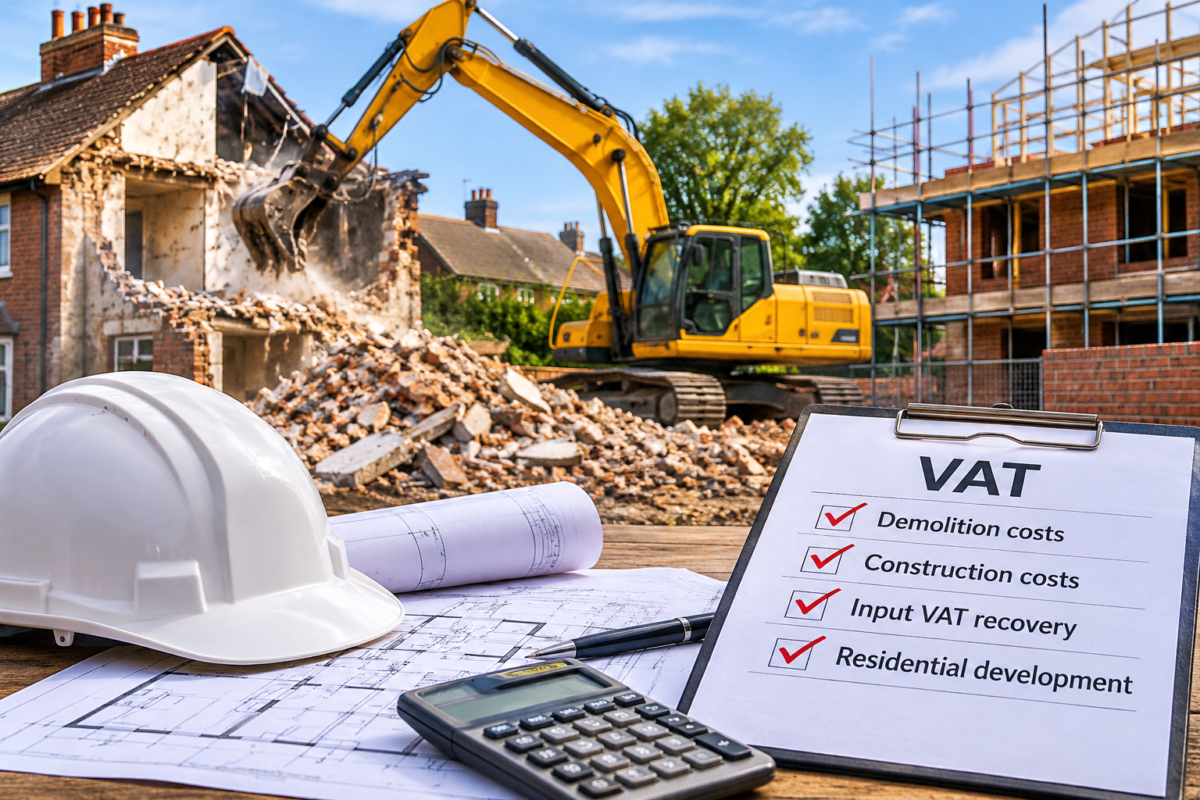
Value Added Tax (VAT) on demolition costs may be recoverable where correctly charged input tax relates to a developer’s taxable business supplies. Recovery is not automatic, including where the eventual development consists of new homes or another company in the group owns the land.
Two separate questions matter: whether VAT should have been charged on the demolition work in the first place, and whether the business receiving that supply can recover it. We help property developers consider these questions before committing to a claim.
Is demolition work subject to VAT?
HMRC’s Buildings and construction (VAT Notice 708), section 3.3.4, explains that demolition can be closely connected to construction where it is part of one project to replace existing structures with a new building. Qualifying construction services may be zero-rated. The conditions of the notice must be considered in full.
A demolition contract that is not part of qualifying construction cannot be assumed to qualify for zero-rating. The contract, planning arrangements and actual project are important. Where VAT was charged incorrectly, the supplier’s invoice treatment needs to be resolved rather than assuming that the amount is recoverable.
Can a residential developer recover demolition VAT?
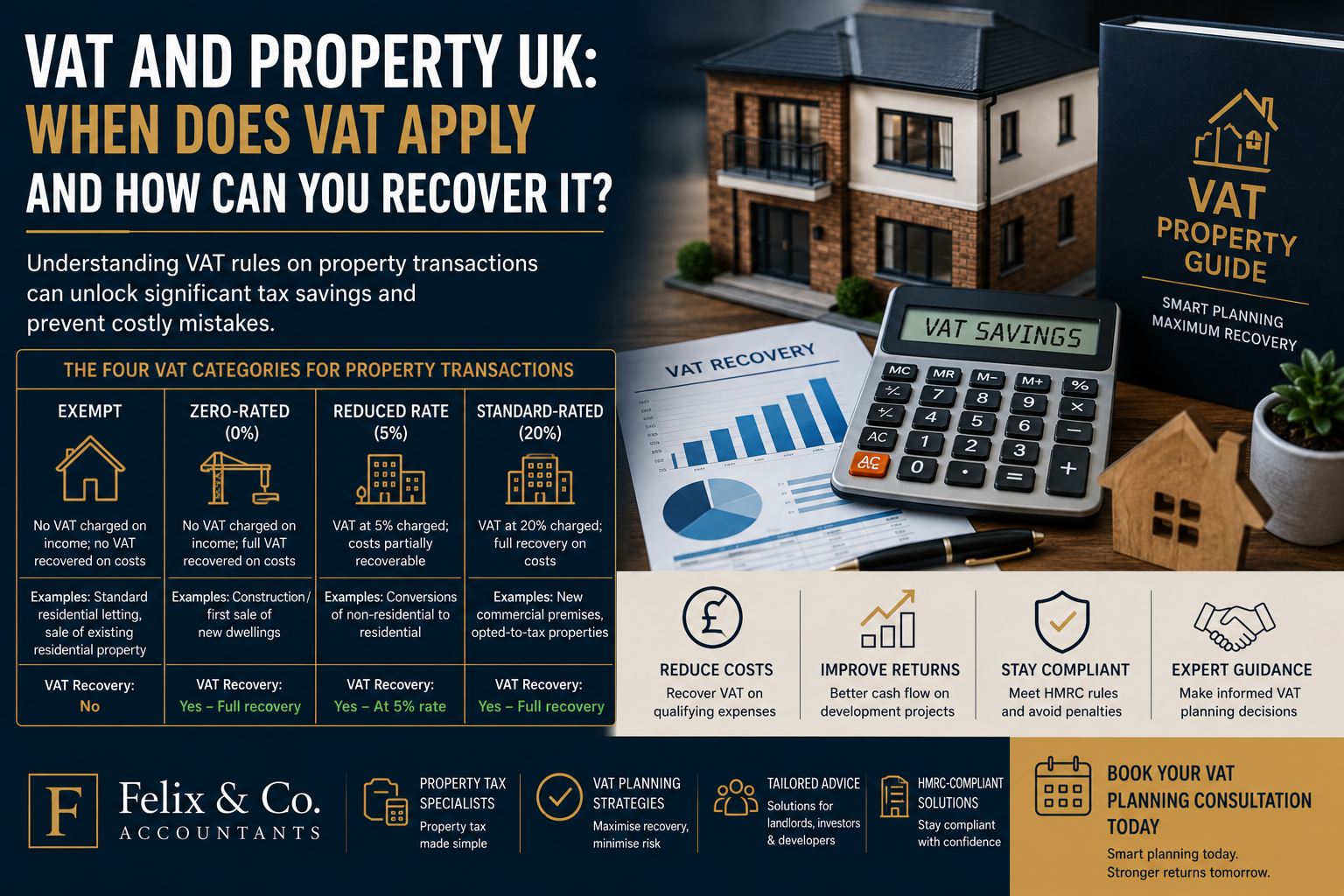
The intended onward supply is relevant. VAT Notice 708 explains the conditions for zero-rating certain first grants of major interests in newly constructed buildings. Where the development qualifies and costs relate to taxable activity, recovery is considered under the normal input tax rules. Exempt residential letting can restrict recovery.
Illustrative example: a development for sale
Suppose a developer receives a correctly issued invoice for demolition of £40,000 plus £8,000 VAT. If the entire cost is attributable to qualifying taxable supplies and all input tax conditions are met, the £8,000 may be recoverable. If demolition instead qualifies for zero-rating, there would be no supplier VAT to recover. The numbers are hypothetical, not a client result.
Illustrative example: a development retained for letting
If the same costs relate to exempt residential letting, input VAT recovery may be restricted. The fact that the building is newly constructed does not by itself make the subsequent rent taxable. Mixed-use developments require a separate analysis of the intended supplies.
What if a connected company owns the development land?
Connected companies must not be treated as interchangeable simply because they have common shareholders. A review should establish the contracting entity, recipient of the demolition services, invoiced entity and intended business activity. VAT group membership and intercompany transactions may alter the analysis. Whether input tax is deductible in a particular structure requires review of the relevant arrangements.
For example, Company A owns the land and Company B contracts for demolition. We would review contracts, invoices, payment flows and the commercial relationship before advising whether either company can deduct VAT. Merely paying an invoice is not enough to settle the question.
VAT grouping, partial exemption and changes in intention
A project may include taxable and exempt supplies, or the developer may change its plan from sale to letting. The treatment of expenditure needs to reflect actual and intended business use. A separate review of VAT grouping, allocation and possible adjustments is appropriate before making or revising a claim.
Documents we review when advising on development costs
- Purchase and ownership documents identifying the landowner.
- Demolition and construction contracts and their scope.
- Supplier invoices and VAT registration details.
- Planning permission and evidence of the development programme.
- Evidence supporting proposed sales, leases or retention of the development.
- Intercompany agreements and VAT group information where relevant.
These documents help distinguish commercial intention from the accounting entries used to record expenditure.
How we can help property developers
At Felix & Co. Chartered Certified Accountants, our accounting software, bookkeeping, tax advice and financial consultancy services can support a structured review of development expenditure. We can discuss the intended project, identify information needed for a VAT analysis and agree the scope of specialist advice required. For related issues, see our guide to residential property capital allowances. Capital allowances are a separate tax question from VAT recovery.
Frequently asked questions
Is all demolition work zero-rated?
No. The nature of the project and the conditions in VAT Notice 708 matter.
Can I recover VAT if I build homes to sell?
Potentially, if the supplies qualify and the input tax conditions are met.
Can I recover VAT if I retain homes to rent?
Exempt residential letting can restrict recovery; the project requires individual assessment.
Can a connected company reclaim the VAT?
Common ownership alone does not establish entitlement.
What if the supplier charges VAT incorrectly?
The invoice treatment should be reviewed with the supplier before a recovery claim is made.
What if my plans change after demolition?
Changes in intended use may require a fresh VAT review and possible adjustments.
This is general information, not personal advice.
Discuss your circumstances with us
Felix & Co. Chartered Certified Accountants can help you understand the next steps. Book a consultation.