
The April 2026 MTD deadline has arrived, marking the most significant shift in property taxation in a generation. For landlords in Reading and across the UK, the transition from annual Self Assessment to quarterly digital reporting is no longer a future concept—it is a mandatory legal requirement for those with qualifying income over £50,000.
As the Let Property Campaign, I am here to ensure you navigate this “Big Bang” moment without falling into the digital traps set by automated enforcement. If the sudden transparency of Making Tax Digital (MTD) has highlighted gaps in your previous filings, the Let Property Campaign remains your primary safety net for voluntary disclosure.
The 2026 Enforcement Trifecta
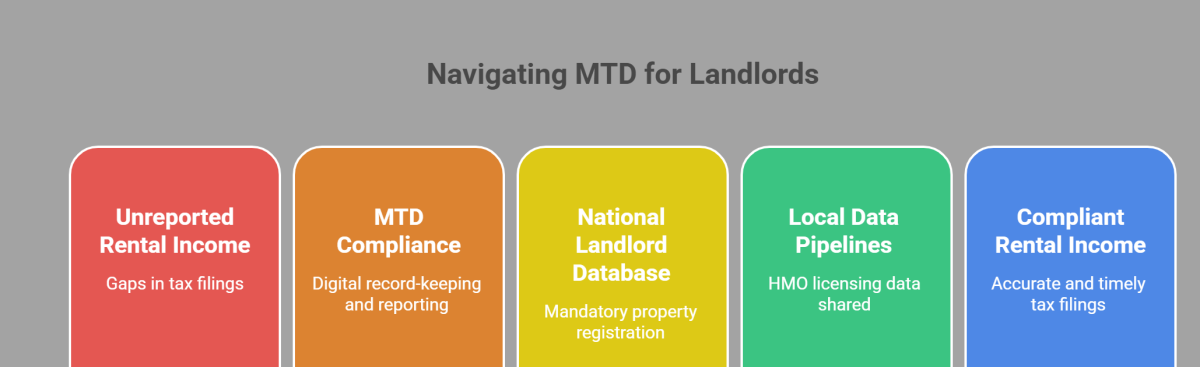
The April 2026 MTD rollout does not exist in a vacuum. It is part of a three-pronged enforcement strategy designed to eliminate “ghost landlording.”
- MTD for Income Tax (Active 6 April 2026): Mandatory digital record-keeping and quarterly updates for landlords earning over £50,000.
- National Landlord Database (Active 1 May 2026): Under the Renters’ Rights Act 2025, registration is mandatory to legally manage properties or serve possession notices.
- Local Data Pipelines (Reading): Since 1 March 2026, Reading Borough Council has extended licensing to small HMOs (3-4 occupants), sharing this data directly with HMRC’s “Connect” system.
Understanding Qualifying Income for the April 2026 MTD Deadline
A common misconception is that the £50,000 threshold applies to profit. It does not. The April 2026 MTD rules apply to your gross qualifying income—the total rent received before any expenses are deducted.
| Income Type | Included in Threshold? |
| Gross Rental Income (UK & Overseas) | Yes |
| Self-Employment Income | Yes |
| Furnished Holiday Lets | Yes |
| Jointly Owned Property Share | Individual Share Only |
The Reading “Trap”: Additional Licensing Meets HMRC Connect
Landlords in Reading face a unique challenge. On 1 March 2026, the council’s Additional HMO Licensing scheme became active for properties with 3 or 4 occupants.
This is more than a safety check. This licensing data serves as a direct feed to HMRC. If you apply for a license in Reading but have not declared that rental income for previous years, the April 2026 MTD digital trail will likely trigger an automated tax enquiry.
Voluntary Disclosure via the Let Property Campaign
If the new digital landscape has made you realize your past filings were “careless” or incomplete, the Let Property Campaign allows you to “come clean” under favorable terms.
- Reasonable Care: HMRC may only look back 4 years.
- Careless: HMRC can investigate the last 6 years.
- Deliberate: Up to 20 years of back-tax, interest, and penalties.
By notifying HMRC voluntarily, you avoid the maximum 100-200% penalties associated with prompted enquiries. Specialists like Marslands Accountants report saving landlords an average of £7,000 on their final bill by identifying valid allowable expenses that landlords often overlook.
Frequently Asked Questions
1. What is the impact of the Section 21 abolition on current landlords?
The Section 21 abolition, effective 1 May 2026, removes the ability to end tenancies without a specific reason. To regain possession, landlords must use new grounds and be registered on the National Landlord Database. This registration links directly to the April 2026 MTD framework, ensuring total tax transparency before any legal possession can be granted by the courts.
2. Can I still evict a tenant after the Section 21 abolition?
Yes, but you must use Section 8 grounds, such as the new Ground 1A for selling the property. However, your legal standing is now tied to compliance. If you are not registered on the National Landlord Database—which feeds into the April 2026 MTD data net—your eviction notices will likely be ruled invalid.
3. How does the National Landlord Database link to my taxes?
The database acts as a digital pipeline to HMRC’s “Connect” system. When you register to comply with the Renters’ Rights Act, HMRC cross-references your identity against your April 2026 MTD submissions. Any discrepancy between the properties you claim to manage and the income you report will trigger an immediate compliance check.
4. What should I do if I haven’t declared rental income before 2026?
You should immediately notify HMRC through the Let Property Campaign. With the April 2026 MTD deadline now active, “ghost landlording” is no longer viable. Making a voluntary disclosure before HMRC’s automated systems flag your Reading licensing data can significantly reduce your penalties and the risk of criminal prosecution.
5. How many years of back-tax will HMRC look at?
The look-back period depends on your behavior. If you were “careless,” HMRC typically reviews 6 years. If they deem the omission “deliberate”—a conclusion easier to reach given the April 2026 MTD digital requirements—they can go back 20 years. Voluntary disclosure is the best way to limit this window and secure lower penalty rates.
6. What expenses are allowable in a Let Property Campaign disclosure?
You can deduct “wholly and exclusively” incurred costs, such as property repairs, insurance, and management fees. In the context of the April 2026 MTD shift, keeping digital receipts for these expenses is vital. Specialists like Marslands often help landlords identify overlooked deductions, saving an average of £7,000 on their final settlement.
7. Is the Let Property Campaign available for limited companies?
No, the campaign is strictly for individual landlords. While companies are not eligible for these specific voluntary terms, they are still subject to the transparency brought by the April 2026 MTD era and the National Landlord Database. Companies with undisclosed income should seek professional advice to rectify their position outside of this specific campaign.
8. What happens if I ignore the new tax transparency rules?
Ignoring the April 2026 MTD and licensing rules is high-risk. HMRC’s “Connect” system now synthesizes data from MTD, the National Landlord Database, and Reading’s HMO licensing. Failure to comply can result in penalties up to 100% of the tax due, being named a “deliberate defaulter,” and losing the legal right to manage or evict tenants.
Note: For more information on making a disclosure, visit the official GOV.UK guide or contact felixaccountants for specialist support.