
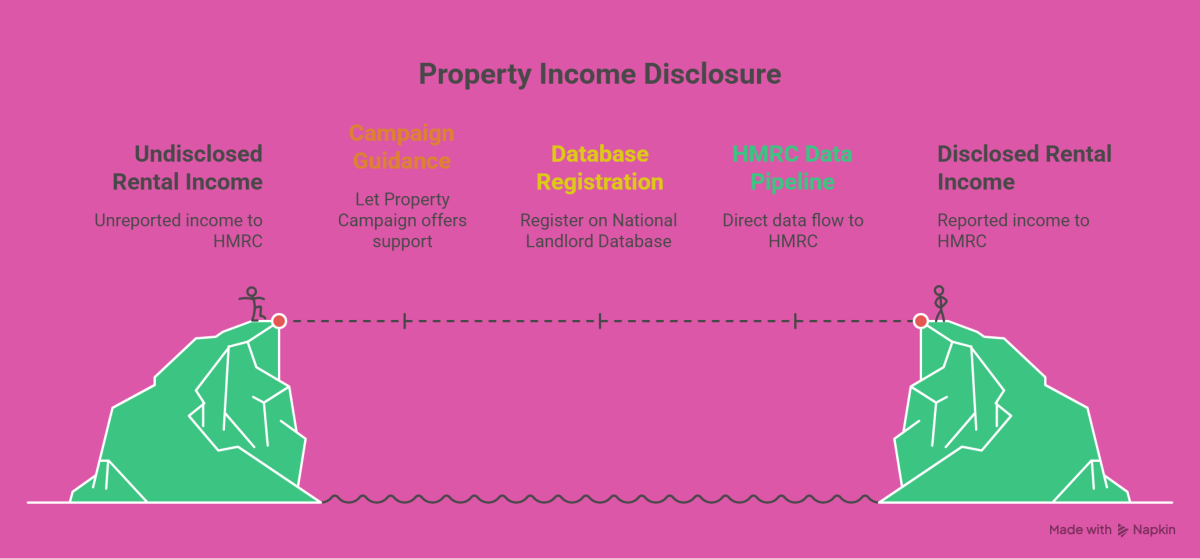
The landscape of UK buy-to-let has reached a “Big Bang” moment. With the Section 21 abolition officially taking effect as part of the Renters’ Rights Act 2025, the days of “no-fault” evictions are over. For landlords, this isn’t just a shift in tenancy management; it is a fundamental shift in tax compliance.
As the Let Property Campaign, I am here to guide you through this transition. The new legislation links your right to regain possession of your property directly to your status on the National Landlord Database, which functions as a direct data pipeline to HMRC. If you have undisclosed rental income, the window to “come clean” under favorable terms is closing fast.
The New Reality: How Tenancy Reform Feeds the Tax Man
The Death of Section 21 and the Rise of the Periodic Tenancy
On 1 May 2026, the Renters’ Rights Act 2025 fully takes effect, mandating the total abolition of Section 21 “no-fault” evictions. Furthermore, all tenancies are being converted into “periodic” or rolling agreements.
The National Landlord Database “Trap”
To serve a valid possession notice under these new rules—even for legitimate reasons like selling the property or moving back in—landlords must be registered on the new National Landlord Database.
- The Data Link: This database is not just an administrative list; it is a direct data feed to HMRC.
- The End of Ghost Landlording: It is now virtually impossible to legally manage a property or evict a tenant without your details being cross-referenced against HMRC’s “Connect” system.
Bridging the Gap: The Let Property Campaign
If the Section 21 abolition has made you realize that your tax affairs aren’t quite in order, the Let Property Campaign is your best route to compliance.
What is the Let Property Campaign?
It is a specific opportunity for individual landlords to disclose unpaid taxes on residential properties. By coming forward voluntarily, you secure more favorable terms—including lower penalties—than if HMRC finds you first through their new digital data pipelines.
Eligibility Criteria
You can use this campaign if you are an individual landlord (not a company or trust) renting out:
- Single or multiple residential properties.
- A room in your main home that exceeds the Rent a Room Scheme threshold.
- Holiday lets or inherited properties.
- UK property while living abroad.
The 3-Step Disclosure Roadmap
| Step | Action | Key Deadline |
| 1. Notify | Tell HMRC you intend to make a disclosure. | Immediately upon realizing the error. |
| 2. Calculate | Work out tax, interest, and penalties for the relevant years. | 90 days from notification. |
| 3. Pay | Make a formal offer and pay the full amount electronically. | 90 days from notification. |
How Far Back Do You Need to Go?
The number of years you must disclose depends on why the tax wasn’t paid:
- Reasonable Care: Maximum of 4 years.
- Careless (Not taking reasonable care): Maximum of 6 years.
- Deliberate: Up to 20 years.
2026: The Year of Digital Enforcement
The Section 21 abolition is just one piece of a larger enforcement puzzle.
Making Tax Digital (MTD)
Since 6 April 2026, MTD for Income Tax has been mandatory for landlords earning over £50,000. This requires quarterly digital reporting, meaning HMRC sees your financial data every three months rather than once a year.
Local Council Data Pipelines
Regional enforcement is also tightening. For example, Reading Borough Council now shares HMO licensing data directly with HMRC’s “Connect” system. Automated pipelines verify landlord identities and property details, leaving no room for “accidental” omissions.
Why Voluntary Disclosure is Non-Negotiable
If HMRC discovers your undisclosed income before you notify them, the consequences are severe:
- Higher Penalties: Up to 100% for UK income or 200% for offshore income.
- Criminal Risk: Potential for criminal prosecution and being named on the “deliberate defaulters” list.
By contrast, voluntary disclosure through specialists like Marslands Accountants can significantly reduce the burden. Marslands report helping landlords save an average of £7,000 on their final tax bill through the expert application of allowable expenses.
Frequently Asked Questions Section 21 abolition
1. What is the impact of the Section 21 abolition on current landlords?
The Section 21 abolition means you can no longer use “no-fault” notices to end tenancies. To gain possession, you must use specific grounds (like selling or moving in) and be registered on the National Landlord Database. This registration acts as a trigger for HMRC to verify your tax compliance and rental income history.
2. Can I still evict a tenant after the Section 21 abolition?
Yes, but the process is now more rigorous. You must provide a valid reason under the revised grounds for possession. Crucially, your legal standing to evict is tied to your transparency; if you aren’t registered on the National Landlord Database—which feeds into HMRC—your possession notices will likely be deemed invalid by the courts.
3. How does the National Landlord Database link to my taxes?
The database is a digital pipeline that shares your property and identity details directly with HMRC’s Connect system. Once you register to comply with the Section 21 abolition requirements, HMRC can automatically cross-reference your property holdings against your self-assessment filings to identify any gaps in reported rental income or capital gains.
4. What should I do if I haven’t declared rental income before 2026?
You should immediately notify HMRC via the Let Property Campaign. With the Section 21 abolition making “ghost landlording” impossible, a voluntary disclosure is the only way to avoid the maximum 100–200% penalties. Starting the process now allows you to settle unpaid taxes under the campaign’s more lenient voluntary terms.
5. How many years of back-tax will HMRC look at?
If you have been “careless,” HMRC typically goes back 6 years. However, if they deem the omission “deliberate”—which is easier to prove now with the Section 21 abolition and MTD providing digital trails—they can go back 20 years. Voluntary disclosure often helps limit the scope and penalty percentage compared to an HMRC-led inquiry.
6. What expenses are allowable in a Let Property Campaign disclosure?
You can deduct “wholly and exclusively” incurred costs such as repairs, insurance, and management fees. Expert accountants, like Marslands, often help landlords save an average of £7,000 by identifying overlooked allowable expenses. Ensuring these are calculated correctly is vital now that MTD requires quarterly digital transparency for many landlords.
7. Is the Let Property Campaign available for limited companies?
No, the campaign is strictly for individual landlords. If you operate your properties through a limited company and have undisclosed income, you cannot use these specific terms. However, with the Section 21 abolition affecting all residential tenancies, companies must also ensure their digital records match the National Landlord Database to remain compliant.
8. What happens if I ignore the new tax transparency rules?
Ignoring the rules while the Section 21 abolition is in effect is highly risky. HMRC’s “Connect” system now receives data from local councils, the National Landlord Database, and MTD. Failure to disclose can lead to penalties of up to 100%, public naming as a defaulter, and the loss of your legal right to manage or regain your property.