
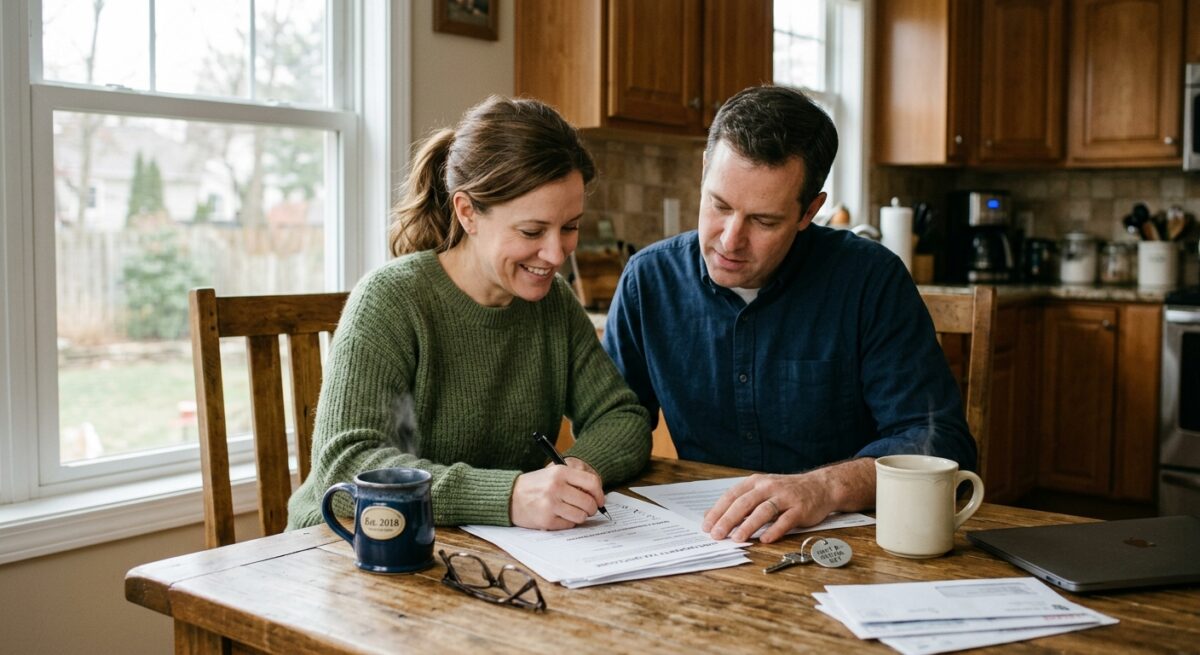
When a rental property is jointly owned by a married couple, civil partners, or unmarried co-owners, disclosing undeclared income through the Let Property Campaign raises a question that doesn’t come up for a sole landlord: how should the income actually be split between the owners for tax purposes? The answer depends heavily on your relationship status and how the property is legally owned, and getting it wrong can mean disclosing — and paying tax on — the wrong amounts for each person.
Jointly own a property with undeclared rental income? Book a free 15-minute consultation with Felix Accountants and we’ll help you both get this sorted. Book your free call here.
The Default Rule for Married Couples and Civil Partners
For married couples and civil partners who jointly own a property, HMRC’s default assumption is that rental income is split 50:50 between them for tax purposes, regardless of the actual ownership proportions or who does more of the practical management. This applies automatically unless the couple has taken specific steps to declare a different split.
Declaring an Unequal Split: Form 17
If a couple genuinely owns the property in unequal shares — for example, 70:30 — and wants their tax treatment to reflect that actual ownership split rather than the automatic 50:50 default, they need to make a formal declaration to HMRC using Form 17, along with evidence of the underlying unequal beneficial ownership, such as a declaration of trust. This election isn’t automatic or retrospective in the way some people assume — it only takes effect from the date HMRC receives a valid declaration, and can’t be backdated to earlier tax years where no such election was made.
This matters directly for a Let Property Campaign disclosure: if no Form 17 election was in place during the years being disclosed, HMRC will generally expect the 50:50 split to apply for those years, even if the couple’s actual ownership shares were different and even if they later put a valid election in place going forward.
Unmarried Couples and Other Joint Owners
The 50:50 default is specifically a rule for married couples and civil partners. For unmarried couples, siblings, friends, or other joint owners, rental income is generally taxed according to each person’s actual beneficial ownership share, which may or may not be an equal split, depending on how the property is legally and beneficially owned. This makes it particularly important for unmarried co-owners to establish the correct ownership percentages, ideally supported by a declaration of trust or similar documentation, before calculating each person’s disclosure.
What If Ownership Shares Have Changed Over Time?
It’s not unusual for ownership shares to change during the period covered by a disclosure — perhaps one partner bought out a larger share, or a property was transferred between spouses at some point. Where this has happened, the income split for each tax year needs to reflect the ownership position that actually applied during that specific year, rather than applying today’s ownership split retrospectively across the whole disclosure period.
Does Each Owner Need Their Own Disclosure?
Generally, yes. Each individual is separately responsible for reporting their own share of rental income to HMRC, which means each joint owner typically needs to make their own Let Property Campaign notification and disclosure, reflecting their own share of the income and their own personal tax position (including their own personal allowance, tax band, and other income). Our guide on joint tax disclosures covers the practical process of coordinating disclosures between joint owners.
Why the Split Matters for the Overall Tax Bill
Because Income Tax is charged on each individual separately, the way income is split between joint owners can genuinely affect the total tax bill for the household — particularly where one owner pays tax at a higher rate than the other, or where one owner has unused personal allowance. This is a legitimate area for forward-looking tax planning (via a genuine change in beneficial ownership and a Form 17 election), but for a historic disclosure, the split needs to reflect what actually applied during each year in question, not what would have been most tax-efficient with hindsight.
Married Couples Considering Tax-Efficient Ownership Going Forward
Once the historic disclosure is dealt with, some couples find it worth reviewing their ownership structure for future years, particularly where one spouse’s income sits in a lower tax band. Our guide on tax planning strategies for married couples and civil partners covers this in more detail, including how a Form 17 election and a change in beneficial ownership can work together going forward.
What Records You’ll Need
- Evidence of the legal and beneficial ownership structure — the title deeds, and any declaration of trust
- Any Form 17 elections made, and the effective date each one took effect
- Records of any change in ownership shares during the disclosure period
- Rental income and expense records, which can generally be shared between joint owners rather than duplicated
Our guide on property ownership structures in the UK is a useful companion resource for understanding how different ownership arrangements affect the tax position more broadly.
How Many Years Does Each Owner Need to Cover?
The look-back period is generally assessed per individual, based on their own circumstances and behaviour, rather than automatically applying the same number of years to both joint owners. In practice, since both owners are usually disclosing the same underlying property and income history, the years covered often end up aligned, but it’s worth confirming this rather than assuming. Our guide on how many years you need to declare sets out the general framework.
How Felix Accountants Can Help
We regularly help couples and joint owners work through exactly this kind of disclosure, correctly establishing the ownership split for each relevant year, preparing separate but coordinated disclosures for each individual, and making sure the numbers add up consistently across both. Get in touch to talk through your specific ownership situation.
Frequently Asked Questions
Is jointly owned rental income automatically split 50:50 between married couples?
Yes, by default, for married couples and civil partners, unless a valid Form 17 election has been made declaring a different split based on actual unequal ownership shares.
Can we backdate a Form 17 election to cover the years we’re disclosing?
No. A Form 17 election only takes effect from the date HMRC receives a valid declaration — it can’t be applied retrospectively to earlier tax years where no election was in place.
Does the 50:50 rule apply to unmarried couples too?
No. The 50:50 default is specific to married couples and civil partners. Unmarried co-owners are generally taxed according to their actual beneficial ownership shares.
Do both joint owners need to make separate Let Property Campaign disclosures?
Generally yes, since each individual is separately responsible for their own share of rental income and their own tax position, though the disclosures are usually coordinated to reflect the same underlying facts.
What if our ownership share changed partway through the years we’re disclosing?
The income split for each tax year should reflect the ownership arrangement that actually applied during that specific year, rather than applying the current ownership split retrospectively.
Let’s sort out your joint property disclosure together. Book your free 15-minute consultation with Felix Accountants.