
Categories
Articles Articles Blogs Let Property Campaign

VAT on Digital Services: What UK Small Businesses Selling Online Need to Know

Selling e-books, online courses, software subscriptions or other digital products feels straightforward, right up until you realise VAT doesn’t always work the way it does for physical goods or in-person services. Digital services follow their own “place of supply” rules, meaning the VAT that applies can depend on where your customer is, not where your business is based. Here’s what UK small businesses selling digital products and services online need to understand.

Not sure how VAT applies to your digital products? Book a free 15-minute consultation with Felix Accountants. Book your free call here.

What Counts as a “Digital Service” for VAT Purposes?

HMRC defines digital services (also called “electronically supplied services”) as services delivered over the internet or an electronic network with little or no human intervention, and largely automated. Common examples include e-books and downloadable content, streaming media, online courses and webinars delivered automatically, software as a service (SaaS), apps, software downloads and updates, and website templates or digital design assets. It’s worth noting this doesn’t cover everything sold online — a live, one-to-one consulting call booked through a website isn’t a digital service in this sense, since it involves genuine human interaction, even though it was arranged digitally.

Selling to UK Customers

If your customers are based in the UK, standard UK VAT rules apply in the normal way. Once your VAT-taxable turnover exceeds the registration threshold of £90,000 in any rolling 12-month period, you must register for VAT and charge the standard rate — currently 20% — on most digital sales to UK customers, with a small number of exceptions such as certain electronically supplied publications, which can qualify for a zero rate.

Selling to Business Customers Abroad (B2B)

For sales to VAT-registered businesses outside the UK, the general rule is that the place of supply is where the customer is established, not where you are. In practice, this usually means no UK VAT is charged on the sale, and the overseas business customer accounts for VAT themselves in their own country under the “reverse charge” mechanism. This applies to most genuine B2B digital service sales, such as a UK SaaS provider invoicing a VAT-registered company in another country.

Selling to Individual Consumers Abroad (B2C)

This is where digital services diverge most from standard VAT treatment. For sales of digital services to private consumers (not VAT-registered businesses), the place of supply is generally where the consumer is located, not where your business is based. This means, in principle, you may need to charge VAT at the consumer’s local rate and account for it in their country, rather than applying UK VAT.

For consumers in the EU specifically, most UK businesses use the Non-Union One Stop Shop (OSS) scheme to manage this, rather than registering for VAT separately in every EU country where they have customers. Registering once through OSS allows a single quarterly return covering all EU consumer digital sales, with the relevant tax authority distributing the VAT to the correct countries.

Determining Where Your Customer Actually Is

Because the applicable VAT depends on the customer’s location, you need reliable evidence of where each customer belongs. HMRC and equivalent EU guidance generally expect at least two pieces of non-conflicting evidence, which might include the customer’s billing address, the IP address used to access the service, the country code of their payment card or bank details, or their SIM card country code for mobile purchases. This evidence should be retained as part of your VAT records, since HMRC and other tax authorities expect it to support the VAT treatment applied to each sale.

What About Digital Platforms and Marketplaces?

If you sell digital products through a third-party platform or marketplace, the VAT obligation can sometimes shift to the platform operator rather than sitting with you directly, depending on the specific arrangement and who is legally identified as the supplier in the contractual terms, invoices and receipts. This is worth clarifying with any platform you sell through, since it directly affects who’s responsible for charging and accounting for VAT on each sale.

Common Mistakes UK Digital Sellers Make

  • Charging UK VAT on B2C sales to EU or international consumers, rather than the correct local rate
  • Not registering for the appropriate scheme (such as OSS) once selling meaningfully to EU consumers
  • Treating a service with genuine human interaction as automatically exempt from digital service rules, when the level of automation actually matters
  • Failing to retain the customer-location evidence needed to support the VAT treatment applied
  • Assuming VAT MOSS still applies post-Brexit — it doesn’t for UK businesses, which now generally use the non-Union OSS scheme instead

Digital Services and Making Tax Digital

Separately from the place-of-supply rules, VAT-registered digital businesses are required to keep digital records and file VAT returns through Making Tax Digital-compatible software, the same as any other VAT-registered business. Given that digital sellers are often already using cloud-based tools for their business, this tends to be a relatively straightforward requirement to meet compared to some other sectors.

How This Differs From Selling Physical Goods Online

If your online business sells physical goods rather than (or alongside) digital services, different VAT rules apply, generally based on where the goods are shipped from and to, rather than the digital place-of-supply rules described here. Our guide on the latest tax rules for online sellers covers the broader landscape for e-commerce businesses selling both physical and digital products.

How Felix Accountants Can Help

We help small businesses selling digital products and services work out exactly where VAT applies, get registered for the right schemes (whether that’s standard UK VAT, OSS for EU consumers, or both), and keep the evidence trail HMRC expects. See our small business tax services for how we support online sellers more broadly.

Frequently Asked Questions

Do I need to charge VAT on digital products sold to consumers in the EU?

Generally yes, at the consumer’s local VAT rate rather than the UK rate, since the place of supply for B2C digital services is where the consumer is located. Most UK businesses manage this through the Non-Union OSS scheme.

Do I charge VAT on B2B digital service sales to overseas businesses?

Usually not UK VAT. For B2B sales, the place of supply is generally where the business customer is established, and the reverse charge mechanism typically applies, meaning the customer accounts for VAT in their own country.

What’s the VAT registration threshold for a UK digital business?

The standard UK VAT registration threshold applies — currently £90,000 of VAT-taxable turnover in any rolling 12-month period — the same threshold that applies to any other type of UK business.

Is an online course automatically treated as a digital service for VAT?

Only if it’s largely automated with little or no human intervention. A live, interactive course delivered by an instructor in real time is generally treated differently from a fully automated, pre-recorded course.

Can I still use VAT MOSS as a UK business?

No. VAT MOSS ended for UK businesses after Brexit. UK sellers generally use the Non-Union One Stop Shop (OSS) scheme instead for EU consumer digital sales.

Let’s make sure your digital sales are VAT-compliant. Book your free 15-minute consultation with Felix Accountants.


Categories
Articles Articles Blogs Let Property Campaign

Corporation Tax Losses: Can a UK Company Carry Forward or Use Them Against Profits?

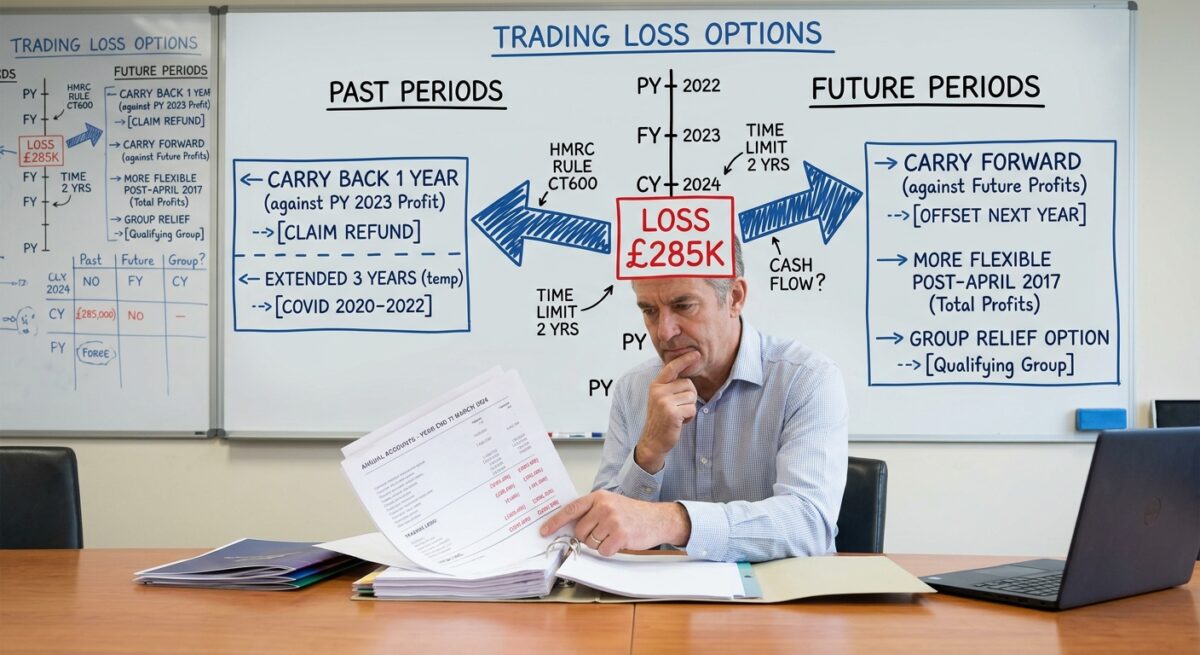
A trading loss is never welcome news, but it isn’t purely bad news for your Corporation Tax position either. UK companies have several options for using a trading loss to reduce tax, whether that’s offsetting it against profits from the same period, carrying it back to a profitable prior year for a refund, or carrying it forward to reduce tax in future years. Understanding which options apply — and which is most valuable for your specific situation — can make a real difference to your company’s cash position.

Made a loss and not sure how to use it? Book a free 15-minute consultation with Felix Accountants and we’ll work through your options. Book your free call here.

What Counts as a Trading Loss?

A trading loss arises when your company’s allowable expenses exceed its taxable income from its main trading activity within an accounting period. It’s calculated in broadly the same way as profit, just with the result coming out negative. It’s worth noting that different types of loss — trading losses, capital losses, and non-trade loan relationship losses — are treated differently, so the options below relate specifically to trading losses from your company’s core business activity.

Option 1: Offset Against Profits in the Same Accounting Period

If your company has other income in the same accounting period — for example, rental income, investment income, or a capital gain — a trading loss can generally be set against that other income first, reducing your overall Corporation Tax bill for the period in which the loss arose.

Option 2: Carry the Loss Back

Under general rules, a trading loss can be carried back and set against profits from the previous accounting period. If your company made a substantial profit last year and a loss this year, carrying the loss back can generate a genuine cash refund of tax already paid — this is often the most immediately valuable option where cash flow is a priority, since it converts the loss into money back in the business relatively quickly, rather than a benefit that only helps once future profits materialise.

Option 3: Carry the Loss Forward

Where a loss can’t be fully used against current or prior-year profits, the remainder can be carried forward indefinitely and set against future profits, as long as the company continues to trade. This is the most commonly used relief for ongoing businesses that expect to return to profitability, and it doesn’t have an expiry date — a carried-forward loss remains available to use against future profits for as long as the company continues trading.

For accounting periods starting on or after 1 April 2017, losses carried forward can generally be set against total profits of the company (not just profits from the same trade), giving more flexibility than losses carried forward from earlier periods, which were typically restricted to profits from the same trade only.

Option 4: Terminal Loss Relief for Companies That Have Stopped Trading

If a company permanently ceases trading and makes a loss in its final 12 months, special “terminal loss” rules allow that loss to be carried back up to three years, rather than the standard one year, against profits from the same trade, applied against the most recent year first and working backwards. This can be particularly valuable for directors winding up a business, since it may unlock refunds from several years of prior Corporation Tax payments.

A Restriction Worth Knowing About: The £5 Million Threshold

For most small and medium-sized companies, this won’t apply, but it’s worth being aware of: where a company or group’s profits exceed £5 million in an accounting period, only 50% of profits above that threshold can be sheltered by carried-forward losses in that period. Below the £5 million threshold, companies can generally use all their available carried-forward losses without this restriction.

Group Relief: Losses Across Related Companies

Where a company is part of a group structure with at least 75% common ownership, trading losses can potentially be surrendered between group companies within the same accounting period, allowing a loss in one company to reduce the tax bill of a profitable related company. This is a more complex area, particularly for property investors using multiple special purpose vehicles, and it’s worth reviewing alongside your wider SPV structure if your group includes several companies.

How to Make a Claim

Loss relief claims are generally made as part of your Company Tax Return (CT600), using the specific loss-relief boxes for the accounting period in question. Where a loss is being carried back to an earlier period, you may need to amend that earlier return or write to HMRC separately, depending on how the return was originally filed and whether it’s still within the amendment window.

Choosing Between Carrying Back and Carrying Forward

Where both options are genuinely available, the right choice depends on your priorities:

  • Carry back if immediate cash flow matters more than long-term tax planning, since it generates a relatively quick refund
  • Carry forward if you expect meaningfully higher profits in future years and would rather shelter tax at a point when the company can more easily absorb the cash flow impact of paying tax now

These aren’t mutually exclusive across different loss amounts — some companies use a combination, carrying back what they can and carrying forward the remainder.

How Felix Accountants Can Help

We help company directors model out the different loss relief options, calculate the actual cash benefit of each, and prepare the correct claims on the CT600 or via a formal letter to HMRC where needed. See our wider business tax services for how loss relief fits into broader Corporation Tax planning, and our guide on tax-efficient business sale exit planning if losses are part of a wider decision about the company’s future.

Frequently Asked Questions

How long can a company carry forward a trading loss?

Indefinitely, as long as the company continues to trade. There’s no expiry date on carried-forward trading losses.

Can I choose whether to carry a loss back or forward?

Generally yes, where both options are genuinely available, though the specific claim process and time limits differ, so it’s worth deciding based on which gives the better financial outcome for your company.

Do carried-forward losses restrict which profits they can be used against?

For losses arising in accounting periods starting on or after 1 April 2017, carried-forward losses can generally be set against the company’s total profits, not just profits from the same trade.

What happens to trading losses if my company stops trading?

If the company permanently ceases trading, a loss made in its final 12 months can be carried back up to three years under special terminal loss relief rules, rather than the standard one-year carry-back.

Is there a limit on how much loss a large company can use?

For companies or groups with profits exceeding £5 million in an accounting period, only 50% of profits above that threshold can be sheltered by carried-forward losses. Most small and medium-sized companies aren’t affected by this restriction.

Let’s work out the best way to use your company’s loss. Book your free 15-minute consultation with Felix Accountants.

Categories
Articles Articles Blogs Let Property Campaign

How to Correct Underreported Income on a UK Self Assessment Tax Return

Realising you’ve under reported income on a Self Assessment return you’ve already filed is unsettling, but it’s also a genuinely common and fixable situation. Whether it’s a missed freelance payment, undeclared rental income, or a figure that was simply entered incorrectly, HMRC has clear, well-established routes for correcting the position — and the process differs depending on how long ago the return was filed.

Realised you’ve under reported income on a past return? Book a free 15-minute consultation with Felix Accountants and we’ll help you correct it properly. Book your free call here.

Why Correcting It Promptly Matters

HMRC generally expects taxpayers to correct errors as soon as they become aware of them, and doing so promptly and voluntarily is treated far more favourably than waiting for HMRC to identify the discrepancy independently. Penalties for inaccuracies in tax returns are based on the behaviour behind the error — genuine mistakes made with reasonable care are treated far more leniently than careless errors, which in turn are treated more leniently than deliberate under-reporting. Acting quickly, before HMRC opens an enquiry, keeps your correction in the more favourable category.

Step 1: Confirm Which Route Applies to You

The correction process depends on how long ago the affected return was filed:

  • Within 12 months of the filing deadline: you can amend the return directly, either online or on paper
  • More than 12 months after the filing deadline: you’ll generally need to write to HMRC to request the correction, and may need to claim “over payment relief” if the correction would reduce your tax bill, or simply notify HMRC of additional tax owed if it increases it

Correcting a Return Within the 12-Month Window

If you filed online, you can amend your return directly through your HMRC online account, once 72 hours have passed since the original submission. Sign in, navigate to your Self Assessment details, select the relevant tax year, and update the figures before resubmitting. HMRC will recalculate your bill and reflect any additional tax owed, or process a refund if the correction reduces your liability.

If you filed a paper return, you’ll need to download a new return form for the relevant year, clearly mark it as an amendment, and post it to HMRC’s Self Assessment address, along with your Unique Taxpayer Reference and a clear explanation of what’s being corrected.

Correcting a Return Outside the 12-Month Window

If more than 12 months have passed since the original filing deadline, you can’t amend the return through the normal online process. Instead, you’ll need to write to HMRC directly, setting out:

  • The tax year the correction relates to
  • Details of the error and the correct figures
  • The reason for the correction
  • A signed declaration confirming the information provided is correct and complete to the best of your knowledge

Where the correction would mean you’d overpaid tax, this is generally handled as a formal claim for “over payment relief,” which can be made up to four years from the end of the relevant tax year. Where the correction increases what you owe, HMRC will issue a revised calculation and expect payment, generally with interest accruing from the original due date.

What If Multiple Years Are Affected?

If the under reported income spans several tax years — for example, a source of income that was missed consistently, such as rental income or a side business — each year technically needs its own correction, following whichever route applies to that specific year. Where the under-reporting relates to rental income specifically, this is exactly the situation HMRC’s Let Property Campaign is designed for, offering a more structured, single process for correcting several years of rental income at once, generally with more favourable penalty treatment than a series of standalone corrections.

Will You Face a Penalty?

Not necessarily. If the correction is voluntary — made before HMRC has contacted you about the discrepancy — and the underlying error was a genuine mistake made with reasonable care, penalties may be reduced significantly or not applied at all. Our guide to HMRC compliance covers how penalty behaviour categories work in more detail, and our penalty calculator can give you a sense of the range involved based on your specific circumstances. The comparison between prompted and unprompted disclosures is also directly relevant here — correcting the error yourself, before any HMRC contact, keeps the disclosure classed as unprompted.

What If HMRC Has Already Contacted You?

If you’ve received a letter or nudge letter from HMRC before you’ve made the correction yourself, the disclosure becomes “prompted” rather than “unprompted,” which generally results in a higher penalty percentage. It’s still almost always better to respond constructively and correct the position than to ignore the letter, delay, or hope the issue resolves itself.

Interest on Underpaid Tax

Regardless of which route applies, interest accrues on any underpaid tax from the original due date until it’s paid, calculated at HMRC’s standard late payment interest rate. This is separate from any penalty and applies even where the under-reporting was a genuine, non-deliberate mistake, so it’s worth correcting and paying as soon as possible to minimise the interest charge.

How Felix Accountants Can Help

We help clients correct under reported income across single years or multiple tax years, whether that’s a straightforward in-year amendment or a more involved correction spanning several years and requiring a formal letter to HMRC. Where the under-reporting relates specifically to rental income, we’ll advise on whether the Let Property Campaign or a standard correction is the more appropriate route for your situation.

Frequently Asked Questions

How far back can I amend a Self Assessment tax return?

You can amend a return directly within 12 months of the original filing deadline. Beyond that, you can still request a correction by writing to HMRC, and claim over payment relief for up to four years from the end of the relevant tax year if the correction reduces your bill.

Will I be fined for correcting an honest mistake?

Not necessarily. Voluntary corrections made with reasonable care, before HMRC contacts you, are generally treated more leniently, and penalties may be reduced significantly or not applied at all.

Do I need to wait before amending an online return?

Yes. HMRC requires a 72-hour wait after the original submission before you can make changes through your online account.

What happens if the correction means I’m owed a refund?

If the correction is made within 12 months of the filing deadline, HMRC processes the refund as part of the standard amendment. Outside that window, you’ll need to make a formal over payment relief claim.

Is there a specific process for correcting undeclared rental income specifically?

Yes. Rental income spanning multiple years is often better handled through the Let Property Campaign, HMRC’s structured voluntary disclosure route for landlords, rather than a series of standalone return corrections.

Let’s get your Self Assessment record corrected properly. Book your free 15-minute consultation with Felix Accountants.


Categories
Articles Articles Blogs Let Property Campaign

Let Property Campaign: What If Your Rental Property Made a Loss?

If your rental property has never turned a profit — or even lost money most years — it’s tempting to assume there’s nothing to declare and nothing to worry about. Unfortunately, that assumption is one of the most common (and costly) misunderstandings we see among landlords considering the Let Property Campaign. A loss-making property doesn’t remove your obligation to report the income; it simply changes what you’ll owe once everything is properly calculated, which in many cases is nothing at all — but you still need to show your working.

Not sure whether a loss-making rental still needs disclosing? Book a free 15-minute consultation with Felix Accountants and we’ll talk it through. Book your free call here.

Why “No Profit” Doesn’t Mean “No Obligation”

HMRC’s requirement to report rental income applies to the income itself, not just the resulting profit. Even where a property genuinely made a loss once all allowable expenses are deducted, landlords are still expected to have filed a Self Assessment return reporting that income and those expenses, allowing HMRC (and you) to confirm the loss position formally. Simply not filing because “there was no profit anyway” leaves an undeclared income stream on record with nothing to show it was correctly assessed.

The Rent-Only-Covers-the-Mortgage Trap

Many landlords genuinely believe their property is loss-making because the rent received roughly matches the mortgage payment. This is one of the most common reasons a property that feels loss-making is, in fact, taxable. Only the interest element of a mortgage payment is an allowable deduction — the capital repayment portion isn’t deductible at all — and since 2020, mortgage interest relief for individually-owned residential lettings has been restricted to a basic-rate tax credit rather than a full deduction against rental income. This means a property that feels like it’s breaking even can still generate a taxable profit once the calculation is done correctly. Our guide to landlord tax deductions explains exactly what can and can’t be claimed.

What Genuine Losses Mean for Your Disclosure

Where a property genuinely has made a loss — after correctly restricting mortgage interest relief and applying only allowable expenses — that loss isn’t wasted. Rental losses can generally be carried forward and set against future rental profits from your UK property business, potentially reducing tax in years where the property does turn a profit. This makes it worth establishing an accurate loss position even where no tax is currently due, since it can genuinely reduce future tax bills once the picture changes — for example, after a mortgage is repaid or rents increase.

What Counts as an Allowable Expense?

Getting the loss calculation right depends on correctly identifying allowable expenses. These generally include:

  • Letting agent fees and management costs
  • Landlord insurance
  • Repairs and maintenance (as distinct from capital improvements)
  • Ground rent and service charges for leasehold properties
  • Utility bills and council tax, where paid by the landlord
  • The interest element of mortgage or loan payments (via the basic-rate tax credit)

Our detailed guide on allowable expenses for property investors and our resource on property expenses cover this in more depth, and getting the categorisation right is often the difference between a genuine loss and a modest, previously unrecognised profit.

Do You Still Need to Notify HMRC if the Result Is a Loss?

Generally, yes. The Let Property Campaign process still involves notifying HMRC of your intention to disclose, calculating the position for each relevant year, and submitting a formal disclosure — even where the final calculation shows no tax is due. This might feel like unnecessary admin for a genuinely loss-making property, but it formally closes off the historic non-disclosure, establishes an accurate loss figure to carry forward, and protects you from HMRC later challenging the position independently, potentially without the benefit of any losses being properly recognised.

How Many Years Should You Cover?

The look-back period for a loss-making property follows the same rules as any other Let Property Campaign disclosure — generally driven by whether the non-disclosure was a genuine, careless oversight or something more deliberate, rather than by whether tax was ultimately due. Our guide on how many years you need to declare sets out the framework for working this out, which applies equally whether the eventual answer is “nothing owed” or a genuine liability.

What If You’re Not Sure Whether It’s a Genuine Loss?

This is exactly where many landlords go wrong — assuming a loss based on a rough mental calculation, rather than a proper year-by-year breakdown using the correct rules. Before assuming there’s nothing to disclose, it’s worth running the actual numbers, including the restricted mortgage interest treatment, correctly categorised expenses, and the specific years involved. Our guide to landlord accounting walks through how these figures are properly assembled.

Keeping Records Even When There’s Nothing (Currently) Owed

Whether the outcome is a small profit or a genuine loss, good record keeping supports the disclosure and any future loss carry-forward claims. Our record keeping guide covers what to retain and for how long, which matters just as much for a loss-making property as a profitable one, since HMRC can still ask questions about how a loss figure was calculated.

How Felix Accountants Can Help

We regularly help landlords work through exactly this situation — properties that feel loss-making but have never been formally assessed. We’ll calculate the correct position year by year, confirm whether tax is genuinely due, and, where it is, guide you through a proper Let Property Campaign disclosure. Where it isn’t, we’ll help you establish an accurate carried-forward loss position for future years, through our wider Let Property Campaign guidance.

Frequently Asked Questions

Do I need to disclose rental income if my property made a loss?

Generally yes. HMRC’s disclosure requirement relates to reporting the income and calculating the correct position, even where the outcome shows no tax due. Simply assuming a loss without a formal calculation leaves the position unresolved.

Can I carry forward a rental loss to future years?

Yes, in most cases. Rental losses can generally be carried forward and set against future rental profits from your UK property business, which is a good reason to establish an accurate loss figure now even if no tax is currently due.

Why might a property I thought was loss-making actually be profitable?

This most commonly happens because mortgage capital repayments were mistakenly treated as an allowable expense, or because mortgage interest relief restrictions weren’t applied correctly, both of which can turn an apparent loss into a genuine taxable profit.

Is there any penalty for a loss-making property that was never declared?

Penalties are generally calculated as a percentage of unpaid tax, so if the correct calculation genuinely shows no tax due, penalties would typically be minimal or nil. However, the disclosure process itself is still worth completing to formally establish this.

Should I get an accountant to check whether my rental property really made a loss?

It’s strongly advisable, given how commonly landlords miscalculate mortgage interest relief and allowable expenses. An accurate calculation protects both your current position and any future loss relief you might be entitled to claim.

Let’s confirm your rental property’s real tax position. Book your free 15-minute consultation with Felix Accountants.


Categories
Articles Articles Blogs Let Property Campaign

How to Reconcile Business Bank Accounts Correctly: A Small Business Guide

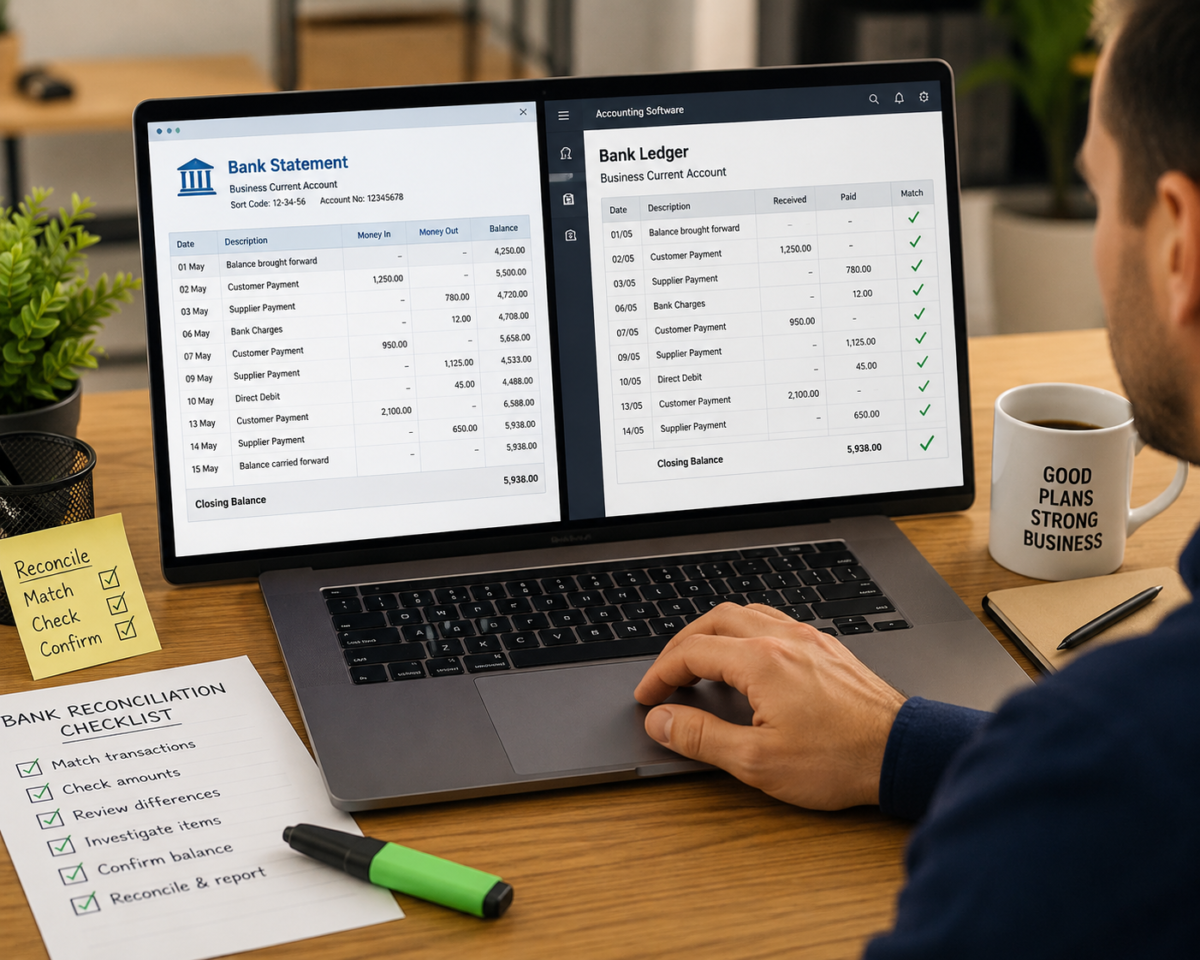
Bank reconciliation is one of those bookkeeping tasks that’s easy to postpone, right up until your bank balance and your accounting records tell two completely different stories. Reconciling your business bank account simply means checking that every transaction in your accounting records matches what’s actually happened in your bank account, and vice versa. Done regularly, it takes minutes. Left for months, it can take hours to unpick — and by then, errors may already have fed into a VAT return or set of accounts.

Want help setting up a reconciliation routine that actually sticks? Book a free 15-minute consultation with Felix Accountants. Book your free call here.
What Is Bank Reconciliation, Exactly?

Bank reconciliation is the process of comparing your business bank statement against your accounting records — whether that’s bookkeeping software, a spreadsheet, or an accountant’s ledger — to confirm that every transaction has been recorded correctly, once, and in the right place. The end goal is simple: your accounting records’ cash balance should match your actual bank balance at any given date, after accounting for any genuinely outstanding items like uncased cheques or payments still in transit.

Why It Matters More Than It Might Seem

Skipping regular reconciliation doesn’t just risk a messy spreadsheet — it can lead to real financial consequences:

  • Duplicate or missing transactions that distort your reported profit
  • VAT returns based on incorrect income or expense figures
  • Missed fraudulent transactions or bank errors that go unnoticed for months
  • An inaccurate picture of your actual cash position, which can lead to poor decisions about spending or hiring
  • A stressful, time-consuming reconstruction job at year end when your accountant needs clean figures

Our guide on the seven numbers vital to your business touches on why an accurate, up-to-date cash position underpins almost every other financial decision you’ll make.

Step-by-Step: How to Reconcile Your Business Bank Account

1. Gather Your Bank Statement and Accounting Records

Pull the bank statement covering the period you’re reconciling — most businesses reconcile monthly — alongside your accounting records for the same period, whether that’s cloud accounting software, a spreadsheet, or an export from your bookkeeping system.

2. Match Transactions One by One

Go through each transaction on the bank statement and confirm it appears, correctly categorised, in your accounting records. Most cloud accounting software can automatically suggest matches based on amount, date and description, but these suggestions still need a human check rather than blanket approval.

3. Investigate Anything That Doesn’t Match

Differences generally fall into a few categories:

  • Timing differences: a transaction recorded in your books but not yet cleared the bank (or vice versa) — for example, a cheque written but not yet cashed
  • Missing transactions: something on the bank statement that was never recorded in your books at all
  • Duplicate entries: the same transaction recorded twice, often after a manual entry and an automatic bank feed import both capture it
  • Bank charges or interest: fees or interest applied directly by the bank that haven’t yet been entered into your accounting records
  • Genuine errors: an incorrect amount entered, or a transaction posted to the wrong account entirely

4. Correct the Records, Not the Bank Statement

The bank statement is the objective record of what actually happened; your accounting records need to be adjusted to match it, not the other way around. Add any missing transactions, remove duplicates, and correct any categorised entries.

5. Confirm the Closing Balances Match

Once every transaction is accounted for, your accounting software’s cash balance for that account should match your bank statement’s closing balance, adjusted for any genuinely outstanding items still in transit. If they don’t match, there’s still a discrepancy to track down before moving on.

6. Record the Reconciliation

Keep a simple record — a date stamp, a note, or a reconciliation report from your software — confirming the account was reconciled and by whom. This becomes useful evidence of good financial control, particularly if HMRC ever asks questions about your records.

How Often Should You Reconcile?

Monthly reconciliation is the practical minimum for most small businesses, and it’s genuinely far easier than it sounds once it becomes a routine rather than a rare event. Businesses with higher transaction volumes, multiple bank accounts, or those using cloud accounting software with live bank feeds often find weekly reconciliation barely takes any extra time, since discrepancies are caught and resolved while they’re still fresh and easy to trace.

Common Bank Reconciliation Mistakes

  • Only reconciling once a year, just before accounts or a tax return are due
  • Accepting automatic bank-feed matches without actually checking them
  • Mixing personal and business transactions through the same account, making reconciliation far more time-consuming
  • Not investigating small discrepancies, assuming they’re too minor to matter — small errors often point to a bigger underlying issue
  • Forgetting to reconcile every business bank account, not just the main current account, including savings or deposit accounts linked to the business

Our wider guide on the top bookkeeping mistakes to avoid covers several related issues that often surface during reconciliation.

Reconciliation and Making Tax Digital

As Making Tax Digital continues to expand, the underlying principle behind it — accurate, up-to-date digital records rather than a single annual reconstruction — makes regular bank reconciliation more important than ever. Businesses already reconciling monthly tend to find the transition to quarterly digital reporting far smoother than those trying to build accurate records retroactively.

How Felix Accountants Can Help

We help small business owners set up reconciliation routines that fit how they actually work, whether that’s a simple monthly process using cloud accounting software or a fully managed bookkeeping service where we handle reconciliation on your behalf. See our small business tax services for how accurate, well-reconciled records feed into stronger tax planning throughout the year.

Frequently Asked Questions

How often should a small business reconcile its bank account?

Monthly is the practical minimum for most small businesses, though weekly reconciliation is increasingly common for businesses with higher transaction volumes or live bank feeds in their accounting software.

What’s the difference between bank reconciliation and bookkeeping?

Bookkeeping is the ongoing process of recording transactions; bank reconciliation is the specific check that confirms those recorded transactions match what actually happened in the bank account.

Why doesn’t my bank balance match my accounting software?

This is usually caused by timing differences (transactions not yet cleared), missing entries, duplicate entries, or bank charges that haven’t been recorded yet — a full reconciliation will identify which applies.

Can accounting software reconcile my bank account automatically?

Most cloud accounting software can suggest matches automatically via a live bank feed, which speeds up the process considerably, but the suggested matches still need to be reviewed rather than approved blindly.

Does bank reconciliation matter if I’m not VAT registered?

Yes. Accurate reconciliation matters for correct profit reporting, cash flow visibility, and Self Assessment or Corporation Tax accuracy, regardless of VAT registration status.

Let’s get your bookkeeping properly reconciled, every month. Book your free 15-minute consultation with Felix Accountants.


Categories
Articles Articles Blogs Let Property Campaign

Payroll vs Dividends: How Should a Limited Company Director Take Income?

If you run your business through a limited company, deciding how to pay yourself isn’t just an administrative detail — it’s one of the more genuinely valuable tax planning decisions you’ll make each year. Most directors end up using a mix of a modest salary and dividends, rather than one or the other exclusively, because the two are taxed very differently. Here’s how each works, and how they typically combine for a tax-efficient structure.

Want to know the most tax-efficient way to pay yourself this year? Book a free 15-minute consultation with Felix Accountants. Book your free call here.

How Salary Works for a Director

Paying yourself a salary through PAYE means the company deducts Income Tax and employee National Insurance before you receive it, and the company itself may owe employer’s National Insurance on top. The salary is a deductible expense for Corporation Tax purposes, which reduces the company’s taxable profit. A salary also counts toward your National Insurance record, which matters for building up entitlement to the State Pension.

How Dividends Work for a Director

Dividends are payments made from a company’s post-tax profits to its shareholders. Because Corporation Tax has already been paid on those profits before a dividend is declared, dividends are taxed differently and generally more favourably than salary at the personal level — there’s no National Insurance on dividend income at all, and dividend tax rates are lower than equivalent Income Tax rates. However, dividends can only be paid from genuine retained profits; declaring a dividend when the company doesn’t have sufficient profits available can create an illegal dividend, which carries its own complications.

Why Most Directors Use a Combination of Both

A salary set at a modest level — commonly around the personal allowance threshold — typically incurs little or no Income Tax while still securing a qualifying year for the State Pension, and it reduces the company’s Corporation Tax bill because salary is a deductible expense. Dividends then top up income above that level, benefiting from lower tax rates than an equivalent salary would attract, and without employee or employer National Insurance applying. This combination is why the vast majority of small company directors use a salary-plus-dividends structure rather than salary alone or dividends alone.

A Typical Structure for 2026/27

For many single-director companies, a common approach for the 2026/27 tax year is a salary broadly in line with the personal allowance, topped up with dividends to whatever level suits the director’s overall income needs and tax position. Every pound of dividend income above the tax-free dividend allowance is taxed at the applicable dividend rate for the band it falls into — the basic rate band attracts the lowest dividend rate, with higher rates applying as income moves into the higher and additional rate bands. The right balance depends heavily on individual circumstances, including whether the company qualifies for the Employment Allowance, which can offset employer’s National Insurance on salaries paid to directors and employees.

Our guide on extracting profits from your company tax-efficiently via dividends goes into more depth on structuring dividend payments, and our article on the best way to pay yourself from your limited company covers the broader annual planning process.

Why Salary-Only or Dividends-Only Rarely Makes Sense

Taking income purely as salary means paying employee and often employer National Insurance on the full amount, with no offsetting benefit — it’s rarely the most efficient route once income moves beyond a modest level. Taking income purely as dividends, on the other hand, means missing out on a qualifying year for the State Pension unless National Insurance credits are being built up some other way, and it forgoes the Corporation Tax deduction a salary provides. For almost all owner-managed companies, a blend of the two outperforms either extreme.

Practical Rules to Keep in Mind

  • Dividends require genuine available profit. Always confirm the company has sufficient retained, post-tax profit before declaring a dividend.
  • Paperwork matters. Dividends should be properly documented with board minutes and dividend vouchers, not simply transferred informally from the business account.
  • Frequency is flexible but shouldn’t look like disguised salary. Our guide on how often you can pay dividends covers the practical and compliance considerations around dividend frequency.
  • Payroll still needs to be run correctly. Even a modest director’s salary needs to go through PAYE and be reported to HMRC in real time.

Other Ways Directors Can Extract Value Tax-Efficiently

Salary and dividends aren’t the only tools available. Pension contributions made directly by the company are generally a deductible business expense and don’t attract Income Tax or National Insurance on the way in, making them one of the most tax-efficient ways to build long-term wealth from company profits. Reimbursed, genuinely allowable business expenses and mileage claims are another route that doesn’t count as personal income at all. Our guides on using pension contributions for tax relief and claiming business mileage from your own company cover both in more detail.

Getting Payroll Right

Running even a simple director’s payroll correctly requires registering as an employer, submitting Real Time Information to HMRC each pay period, and issuing proper payslips. Our payroll services handle this end-to-end, so directors don’t need to manage the compliance side themselves while still getting the tax benefit of a properly structured salary.

How Felix Accountants Can Help

The right salary-dividend split depends on your specific company profits, personal income from other sources, and long-term plans — there’s no single “correct” answer that applies to every director. We run the numbers for your specific situation and set up a structure that’s both tax-efficient and properly compliant from day one.

Frequently Asked Questions

Is it better to take a salary or dividends as a company director?

Most directors benefit from a combination of both — a modest salary to secure a State Pension qualifying year and a Corporation Tax deduction, topped up with dividends taxed at lower personal rates.

Do I pay National Insurance on dividends?

No. Dividends aren’t subject to National Insurance, which is one of the reasons they’re generally more tax-efficient than an equivalent amount of salary above a certain income level.

Can I take dividends whenever I want?

Dividends can be declared at any time the company has sufficient available profit to support them, but each dividend needs proper documentation, and declaring dividends without adequate profits can create legal and tax problems.

What happens if I pay myself a salary with no PAYE registration?

This isn’t compliant. Any salary paid to a director must go through PAYE, with the correct deductions and Real Time Information reporting to HMRC, regardless of how small the amount is.

Should every director use the same salary-dividend split?

No. The most tax-efficient split depends on individual factors including other personal income, whether the company qualifies for the Employment Allowance, and the company’s available profits, so it’s worth reviewing your specific position each tax year.

Let’s structure your income the tax-efficient way. Book your free 15-minute consultation with Felix Accountants.


Categories
Articles Articles Blogs Let Property Campaign

Self Assessment Payments on Account: How Do They Work and Who Must Pay Them?

Few things catch new Self Assessment taxpayers off guard quite like their first January bill being far bigger than the tax they actually owed for the year. The culprit is usually payments on account — advance payments toward next year’s tax bill, added on top of what you owe for the year you’re actually filing. It’s not an extra charge or a penalty; it’s simply how HMRC spreads tax payments for people whose income isn’t taxed at source. Understanding how the system works makes it far easier to plan for.

Want help understanding or planning around your payments on account? Book a free 15-minute consultation with Felix Accountants. Book your free call here.

What Are Payments on Account?

Payments on account are advance instalments toward your next tax year’s Self Assessment bill. Rather than waiting until the following January to collect the full amount you’ll owe, HMRC asks most Self Assessment taxpayers to pay roughly half of their expected bill in January and the other half in July, based on the assumption that your income this year will be similar to last year’s.

Who Has to Pay Them?

You’ll generally need to make payments on account if both of the following apply:

  • Your Self Assessment tax bill for the year was more than £1,000
  • Less than 80% of the tax you owed was already collected at source, for example through PAYE

This means most landlords, sole traders and contractors with meaningful untaxed income will fall within the payments on account system, while someone with a small amount of side income taxed mostly through PAYE, or a modest one-off tax bill under £1,000, generally won’t.

How the Two Payments Are Calculated

Each payment on account is equal to 50% of your previous year’s Self Assessment tax bill. So if your tax bill for 2025/26 was £6,000, your payments on account toward 2026/27 would be £3,000 in January 2027 and £3,000 in July 2027 — in addition to any balancing payment due for 2025/26 itself.

A Worked Example

DateWhat’s DueExample Amount
31 JanuaryBalancing payment for the previous tax year + first payment on account for the current year£3,000 (balance) + £3,000 (1st POA) = £6,000
31 JulySecond payment on account for the current year£3,000
Following 31 JanuaryBalancing payment once the actual bill is known + first payment on account for the next yearVaries depending on actual profit

This is why the first year of payments on account often feels disproportionately painful — you’re effectively paying for the previous year and a chunk of the current year at the same time.

What Counts Toward the Payments on Account Calculation

Payments on account are based on your Income Tax and Class 4 National Insurance liability. Capital Gains Tax and student loan repayments are excluded from the payments on account calculation and are instead collected in full as part of your balancing payment. This is a common point of confusion — a large one-off capital gain won’t inflate your payments on account for the following year, but it will need to be paid in full at the balancing payment stage.

Can You Reduce Your Payments on Account?

Yes. If you expect your income for the current year to be lower than the previous year — for example, if a rental property was sold partway through the year, or business income has genuinely dropped — you can apply to reduce your payments on account through your HMRC online account, or by submitting form SA303. This can meaningfully help with cash flow, but it’s worth being careful: if you reduce your payments too far and your actual tax bill turns out higher than the reduced amount, HMRC will charge interest on the shortfall from the original due date, even though you paid the reduced amount on time.

What Happens If You Miss a Payment on Account Deadline?

Interest starts accruing the day after the due date, calculated at the Bank of England base rate plus a fixed percentage. Unlike Self Assessment filing penalties, there’s typically no grace period before interest begins on unpaid tax. If a payment remains outstanding for an extended period, additional late payment penalties can also apply on top of the accruing interest.

How Payments on Account Interact With Making Tax Digital

With Making Tax Digital for Income Tax being introduced from April 2026 for those with qualifying income above £50,000, it’s worth being clear that MTD changes how income and expenses are reported to HMRC — through quarterly digital updates — but it does not change the payments on account system itself. The 31 January and 31 July payment dates remain the same; only the reporting process around them is changing.

Planning Ahead So January Doesn’t Catch You Out

The most effective way to avoid a payments-on-account shock is to set aside a consistent percentage of income throughout the year, rather than treating tax as a single annual event. Many landlords and sole traders find it helpful to transfer roughly a quarter to a third of income into a separate savings account as it’s received, so both the balancing payment and the next payment on account are already covered when the deadlines arrive. Our guide on understanding the UK tax year and key deadlines is a useful companion for mapping out the full annual calendar alongside your payments on account.

How Felix Accountants Can Help

We help landlords and small business owners understand exactly what they’ll owe and when, well before the deadline arrives, and can advise on whether reducing your payments on account makes sense for your circumstances. See our guide on how to file taxes as a landlord for how payments on account fit into the wider Self Assessment picture.

Frequently Asked Questions

Do I have to make payments on account in my first year of trading?

Yes, if your first year’s tax bill is over £1,000 and less than 80% was collected at source, you’ll be required to make payments on account toward the following year, which is why the first January bill can be a shock.

Are payments on account based on my exact current income?

No. They’re based on your previous year’s tax bill, split into two equal instalments, on the assumption your income will be similar. If it isn’t, you can apply to reduce them.

Does Capital Gains Tax affect my payments on account?

No. Capital Gains Tax is excluded from the payments on account calculation and is instead paid in full as part of your balancing payment.

What happens if I reduce my payments on account too much?

If your actual tax bill turns out higher than your reduced payments, HMRC will charge interest on the underpaid amount from the original due date, so reductions should be based on a realistic estimate.

Does Making Tax Digital change when I pay my tax?

No. MTD changes how income and expenses are reported to HMRC through quarterly digital updates, but the 31 January and 31 July payment on account deadlines remain unchanged.

Don’t get caught out by your next Self Assessment bill. Book your free 15-minute consultation with Felix Accountants.


Categories
Articles Articles Blogs Let Property Campaign

Let Property Campaign: How Should You Deal With Rental Income From a Property Abroad?

Owning a holiday home in Spain, an apartment in Dubai, or a family property in India can feel entirely separate from your UK tax affairs — especially if local tax has already been paid where the property sits. It’s a common and costly misconception. If you’re UK tax resident, HMRC generally expects you to report your worldwide income, including rent from property overseas, and the Let Property Campaign extends to exactly this situation. Here’s how it works, and what makes overseas disclosures a little different from a straightforward UK-only case.

Not sure how to bring an overseas rental property up to date with HMRC? Book a free 15-minute consultation with Felix Accountants. Book your free call here.

Do You Need to Declare Rent From a Property Abroad?

If you’re resident in the UK for tax purposes — broadly, if you spend more than 183 days a year here, or the UK is your only home — you’re generally taxed on your worldwide income, not just income arising in the UK. This includes rental income from property you own overseas, regardless of whether you’ve already paid local tax on it in the country where the property is located. Many landlords assume that because tax has been paid abroad, or because the income never touches a UK bank account, there’s nothing further to report here. Neither is correct.

Does the Let Property Campaign Cover Overseas Property?

Yes. The Let Property Campaign is open to individual landlords with undeclared residential rental income from property in the UK or abroad. This means a UK resident with an undisclosed overseas rental property is generally eligible to use exactly the same voluntary disclosure route as someone with an undeclared UK buy-to-let, subject to the usual eligibility rules — the campaign is for individuals, not companies or trusts.

Avoiding Double Taxation

A common worry is being taxed twice — once in the country where the property is located, and again in the UK. In practice, the UK has double taxation agreements with most countries, and where tax has genuinely been paid overseas on the same rental income, foreign tax credit relief is generally available to offset that against the UK liability. This doesn’t remove the requirement to report the income in the UK, but it should prevent the same profit being taxed twice in full. Getting this calculation right, particularly where currency conversion and differing tax years are involved, is one of the more technical parts of an overseas disclosure.

Why HMRC’s Reach Now Extends Well Beyond UK Borders

Overseas rental income used to feel harder for HMRC to identify than UK-based lettings. That’s changed substantially. Over 100 countries now participate in the Common Reporting Standard, an international system under which financial institutions automatically share account information across borders. If rent from an overseas property is paid into a foreign bank account, that account’s existence and activity can be reported directly to HMRC’s data-matching systems. Combined with property registry data and international information-sharing agreements, the assumption that an overseas property is effectively invisible to HMRC is now firmly outdated.

Let Property Campaign vs the Worldwide Disclosure Facility

For most individuals with undeclared rental income from a single overseas residential property, the Let Property Campaign remains the appropriate route, and is generally the more specialised and straightforward option. However, HMRC also runs the Worldwide Disclosure Facility, a broader route covering various types of undeclared offshore income and assets beyond just residential letting. Our guide on the common mistakes people make using the Worldwide Disclosure Facility is worth reviewing if your situation extends beyond rental income alone — for example, if it also involves undeclared overseas investment income or foreign bank interest, where the WDF may be the more appropriate channel.

Why Penalties Can Be Higher for Overseas Non-Disclosure

It’s worth being aware that HMRC treats undisclosed offshore income more seriously than equivalent UK-based non-disclosure. Under the “Requirement to Correct” rules, penalties for failing to correct historic offshore tax non-compliance can be significantly higher than standard Let Property Campaign penalties, in some circumstances reaching a much larger proportion of the tax owed. This makes voluntary, proactive disclosure even more valuable for overseas property owners than for UK-only landlords — the gap between coming forward first and being caught later is wider.

How Many Years Do You Need to Go Back?

As with UK property, the look-back period depends on the reason for non-disclosure rather than simply how long the property has been let. Our guide on how many years you need to declare sets out the general framework, and the same principles apply to overseas property, though the practical process of gathering years of foreign records, converted into sterling, often takes longer to prepare than an equivalent UK disclosure.

What You’ll Need to Gather for an Overseas Property Disclosure

  • Rental income received each year, converted to GBP using the correct exchange rate for each period
  • Evidence of any local tax paid on the same rental income, to support a foreign tax credit claim
  • Records of allowable expenses — many of the same categories apply as for UK property, such as agent fees, insurance, and repairs
  • Details of the letting arrangement, including dates and any local property management or agency involved

What About Non-Residents Renting Out UK Property?

The reverse situation also applies. UK residents aren’t the only ones with cross-border obligations — non-residents renting out UK property have their own reporting requirements under the Non-Resident Landlord Scheme, and can also use the Let Property Campaign to correct historic undeclared UK rental income. Our guide on expat tax rules for non-resident landlords covers this side of the picture if it’s more relevant to your situation.

How Felix Accountants Can Help

Overseas disclosures involve extra layers most UK-only cases don’t — currency conversion, foreign tax credits, and sometimes limited or differently formatted local records. We help UK residents bring overseas rental property fully up to date through the Let Property Campaign, calculating what’s genuinely owed after accounting for tax already paid abroad, and managing the disclosure process with HMRC. See our full Let Property Campaign guide for the wider disclosure process this sits within.

Frequently Asked Questions

Do I need to declare rent from an overseas property if I’ve already paid tax on it abroad?

Generally yes, you still need to report it in the UK if you’re UK tax resident, but foreign tax credit relief is usually available so you shouldn’t be taxed twice on the same income.

Can I use the Let Property Campaign for a property outside the UK?

Yes. The campaign covers undeclared residential rental income from property in the UK or abroad, provided you’re an individual landlord rather than a company or trust.

Is it riskier to leave overseas rental income undeclared than UK rental income?

In some respects yes. Penalties for uncorrected offshore non-compliance can be significantly higher than standard UK penalties, and international data-sharing has made overseas income increasingly visible to HMRC.

How does HMRC find out about rental income from a property abroad?

Primarily through the Common Reporting Standard, an international system where financial institutions in over 100 countries automatically share account information, alongside property records and other data-matching sources.

Should I use the Let Property Campaign or the Worldwide Disclosure Facility?

For most cases involving only undeclared rental income from residential property, the Let Property Campaign is usually the appropriate and more specialised route. The Worldwide Disclosure Facility tends to suit broader offshore income or asset disclosures.

Bring your overseas rental property up to date with HMRC. Book your free 15-minute consultation with Felix Accountants.


Categories
Articles Articles Blogs Let Property Campaign

Bookkeeping for Landlords: How to Organize Rental Income and Property Records

Good bookkeeping is the difference between a stress-free Self Assessment season and a scramble every January to remember which repair bill belonged to which property. For UK landlords, keeping rental income and expenses organised throughout the year isn’t just good practice — with Making Tax Digital for Income Tax rolling out from April 2026, it’s becoming a legal requirement for many. This guide sets out a practical, low-effort system for organising your rental records properly, whether you own one buy-to-let or a small portfolio.

Want help setting up a bookkeeping system that actually works for your properties? Book a free 15-minute consultation with Felix Accountants. Find a time here.

Why Bookkeeping Matters More Than Ever for Landlords

Historically, many landlords managed with a shoe-box of receipts and an annual spreadsheet pulled together just before the Self Assessment deadline. That approach is becoming increasingly risky, and not just because it’s stressful. Making Tax Digital for Income Tax Self Assessment is being introduced from 6 April 2026 for landlords and sole traders with qualifying income over £50,000, dropping to £30,000 from April 2027, and further down again in later years. Under STD, you’ll need to keep digital records of rental income and expenses and submit quarterly updates to HMRC, rather than a single annual return. Our guide on the top five things landlords need to know about STD covers the roll out in more detail.

Separate Your Property Finances From Personal Finances

The single most effective bookkeeping habit is running rental income and expenses through a dedicated bank account, separate from your personal spending. This doesn’t need to be a business account if you’re a sole individual landlord — a simple second personal current account is enough for most people with one or two properties. The benefit is immediate clarity: every transaction in that account relates to the property, so you’re not trying to remember months later whether a payment was rent, a personal transfer, or something else entirely.

What Records You Actually Need to Keep

At a minimum, landlords should retain records covering:

  • Rental income: the date, amount, and source of every rent payment received
  • Mortgage interest: statements showing the interest element of mortgage payments, which is treated differently from the capital repayment for tax purposes
  • Repairs and maintenance: invoices and receipts, kept separate from any capital improvement costs
  • Letting agent fees and management costs
  • Insurance: landlord and buildings insurance premiums
  • Ground rent and service charges, where applicable to leasehold properties
  • Utility bills, where paid by the landlord rather than the tenant
  • Travel costs genuinely incurred managing or maintaining the property

Our detailed guide to allowable expenses for property investors breaks down what can and can’t be claimed against rental income, and our broader guide to landlord accounting covers how these figures ultimately feed into your tax return.

Choose a System That Matches Your Portfolio Size

Bookkeeping doesn’t need to be complicated to be effective. A sensible approach scales with how many properties you manage:

  • One property, straightforward finances: a well-structured spreadsheet with a tab per property, updated monthly, may be sufficient — provided it captures every transaction with a date, amount, category and property reference.
  • Multiple properties or growing complexity: dedicated landlord bookkeeping software (many of which are STD-compatible) makes it far easier to track income and expenses per property, generate reports, and export figures at year end.
  • Portfolio landlords or those approaching the STD threshold: cloud accounting software linked directly to your bank account removes most manual data entry and creates the kind of transaction-level digital trail STD requires.

Whichever system you choose, the golden rule is consistency: recording transactions weekly or monthly, rather than trying to reconstruct a year’s worth of activity in one sitting.

Getting Ready for Making Tax Digital

If your combined property and self-employment income is likely to exceed £50,000, you’ll need STD-compatible software from April 2026 to keep digital records and submit quarterly updates, followed by a Final Declaration each year. Our April 2026 STD deadline guide explains the practical steps to prepare. Even if you’re currently below the threshold, it’s worth adopting STD-style habits now, since the qualifying income threshold is set to fall to £30,000 from April 2027 and is expected to reduce further in subsequent years, gradually bringing more landlords into scope.

Common Bookkeeping Mistakes Landlords Make

  • Mixing personal and rental transactions in the same bank account
  • Confusing capital improvements (which aren’t deductible against rental income in the same way as repairs) with genuine repair and maintenance costs
  • Losing receipts for cash payments to tradespeople
  • Failing to record the mortgage interest figure separately, which matters given the restricted way interest relief is now given to individual landlords
  • Waiting until January to reconcile a full year of transactions in one go

Our article on the top five bookkeeping mistakes to avoid covers several of these in more depth, alongside practical fixes.

A Simple Monthly Routine That Works

Rather than an elaborate system, most landlords do well with a short monthly routine:

  1. Log into your dedicated property bank account and record any new rent received
  2. Enter any expenses paid that month, categorising each one (repairs, insurance, agent fees, etc.)
  3. Photograph or scan paper receipts and store them digitally, linked to the relevant transaction
  4. Note any capital works separately from routine repairs
  5. Once a quarter, review the running totals against your budget or previous year, to catch anything unusual early

Twenty minutes a month is almost always less painful — and far more accurate — than several hours of reconstruction under deadline pressure.

How Felix Accountants Can Help

We help landlords set up bookkeeping systems that fit their portfolio, whether that’s a simple spreadsheet template or full cloud accounting software integration ahead of Making Tax Digital. We also review historic records to make sure nothing has been missed, and prepare Self Assessment returns based on properly organised figures rather than last-minute estimates. See our guide on how to file taxes as a landlord for how good bookkeeping feeds directly into a smoother tax return.

Frequently Asked Questions

Do I need a separate bank account for my rental property?

It isn’t a legal requirement for individual landlords, but it’s strongly recommended. A dedicated account makes it far easier to track income and expenses accurately and separates rental activity from personal spending.

How long should I keep landlord bookkeeping records?

HMRC generally requires records to be kept for at least five years after the 31 January submission deadline for the relevant tax year, so records should typically be retained for around six years in total.

Do I need accounting software as a landlord, or is a spreadsheet enough?

A well-maintained spreadsheet can be sufficient for a single property, but landlords approaching the Making Tax Digital threshold will need STD-compatible software to keep digital records and submit quarterly updates.

What’s the difference between a repair and a capital improvement for bookkeeping purposes?

A repair restores something to its original condition (such as fixing a broken boiler) and is generally deductible against rental income. A capital improvement enhances the property beyond its original state (such as adding an extension) and is treated differently for tax purposes.

When does Making Tax Digital start affecting landlords?

STD for Income Tax Self Assessment begins on 6 April 2026 for landlords and sole traders with qualifying income above £50,000, with the threshold reducing in later years to bring more landlords into scope.

Get your rental bookkeeping under control before the next deadline. Book your free 15-minute consultation with Felix Accountants today.


Categories
Articles Articles Blogs Let Property Campaign News

Let Property Campaign: Can You Disclose Rental Income From a Property You No Longer Own?

If you used to let out a property but have since sold it, gifted it, or moved back in yourself, you might assume that any undeclared rental income from those years is now somehow out of reach of HMRC. It isn’t. The good news is that selling the property doesn’t close the door on putting things right — you can still use the HMRC Let Property Campaign to disclose rental income from a property you no longer own, and doing so voluntarily is almost always better than waiting to be found.

Not sure where you stand with a property you’ve already sold? Book a free 15-minute consultation with Felix Accountants and we’ll talk through your situation in plain English, with no obligation. Reserve your free call here.

Does Selling a Rental Property Remove Your Obligation to Declare Past Rent?

No. Your obligation to report rental income relates to the tax years in which you actually received that income, regardless of whether you still own the property today. If you let out a property between, say, 2019 and 2023 and then sold it, you were still legally required to report the rent you received during those years on a Self Assessment tax return. Selling the property doesn’t erase that history — it simply means the disclosure now covers a property that no longer appears on your current asset list.

This is one of the most common misunderstandings we see at Felix Accountants. Landlords often believe that once a property is sold, any loose ends relating to it are automatically tidied up. In reality, HMRC’s Let Property Campaign was specifically designed to capture exactly this kind of situation — current landlords, former landlords, and anyone in between with unreported letting income.

Who Can Use the Let Property Campaign for a Former Rental Property?

The Let Property Campaign is open to individual landlords who have received undeclared rental income from residential property in the UK or abroad. This includes people who:

  • Sold the rental property some years ago but never declared the rent received while they owned it
  • Inherited a property, let it out for a period, and later sold it
  • Moved back into a property that was previously let to tenants
  • Gifted or transferred a rental property to a family member and stopped receiving rent from it
  • Were an accidental landlord for a short period before selling

In every one of these cases, the fact that the property has moved on doesn’t change the underlying tax history. What matters to HMRC is the income you received while you owned and let the property, not whether you still hold the title today.

How Far Back Do You Need to Declare?

The look-back period depends on why the income wasn’t declared in the first place, not on when you sold the property. As a general guide:

  • Genuine, careless error: typically up to 4–6 years
  • Failure to take reasonable care: up to 6 years
  • Deliberate non-disclosure: HMRC can go back as far as 20 years

We’ve written a more detailed breakdown of this in our guide on how many years you need to declare and our companion article on how many years of rental income landlords must disclose. If the property has since been sold, you’ll still need to work out the correct number of years based on when you first started letting it and when the undeclared income actually stopped, which for a sold property is usually the completion date.

What About Capital Gains Tax on the Sale Itself?

A disclosure through the Let Property Campaign covers rental income and any related expenses, not the sale of the property. However, if you sold the property at a profit, you may separately owe Capital Gains Tax on that sale, and UK residential property sales generally need to be reported to HMRC within 60 days of completion. If both the rental income and the sale itself were never reported, it’s sensible to deal with both matters together rather than treating them as separate problems, since HMRC will often be looking at your full history once a disclosure is opened.

Why Voluntary Disclosure Still Matters After the Sale

Coming forward voluntarily, before HMRC contacts you, generally results in significantly lower penalties than a prompted disclosure that follows an HMRC letter or enquiry. Our article on prompted versus unprompted disclosures sets out the practical difference in more detail, but the short version is this: HMRC has extensive data-matching capability drawn from Land Registry records, Stamp Duty Land Tax returns, letting agent reporting and platforms such as Airbnb, so a sold property is not invisible simply because you no longer own it. Making the first move, through our voluntary disclosure guidance, gives you more control over the outcome, the tone of the process and the penalty percentage applied.

What You’ll Need to Gather

Because you no longer own the property, you may not have easy access to the same records a current landlord would. It’s still worth trying to pull together:

  • Bank statements showing rent received during the letting period
  • Tenancy agreements or letting agent statements, if available
  • Records of allowable expenses such as mortgage interest, insurance, repairs and letting agent fees
  • The completion date of the sale, and the purchase and sale prices, in case a Capital Gains Tax position also needs reviewing

If some records are missing entirely, that’s a common and manageable problem — HMRC accepts reasonable estimates provided they’re clearly labelled and based on a sensible methodology, rather than guesswork presented as fact.

How Felix Accountants Can Help

We regularly help former landlords work through reporting undisclosed rental income to HMRC, including cases where the property has already been sold, gifted, or repossessed. We’ll help you reconstruct a reasonable income and expense history, calculate what’s owed, and manage the notification and disclosure process on your behalf so you’re not dealing with HMRC directly and unrepresented.

Frequently Asked Questions

Can I still be investigated if I sold the rental property years ago?

Yes. HMRC’s ability to open an enquiry into undeclared rental income isn’t affected by a subsequent sale. The tax liability relates to the years you received the income, and HMRC can pursue this regardless of your current ownership status.

Do I need to disclose if the rental profit was very small?

Generally yes. There’s no minimum threshold that exempts small amounts of rental profit from disclosure, although your allowable expenses and personal allowance may mean little or no tax is ultimately due once everything is calculated correctly.

What if I can’t find all my old records for a property I no longer own?

This is common, particularly for properties sold some years ago. HMRC accepts reasonable, clearly explained estimates where original records aren’t available. An accountant experienced with the Let Property Campaign can help you build a defensible estimate.

Will disclosing affect the sale I’ve already completed?

No. The sale itself is a separate, completed transaction. A Let Property Campaign disclosure deals with the historic rental income tax position and won’t unwind or affect the property sale.

Is it too late to make a voluntary disclosure?

It’s rarely too late to disclose voluntarily unless HMRC has already contacted you about the specific property. Acting before any HMRC letter arrives keeps your disclosure classed as unprompted, which generally attracts lower penalties.

Ready to sort out a property you’ve already sold? Felix Accountants specialises in Let Property Campaign disclosures for current and former landlords. Book your free 15-minute consultation and let’s work out exactly where you stand.