
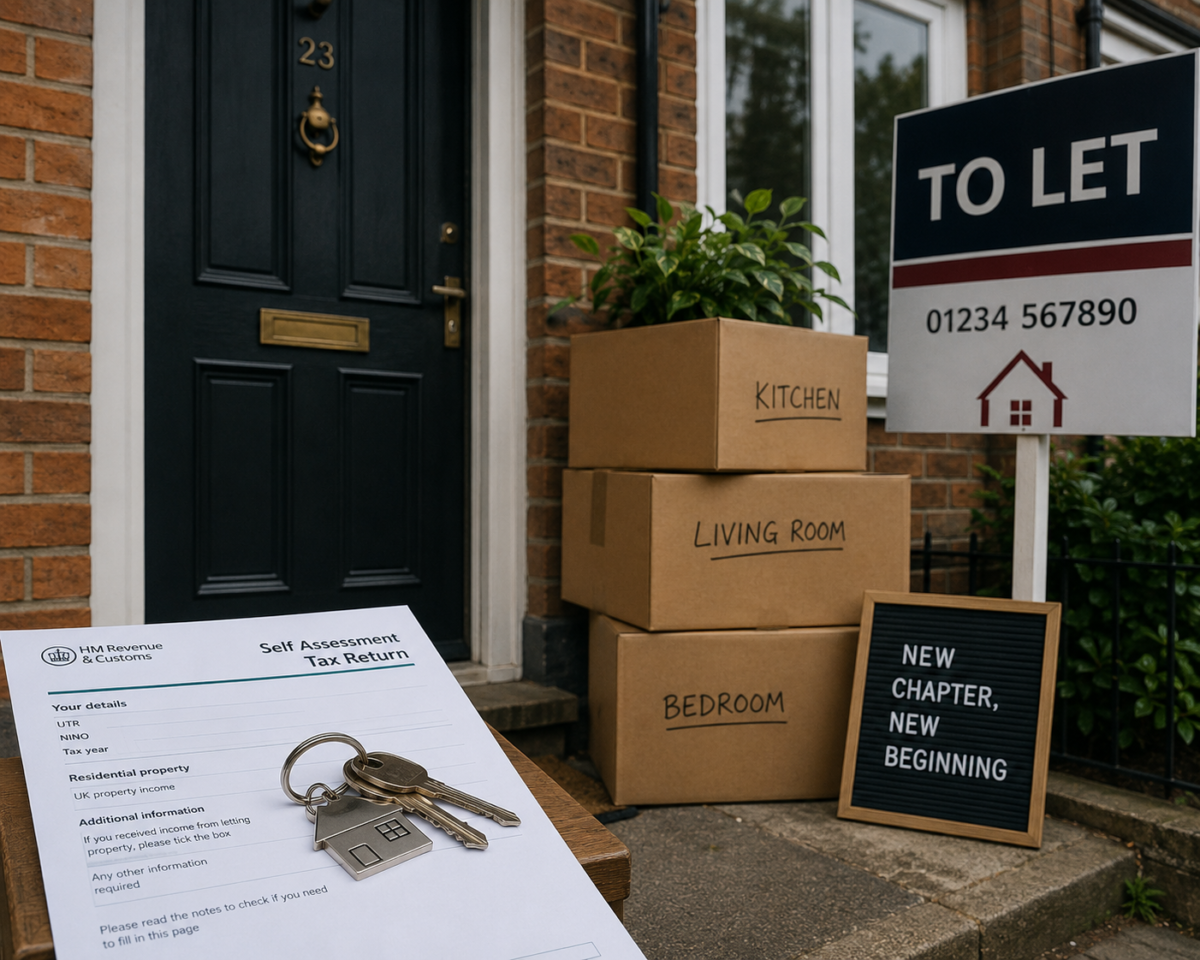
It’s one of the most common ways people become landlords without ever really deciding to: you move in with a partner, relocate for work, or upsize to a bigger house, and rather than sell your old property, you rent it out. It feels like a sensible, low-key decision at the time — and often nobody mentions that the rent needs to be declared to HMRC. Years can pass before it becomes clear that this “temporary” arrangement has created a genuine, and growing, tax liability. The good news is that this is a well-recognised situation, and there’s a clear, structured way to correct it.
Rented out your old home without realising you needed to declare it? Book a free 15-minute consultation with Felix Accountants and we’ll help you get back on the right side of HMRC. Find a time here.
Why This Situation Is So Common
Most people who fall into this position never set out to become a landlord. Common scenarios we see regularly include:
- Moving in with a partner and letting out a previous flat or house rather than selling it
- Relocating for work and renting the family home while abroad or in another part of the UK
- Inheriting a property, moving in briefly, and then letting it out once circumstances changed
- Buying a new main residence and keeping the old one as a rental “for now”
In every one of these cases, the person’s mental model is often “this is still basically my house,” which makes it easy to overlook that HMRC treats rental income exactly the same way regardless of how the letting arrangement came about. Our guide on being an accidental landlord covers this pattern in more depth, including the specific triggers that most often catch people out.
Why the Rent-Only-Covers-the-Mortgage Myth Is So Costly
A particularly common misconception is believing that if the rent received roughly matches the mortgage payment, there’s no taxable profit and therefore nothing to declare. This isn’t correct, for two reasons. First, only the interest element of a mortgage payment is an allowable expense — the capital repayment portion isn’t deductible at all. Second, since 2020, tax relief for mortgage interest on residential lettings held personally has been restricted to a basic-rate tax credit rather than a full deduction against income. This means many landlords who genuinely believed they were breaking even are, in fact, sitting on a taxable rental profit they’ve never reported.
Correcting the Position Through the Let Property Campaign
The Let Property Campaign is HMRC’s dedicated voluntary disclosure route for exactly this situation. It allows individual landlords to come forward, calculate what’s owed across the relevant tax years, and pay it — typically with significantly lower penalties than if HMRC discovers the income independently and opens an enquiry. The process generally involves three stages: notifying HMRC of your intention to disclose, calculating the tax owed for each relevant year (including interest), and submitting a formal disclosure, usually within 90 days of notifying.
Working Out How Many Years to Go Back
The number of years you need to include depends on why the income wasn’t declared, not simply how long you’ve been letting the property. For most people in this situation — where the omission genuinely stemmed from not realising the obligation existed, rather than any attempt to conceal income — the look-back period is typically four to six years. Our detailed guide on how many years you need to declare explains how this is determined and why getting it right matters, since under-disclosing can itself create problems later.
What About the Original Main Residence Relief?
Because the property was once your main home, it’s worth understanding how that history interacts with your tax position going forward, particularly around Capital Gains Tax if you eventually sell. Private Residence Relief can reduce or eliminate Capital Gains Tax for the period the property was genuinely your main residence, plus a final period of ownership, even though it’s since been let out. Our guide on maximising main residence relief explains how this relief interacts with a period of letting, which is a separate but closely related consideration alongside sorting out the undeclared rental income itself.
What If HMRC Has Already Written to You?
If you’ve received a nudge letter from HMRC about rental income, the position changes slightly. A disclosure made after HMRC has already contacted you is classed as “prompted” rather than “unprompted,” which generally attracts a higher penalty percentage than coming forward first. Our comparison of prompted versus unprompted disclosures sets out exactly how the two are treated differently, and it’s still almost always better to respond promptly and constructively than to ignore the letter or delay further.
What You’ll Need to Pull Together
- The date you moved out and started letting the property
- Rent received each year, from bank statements or a letting agent’s annual statement
- Mortgage interest statements for the letting period
- Records of repairs, insurance, letting agent fees, and any other allowable running costs
- Details of any period the property was genuinely your main residence, for the Capital Gains Tax position if it’s later sold
If some of this is missing, that’s a common and manageable problem — a reasonable, well-documented estimate is generally acceptable where original records genuinely can’t be recovered.
Why Acting Now Is Better Than Waiting
HMRC’s ability to identify undeclared rental income has grown substantially through data from letting agents, deposit protection schemes, the Land Registry, and information-sharing arrangements with online letting platforms. The longer an undeclared rental arrangement continues, the larger the eventual liability becomes, and the greater the risk that HMRC identifies it independently before you’ve had the chance to disclose voluntarily and secure the lower penalty treatment available for unprompted disclosures.
How Felix Accountants Can Help
We regularly help people in exactly this position — landlords who never intended to be landlords, and who simply want to get their tax affairs straight without unnecessary stress. We’ll help you work out the correct number of years to disclose, calculate what’s owed, and manage the process with HMRC on your behalf through our undisclosed rental income reporting service.
Frequently Asked Questions
Do I need to declare rental income if it just covers my mortgage payment?
Yes. Only the interest portion of a mortgage payment is an allowable cost, and mortgage interest relief for individual landlords is now given as a basic-rate tax credit rather than a full deduction, so many landlords in this position do have a taxable profit even if it doesn’t feel that way.
How many years of rental income will I need to declare for my old home?
This depends on the reason for non-disclosure. Where the omission stemmed from a genuine misunderstanding rather than deliberate concealment, the look-back period is typically four to six years.
Will I lose the tax relief for the years the property was my main home?
No. Private Residence Relief still applies to the period the property was genuinely your main residence, plus a final period of ownership, and this is separate from correcting the undeclared rental income for the letting period.
What if I’ve already had a letter from HMRC about this property?
You can still disclose, but it will generally be treated as a prompted disclosure, which typically carries a higher penalty than an unprompted one. It’s still better to respond and disclose than to ignore the letter.
Is it worth using an accountant for this, or can I do it myself?
You can make a disclosure yourself, but the calculations involving mortgage interest restrictions, allowable expenses and the correct look-back period are easy to get wrong. An accountant experienced with the Let Property Campaign can help ensure the disclosure is accurate and complete the first time.
Ready to put your old home’s rental income right? Book your free 15-minute consultation with Felix Accountants today.