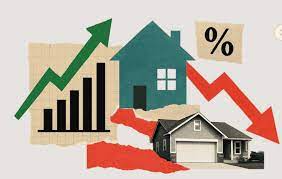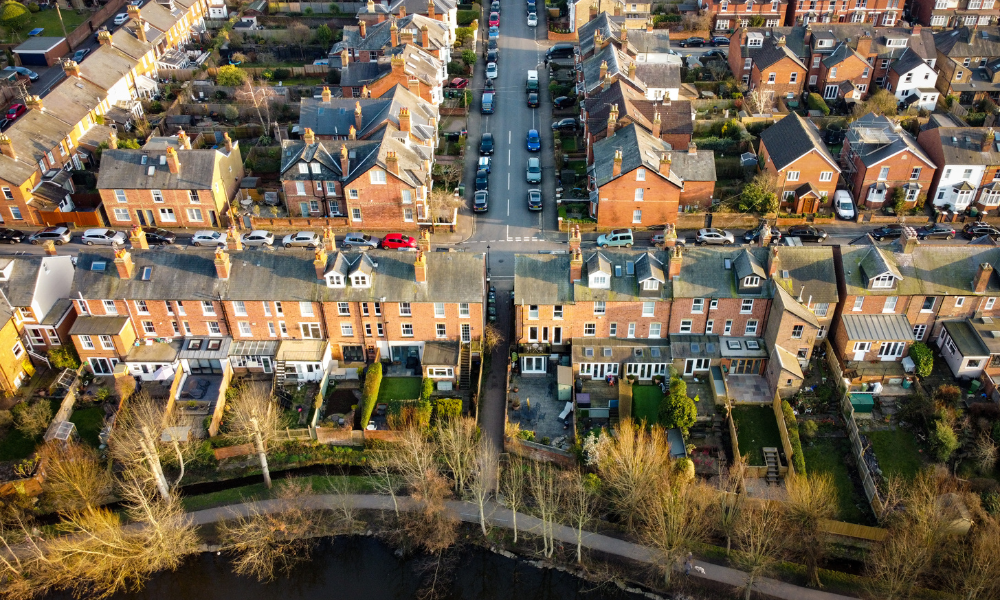

As we approach the end of 2025, the headlines surrounding the UK property sector have shifted. The frantic pace of previous years has given way to a distinct cooling. The UK housing market slowdown is no longer a prediction; it is the current reality.
Driven by a convergence of economic headwinds—from persistent high interest rates to political uncertainty—buyer demand is dropping, and transaction volumes are thinning. For sellers, the “gold rush” era of bidding wars is fading. For buyers, however, this cooling period presents a complex mix of affordability challenges and rare negotiation opportunities.
In this comprehensive market analysis, we will unpack the key factors driving this slowdown, examine the “supply and demand” imbalance, and look ahead to what economists are predicting for 2026.
The Current Landscape: A Market Applying the Brakes
The UK housing market has historically moved in cycles, but the current deceleration is notable for its specific drivers. Recent reports highlight a market that is pausing for breath.
The “Wait and See” Approach
The dominant sentiment among buyers today is caution. The “fear of missing out” (FOMO) has been replaced by the “fear of overpaying.” This hesitation is not unfounded; it is a rational response to an economic environment where borrowing remains expensive and the cost of living continues to squeeze household budgets.
Metrics from late 2025 indicate that while inventory is tightening in some specific hotspots, the broader national picture is one of longer time-on-market and sluggish activity. The urgency has left the building.
Key Factors Contributing to the Slowdown
Why is the market slowing down now? It isn’t just one factor, but a “perfect storm” of economic pressures.
1. Interest Rates & The Affordability Ceiling
The single biggest brake on the market is the cost of borrowing.
- Mortgage Rates: Although rates have dipped slightly from their peak, they remain elevated compared to the historic lows of the last decade. With rates hovering significantly higher than borrowers were used to, the monthly cost of servicing a mortgage has skyrocketed.
- Impact: This has effectively capped how much buyers can borrow, forcing many entry-level participants out of the market entirely.
2. Inflation and Cost of Living
While headline inflation figures fluctuate, the cumulative effect of price rises over the last three years has eroded real wages.
- Prospective buyers are finding it harder to save for deposits.
- Existing homeowners are hesitant to move (upsize) because they don’t want to trade their old, lower mortgage rate for a new, higher one.
3. Political and Policy Uncertainty
Markets hate uncertainty, and the UK has had its fair share.
- Election Jitters: The ripple effects of recent elections and political shifts always cause a temporary freeze in large financial decisions.
- Tax Changes: Uncertainty around specific policies—such as changes to “non-dom” tax rules or adjustments to Stamp Duty—has caused hesitation, particularly in the prime London markets and among property investors.
4. Supply & Demand Imbalance
Interestingly, we are seeing a divergence in supply and demand.
- Rising Supply: More properties are coming onto the market as some landlords exit the sector and homeowners decide they can no longer delay their moves.
- Cooling Demand: At the same time, the pool of qualified buyers is shrinking.
- The Result: When supply outpaces demand, price growth slows, and in some areas, asking prices begin to soften.

UK Housing Market Slowdown

What a Slowdown Means for You
Depending on which side of the transaction you stand, a slowdown manifests differently.
For Sellers: The Need for Realism
The days of putting a sign up and receiving five offers in a week are largely over.
- Longer Time on Market: Be prepared for your property to sit on portals like Rightmove or Zoopla for longer.
- Price Softening: You may need to adjust your expectations. While headline prices might not be crashing, the rate of growth has slowed. In real terms (inflation-adjusted), prices per square foot are under pressure.
- Pricing Strategy: Overpricing in this market is fatal. Homes that are priced correctly from day one are still selling, but those that “test the market” at a high price are stagnating.
For Buyers: A Window of Opportunity?
A slowing market is often the best time to buy—if you can afford the mortgage.
- Less Competition: You are less likely to face a bidding war.
- Negotiation Power: With homes taking longer to sell, sellers are more open to offers below the asking price.
- Incentives: We are seeing a rise in builder incentives (such as stamp duty contributions or mortgage rate buydowns) as developers try to shift unsold new-build inventory.
The Outlook for 2026: A Modest Recovery?
Looking ahead, the forecast is not entirely gloomy. Economists and market analysts anticipate that 2026 will bring a stabilization rather than a crash.
Affordability Improvements
For the first time in years, we may see a modest improvement in affordability in 2026.
- Income Growth: Wages are slowly catching up to inflation, which could bring the share of income spent on a typical mortgage back down below critical thresholds.
- Rate Stabilization: If mortgage rates settle around a “new normal” (potentially around the low-to-mid 4% range for fixed deals, or roughly 6% for variable stress tests), buyer confidence may return.
The Role of House Builders
Builders are currently facing a glut of unsold homes in some regions due to the 2025 slowdown. Expect them to be aggressive in 2026.
- Price Cuts: Direct reductions on list prices for new builds.
- Rate Incentives: Offers of lower interest rates for the initial fixed period (e.g., 3.99% deals funded by the developer).
Regional Variations: It’s Not One Single Market
It is vital to remember that the “UK housing market” is actually a collection of micro-markets.
- The South East & London: Often hit hardest by mortgage rate rises due to higher average prices. Demand here has seen a sharper drop.
- The North & Midlands: These areas, where affordability ratios are generally better, may see more resilience.
- Seasonal Factors: Regardless of region, the market is currently in its traditional winter dip. Activity naturally slows as the year ends, amplifying the feeling of a slowdown.
Patience is the New Currency
The UK housing market is currently experiencing a necessary correction. After the post-pandemic boom, economic gravity has reasserted itself.
For sellers, patience and realistic pricing are key. You are operating in a buyer’s market, and you must compete for attention.
For buyers, the slowdown is a double-edged sword. High costs make entry difficult, but if you can overcome the affordability hurdle, you have more choice and more leverage than at any point in the last few years. As we move into 2026, the hope is that a stable economic environment will encourage the tentative return of activity, turning this “slowdown” into a sustainable “steady state.”

Frequently Asked Questions (FAQs)
- Is the UK housing market crashing?
No, “crashing” is too strong a word. The market is experiencing a slowdown and a “softening” of prices. While transaction numbers are down and homes are taking longer to sell, we are not seeing the rapid double-digit percentage drops associated with a crash. It is a correction driven by high interest rates and affordability constraints. - Why is buyer demand dropping?
Buyer demand is dropping primarily due to affordability. Mortgage rates are higher than many people are used to, and the cost of living remains high. Additionally, uncertainty—both economic (inflation, job security) and political (elections, tax changes)—makes people hesitant to make large financial commitments. - Will house prices go down in 2026?
Most economists predict modest stabilization rather than significant drops or rises. Prices may dip slightly in real terms (when adjusted for inflation), or stay flat. Some forecasts suggest that as incomes rise and rates stabilize, we might see very slow growth return by the end of 2026.
4. Are new build homes a good option in a slowing market?
They can be. Builders are currently facing reduced demand and often have a backlog of unsold properties. This means they are offering incentives that individual sellers cannot match, such as paying your Stamp Duty, upgrading fixtures for free, or even subsidizing your mortgage rate for the first few years.
5. How long does it take to sell a house in the current market?
Time on market has increased significantly. While it varies by region, homes are taking weeks or even months longer to sell than they did in 2022/2023. Sellers should be prepared for a waiting period and ensure their pricing is competitive from day one to avoid stagnation.
6. What should I do if I need to sell right now?
If you cannot wait for the market to improve, you must be realistic about price. Check the sold prices of similar homes in your area from the last 3 months (not the asking prices). Ensure your home is well-presented to stand out in a crowded market. Consider targeting “proceedable” buyers (those not in a chain) even if their offer is slightly lower, to ensure the sale goes through.
click here for more