
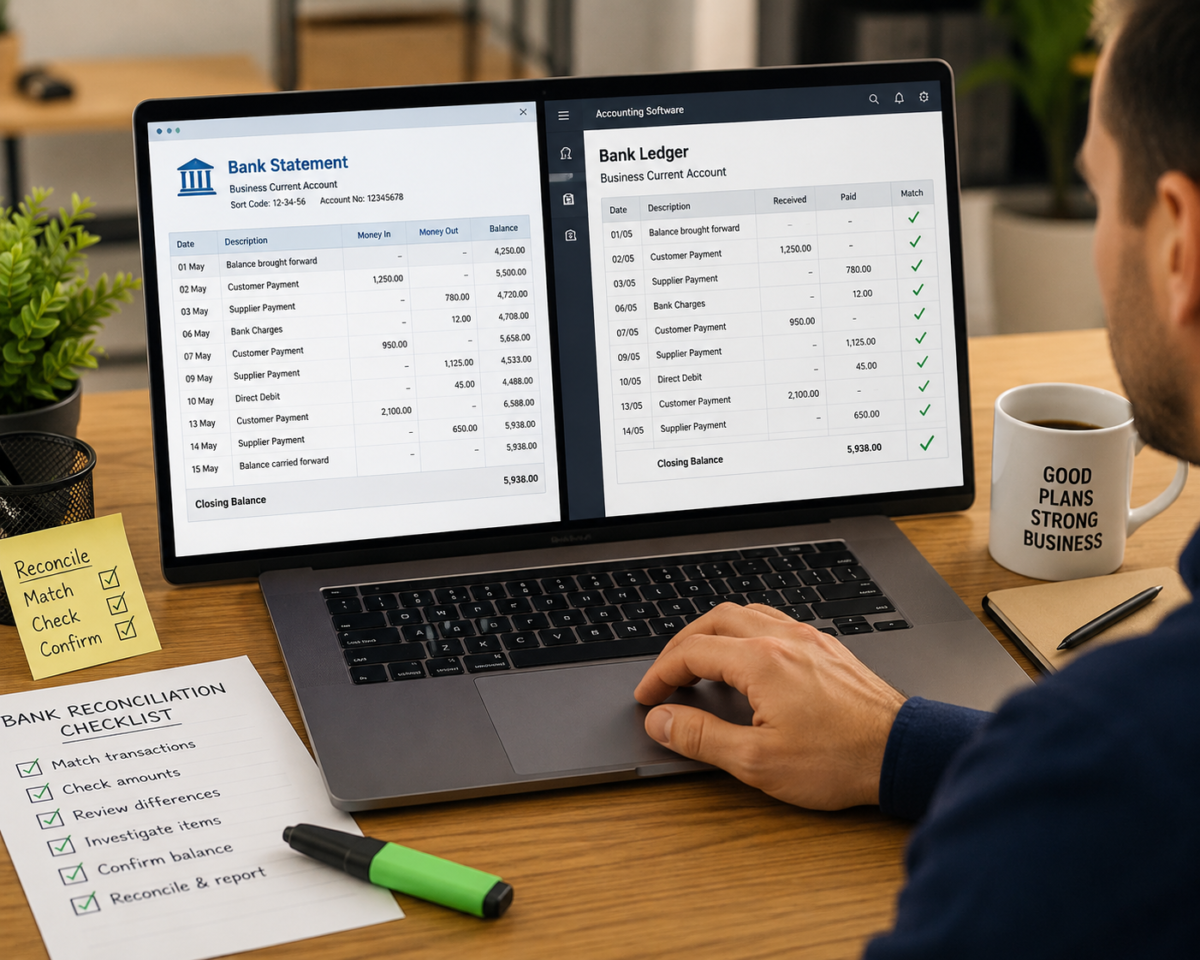
Bank reconciliation is one of those bookkeeping tasks that’s easy to postpone, right up until your bank balance and your accounting records tell two completely different stories. Reconciling your business bank account simply means checking that every transaction in your accounting records matches what’s actually happened in your bank account, and vice versa. Done regularly, it takes minutes. Left for months, it can take hours to unpick — and by then, errors may already have fed into a VAT return or set of accounts.
Want help setting up a reconciliation routine that actually sticks? Book a free 15-minute consultation with Felix Accountants. Book your free call here.
What Is Bank Reconciliation, Exactly?
Bank reconciliation is the process of comparing your business bank statement against your accounting records — whether that’s bookkeeping software, a spreadsheet, or an accountant’s ledger — to confirm that every transaction has been recorded correctly, once, and in the right place. The end goal is simple: your accounting records’ cash balance should match your actual bank balance at any given date, after accounting for any genuinely outstanding items like uncased cheques or payments still in transit.
Why It Matters More Than It Might Seem
Skipping regular reconciliation doesn’t just risk a messy spreadsheet — it can lead to real financial consequences:
- Duplicate or missing transactions that distort your reported profit
- VAT returns based on incorrect income or expense figures
- Missed fraudulent transactions or bank errors that go unnoticed for months
- An inaccurate picture of your actual cash position, which can lead to poor decisions about spending or hiring
- A stressful, time-consuming reconstruction job at year end when your accountant needs clean figures
Our guide on the seven numbers vital to your business touches on why an accurate, up-to-date cash position underpins almost every other financial decision you’ll make.
Step-by-Step: How to Reconcile Your Business Bank Account
1. Gather Your Bank Statement and Accounting Records
Pull the bank statement covering the period you’re reconciling — most businesses reconcile monthly — alongside your accounting records for the same period, whether that’s cloud accounting software, a spreadsheet, or an export from your bookkeeping system.
2. Match Transactions One by One
Go through each transaction on the bank statement and confirm it appears, correctly categorised, in your accounting records. Most cloud accounting software can automatically suggest matches based on amount, date and description, but these suggestions still need a human check rather than blanket approval.
3. Investigate Anything That Doesn’t Match
Differences generally fall into a few categories:
- Timing differences: a transaction recorded in your books but not yet cleared the bank (or vice versa) — for example, a cheque written but not yet cashed
- Missing transactions: something on the bank statement that was never recorded in your books at all
- Duplicate entries: the same transaction recorded twice, often after a manual entry and an automatic bank feed import both capture it
- Bank charges or interest: fees or interest applied directly by the bank that haven’t yet been entered into your accounting records
- Genuine errors: an incorrect amount entered, or a transaction posted to the wrong account entirely
4. Correct the Records, Not the Bank Statement
The bank statement is the objective record of what actually happened; your accounting records need to be adjusted to match it, not the other way around. Add any missing transactions, remove duplicates, and correct any categorised entries.
5. Confirm the Closing Balances Match
Once every transaction is accounted for, your accounting software’s cash balance for that account should match your bank statement’s closing balance, adjusted for any genuinely outstanding items still in transit. If they don’t match, there’s still a discrepancy to track down before moving on.
6. Record the Reconciliation
Keep a simple record — a date stamp, a note, or a reconciliation report from your software — confirming the account was reconciled and by whom. This becomes useful evidence of good financial control, particularly if HMRC ever asks questions about your records.
How Often Should You Reconcile?
Monthly reconciliation is the practical minimum for most small businesses, and it’s genuinely far easier than it sounds once it becomes a routine rather than a rare event. Businesses with higher transaction volumes, multiple bank accounts, or those using cloud accounting software with live bank feeds often find weekly reconciliation barely takes any extra time, since discrepancies are caught and resolved while they’re still fresh and easy to trace.
Common Bank Reconciliation Mistakes
- Only reconciling once a year, just before accounts or a tax return are due
- Accepting automatic bank-feed matches without actually checking them
- Mixing personal and business transactions through the same account, making reconciliation far more time-consuming
- Not investigating small discrepancies, assuming they’re too minor to matter — small errors often point to a bigger underlying issue
- Forgetting to reconcile every business bank account, not just the main current account, including savings or deposit accounts linked to the business
Our wider guide on the top bookkeeping mistakes to avoid covers several related issues that often surface during reconciliation.
Reconciliation and Making Tax Digital
As Making Tax Digital continues to expand, the underlying principle behind it — accurate, up-to-date digital records rather than a single annual reconstruction — makes regular bank reconciliation more important than ever. Businesses already reconciling monthly tend to find the transition to quarterly digital reporting far smoother than those trying to build accurate records retroactively.
How Felix Accountants Can Help
We help small business owners set up reconciliation routines that fit how they actually work, whether that’s a simple monthly process using cloud accounting software or a fully managed bookkeeping service where we handle reconciliation on your behalf. See our small business tax services for how accurate, well-reconciled records feed into stronger tax planning throughout the year.
Frequently Asked Questions
How often should a small business reconcile its bank account?
Monthly is the practical minimum for most small businesses, though weekly reconciliation is increasingly common for businesses with higher transaction volumes or live bank feeds in their accounting software.
What’s the difference between bank reconciliation and bookkeeping?
Bookkeeping is the ongoing process of recording transactions; bank reconciliation is the specific check that confirms those recorded transactions match what actually happened in the bank account.
Why doesn’t my bank balance match my accounting software?
This is usually caused by timing differences (transactions not yet cleared), missing entries, duplicate entries, or bank charges that haven’t been recorded yet — a full reconciliation will identify which applies.
Can accounting software reconcile my bank account automatically?
Most cloud accounting software can suggest matches automatically via a live bank feed, which speeds up the process considerably, but the suggested matches still need to be reviewed rather than approved blindly.
Does bank reconciliation matter if I’m not VAT registered?
Yes. Accurate reconciliation matters for correct profit reporting, cash flow visibility, and Self Assessment or Corporation Tax accuracy, regardless of VAT registration status.
Let’s get your bookkeeping properly reconciled, every month. Book your free 15-minute consultation with Felix Accountants.