
Categories
Articles Blogs FAQs Guides News

How Do I Set Up My Personal Tax Account?

Table of Contents

How Do I Set Up My Personal Tax Account 

  1. What Can I Do with My Personal Tax Account? 
  2. What are the Benefits of setting up a Personal Tax Account? 
  3. Is it easy to Set up My Personal Tax Account in the UK? 
  4. How can I create my personal tax account?
  5. Can mPersonal Tax Account Help Review my National Insurance Record? 
  6. Can my Personal Tax Account Help Review my Employment Records? 
  7. Can Personal Tax Accounts Provide Information on PAYE codes? 
  8. Is your Personal Information Secure? 
  9. How Can I Ensure Nobody Accessed My Account? 
  10. Does HMRC Ask for Personal and Financial Detail? 
  11. Conclusion 
  12. Recent Posts

A personal tax account is an HMRC-initiated system to make the tax system in the UK more efficient and transparent. This system facilitates you to access all your tax-related personal information in one place. Through your tax account, you can solve your tax issues on time by yourself without writing or calling the HMRC. You are probably wondering, how do I set up my personal tax account? 

If you have access to your personal tax account, it means you can save a great deal of your time and energy. You can manage and handle your tax matters in a much better way. The personal tax account system was started in 2015 and it has been a splendid success since then as it saves countless hours by dealing with everything online. Surely, it is for the best that you set up your personal tax account.  

What Can I Do with My Personal Tax Account? 

The list of services for the personal tax account is constantly expanding and growing. Therefore, you can avail of many useful financial services from your personal tax account that include:  

  • Checking income tax code. 
  • Finding the national insurance number. 
  • Organising tax credits. 
  • Claiming a tax refund. 
  • Checking your income tax estimates. 
  • Paying overdue taxes. 
  • Updating or checking your marriage allowance. 
  • Checking the latest updates on the value of the state pension. 
  • Adding a family member or other trustworthy person to manage your account on your behalf. 
  • Viewing your self-assessment tax calculation, which might be helpful in applying for credit.  

If there is any error or miscalculation in anything like details or anything else, you can change it by yourself. This guide will help you comprehend how do I set up my personal tax account

What are the Benefits of setting up a Personal Tax Account? 

The personal tax account system is an attempt by the HMRC to make the taxation system more transparent and efficient. With the use of this taxation system, it becomes easier for you to update the HMRC about the changes to your circumstances, like getting married, having a baby, and changing your address. It enables you to change your child’s benefits circumstances, such as if the child joins or leaves education or training. If you are a parent, then you can keep track of child track credits. you can check or update the benefits you get from your work such as car insurance, or company car details.  

The major benefit of the personal tax account is that everything relating to your tax affairs will be online in one place. Hence, you will not have to spend time finding out different papers to get the details of your taxes.  

Also, creating your personal tax account enables you to monitor your tax-related affairs to make sure that your records are accurate and up to date.  

It is less time-consuming, more transparent, less difficult, more immediate, and entirely paperless. This process does not require lengthy letters but easy texting messages or emails- so you will be doing good for the environment too. Thus, it is an ideal situation.  

Is it easy to Set up My Personal Tax Account in the UK? 

Certainly, it is human nature to envisage every new thing as difficult until becoming familiar with it. But setting up your personal tax account with HMRC is like something easier done than said.  

Setting up a personal tax account is not time-taking or technicalities involving the job at all. According to HMRC, it should only take 5-10 minutes. 

Personal Tax Account

To start with, you must log in to your government gateway account.  

The form online available is itself much easier to follow as it simply involves inputting your information and setting up security protocol. At this stage, the time factor entirely depends on the organization of the paperwork you start with. The more your paperwork is organized, the less time will it takes. Let’s discuss the paperwork you require to understand how I set up my personal tax account.  

What do you need to Apply for the Paperwork?  

  • National insurance number. 
  • Recent pay slip. 
  • UK passport (must be on date) or most recent P60. 
  • Landline number or your mobile number, as part of the two-step security.  
  • Choose the email address you want to attach to the account.  

Now, you have acquired all the needed information to set up your personal account. Just go to the government gateway, and select either individual, (if you represent your own business) or agent (if you represent other people in financial matters to the government) to start the registration process.  

How can I create my personal tax account?

There are a few steps to set up your personal tax account. We share those steps one by one in a largely simplified way.  

1. Registration 

You will need to register online by using this link on the official website of the HMRC to access the personal tax account.  

Click the ‘create sign-in details’ link given below the sign-in button to begin the registration process.  
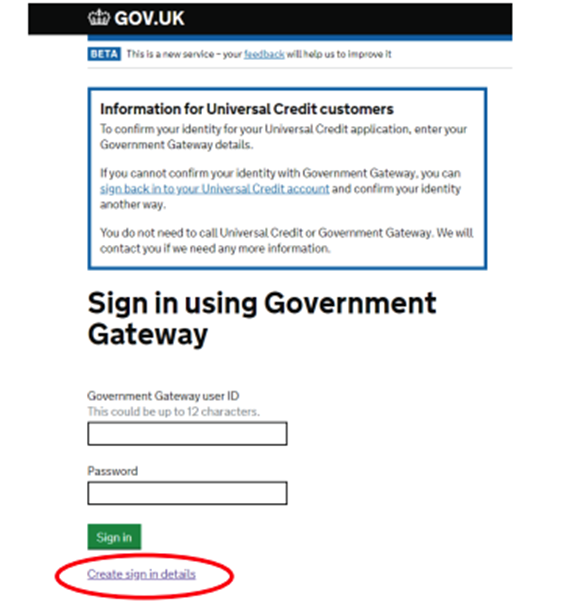
Then you will have to enter your email address. After doing so, select Continue. 
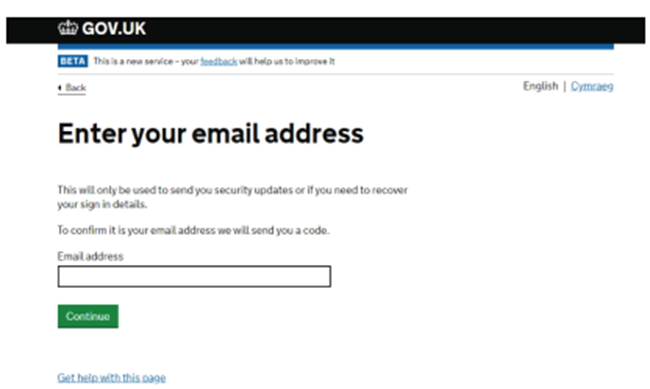
You will receive a code of 6 characters from HMRC at this email address. 
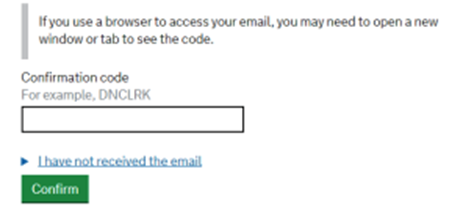
Once you have entered the details in the given box, HMRC will prompt you to enter your full name and create a password. Then you will see your Government Gateway ID number.  

2. Setting up your account 

Here the HMRC will ask you to select the type of account you need. Please select “individual” and then click the green button of “continue”.
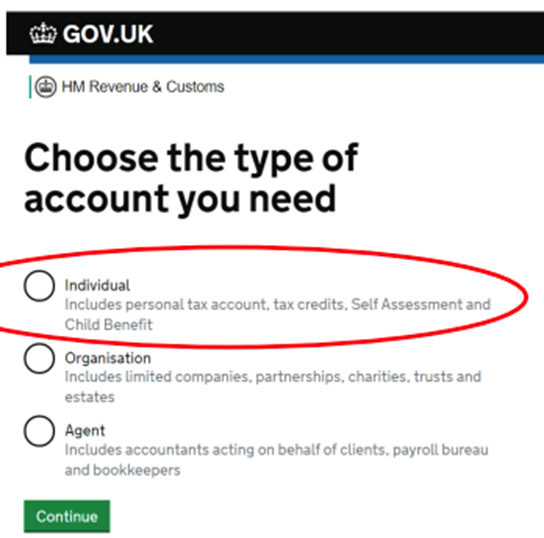
Now the HMRC will ask you to set up a method to receive an access code. It is important to know that select a method you are quite comfortable with because HMRC will use this method to send you an access code, every time you sign by using your Government Gateway user ID. 
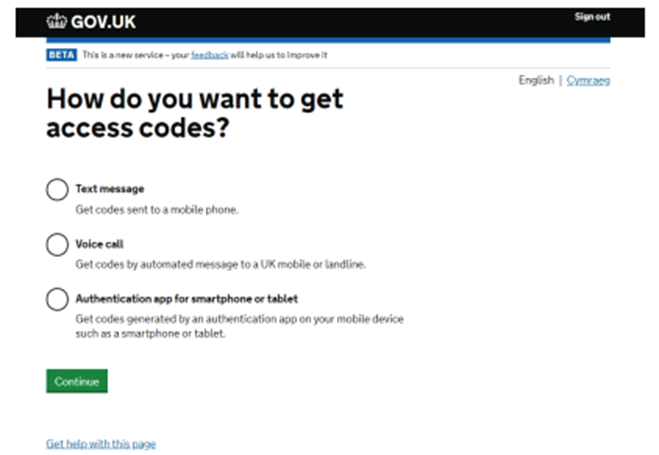
After selecting the method, you are most convenient with, click on the green button of “continue”.  

Then HMRC will ask you to enter the 6 digits access code it has provided you with.  

Kindly, enter the code and then click the green button “continue”.  

Now HMRC will ask you to confirm your identity, please provide the details where asked and then click the green button of “continue”. 

Now HMRC will ask you the way you want your identity o be confirmed by the HMRC. If you are a UK passport holder, you are recommended to use this option.  

HMRC will ask you to share the same detail you have on your passport. Please enter the required details and then click the green button of “continue”.  

Now HMRC will confirm whether the details you entered are correct and whether the personal tax account has been successfully set up. After its confirmation, you will be asked whether you would like to receive your correspondence regarding your tax affairs electronically or post via your Personal Tax Account. please select the option which is most suitable to you and select the green “continue” button.  Now you will be taken to the Personal Tax Account home page.  

3. Recovering Login Details 

If you have previously used the online services of the government Gateway or HMRC to submit your tax returns electronically via the website of HMRC. You must log in by using those account details. But if you have forgotten the details of those accounts then please select one of the links given at the bottom of the sign-in page depending on the details you need to recover.  
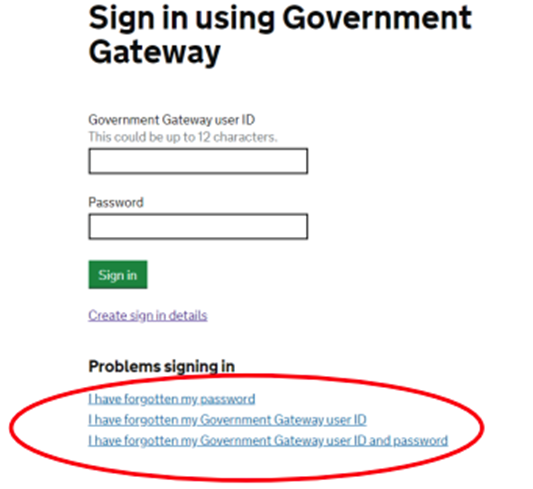
Now HMRC will take you, according to its process to recover your Government Gateway user ID or password. 

If you face any difficulty with the process, you can easily contact HMRC for help.  

Safety and security with your Personal Tax Account 

After completing the registration procedure, you are the only person to have access to your personal tax account with your user ID and password.  

Therefore, that answers your question, how do I set up my personal tax account? 

Can my Personal Tax Account Help Review my National Insurance Record? 

When it comes to reviewing your National Insurance record, your personal tax account can be particularly helpful. You can easily review your national insurance record that covers your entire working history by accessing your personal tax account. Reviewing your National Insurance record helps you ensure that your entire record is accurate and up to date. It also identifies any gaps in your contributions that might need to be addressed.  

After that, when you reach the pension age, you can ensure that you have the correct credits to receive a full pension. If you find any discrepancies and gaps, the best option is to contact HMRC for investigation.  

Can my Personal Tax Account Help Review my Employment Records? 

Yes, your personal tax account gives you the additional benefit of reviewing your employment records.  

It’s another benefit is that if you cannot obtain a copy of your P60 from your employer, you get it from your personal tax account. Once you understand how I set up my personal tax account, you can move forward with these steps.  

Can Personal Tax Accounts Provide Information on PAYE codes? 

Another useful feature of a personal tax account is that it enables you to view the PAYE codes use applied to your employment.  

Moreover, you also have the option to modify your PAYE code directly from your personal tax account.  

Is your Personal Information Secure? 

When it comes to security, HMRC takes it seriously and uses firewall protection for all its systems. This is like a bulwark to provide maximum protection for your information because its detective capacity is strong enough to detect any unauthorized entry. All the data that you share with HMRC is encrypted and nobody can see your data except yourself.  

Furthermore, you also must be conscious and vigilant of your online safety. Avoid sharing your user ID or password with anybody. If you cannot remember it and want to note it down, then ensure to keep it in a discrete place. Surely, you now have a clear idea of how I set up my personal tax account

How Can I Ensure Nobody Accessed My Account? 

One of the easiest ways, you must know whether someone accessed your account or not is the security measure of the system that shows you the time and date you logged into your personal tax account. Check this list frequently, if see any such thing that does not look right, immediately contact HMRC through their website.  

Another safety measure built into the system is automatic logging out of your account if it is not active after 15 minutes. If you are forgetful, don’t worry, the system will secure your account. 

Does HMRC Ask for Personal and Financial Detail? 

It is important to know, and HMRC often emphasizes to be mindful of the procedure of HMRC that it does not ask for any personal or financial details by email, phone, or text. Always be on watch to protect yourself from the scammer, if notice any such thing as suspicious, report it to the HMRC, even if you have not lost anything. Undoubtedly, it is in your best interest to do so.   

Shortly speaking, setting up a personal tax account offers a wide range of benefits by saving you a great deal of energy and time that you can utilize in something more productive and creative.  You can easily check state pensions, national insurance contributions, and many other tax affairs online without standing in long queues on helplines or doing related paperwork. It keeps you updated and informed about your tax status. And through it, you can also keep HMRC timely updated and informed about your circumstances. Most importantly, your financial information is safe and secure. 

FAQs

How do I activate my UTR number?

If your UTR (Unique Taxpayer Reference) is inactive, you can reactivate it by:

  1. Contacting HMRC – Call the Self Assessment helpline and request reactivation.
  2. Providing Personal Details – You may need to confirm your full name, address, National Insurance number, and date of birth.
  3. Waiting for Confirmation – HMRC will confirm reactivation, usually via letter or phone.

How to check income tax?

You can check your income tax by:

  1. Logging into your HMRC Personal Tax Account – View your tax payments, liabilities, and tax code.
  2. Using the HMRC App – Check your tax status on the go.
  3. Contacting HMRC – If you have queries about your tax records, call them for assistance.

How to file income tax?

To file your income tax return:

  1. Register for Self Assessment if you haven’t already.
  2. Gather Necessary Documents – Income records, expenses, and other tax-related details.
  3. Complete Your Tax Return – Log in to your HMRC account and fill out the SA100 form.
  4. Submit Before the Deadline – The deadline for online submissions is usually 31 January.

How do I create a UTR account?

To get a UTR number:

  1. Register for Self Assessment with HMRC.
  2. Provide Personal Information – Full name, address, date of birth, and National Insurance number.
  3. Wait for UTR to Arrive – It is usually sent by post within 10 working days in the UK.

How do I check if my UTR is active?

You can check if your UTR is active by:

  1. Logging into your HMRC account to view your Self Assessment status.
  2. Calling HMRC – Provide your UTR and ask if it is active.

How to set up self-employed?

  1. Register with HMRC for Self Assessment.
  2. Keep Records of your income and business expenses.
  3. Submit Your Tax Returns Annually to pay the correct amount of tax and National Insurance.

How do I check my UTR online?

You can find your UTR number by:

  1. Logging into your HMRC account – Your UTR is listed in your tax documents.
  2. Checking Previous HMRC Letters – It appears on tax returns and payment reminders.

How do I check my active tax status?

  1. Use Your HMRC Personal Tax Account – Check your tax payments and liabilities.
  2. Contact HMRC – If you’re unsure about your status, they can confirm it.

How long does it take to get a UTR?

HMRC usually issues a UTR within 10 working days if you’re in the UK or 21 days if you’re abroad.

How much money do you have to make as a self-employed person?

If you earn over £1,000 per tax year from self-employment, you must register with HMRC and file a tax return.

How do self-employed get money?

Self-employed individuals earn money by:

  • Charging clients/customers directly for services.
  • Selling products online or in-store.
  • Receiving payments through invoices, bank transfers, or platforms like PayPal.

How can I make money from home self-employed?

Options for making money from home include:

  • Freelancing – Writing, graphic design, programming, etc.
  • E-commerce – Selling on platforms like eBay, Etsy, or Amazon.
  • Affiliate Marketing – Promoting products for commissions.
  • Online Courses – Teaching skills through platforms like Udemy or Teachable.

How to earn $1,000 per day from home?

Earning $1,000 per day requires high-income skills or scalable businesses:

  • Dropshipping or E-commerce – Selling trending products online.
  • Stock Trading or Cryptocurrency – Requires experience and risk management.
  • Freelance Consulting – High-ticket services like business coaching.
  • Online Courses & Digital Products – Selling valuable knowledge at scale.

What is the fastest way to become self-employed?

  1. Identify a skill or service you can offer immediately.
  2. Register as self-employed with HMRC.
  3. Find clients through online platforms like Fiverr, Upwork, or LinkedIn.
  4. Start small and reinvest earnings to grow your business.

How to earn money from Google at home?

Google offers multiple ways to make money:

  • Google AdSense – Earn from ads on a blog or YouTube channel.
  • Google Play Store – Develop and sell apps.
  • Google Opinion Rewards – Get paid for surveys.
  • YouTube Partner Program – Monetize videos through ads and memberships.

click here for more

Categories
Articles Blogs News

7Powerful Cash Flow Tips for Successful Property Developers

In the fast-paced world of property development, managing cash flow is like keeping the engine running in a high-performance car. Without proper fuel—cash—your projects can stall, no matter how promising they are. Effective cash flow management ensures that your development projects move forward smoothly, unexpected expenses don’t derail your plans, and you maintain the liquidity needed to seize new opportunities. This guide offers actionable tips on cash flow analysis in the UK, tailored specifically for property developers aiming to enhance their financial stability and growth.

property Developers

The Crucial Role of Cash Flow in Property Development

Imagine embarking on an ambitious construction project—a sleek apartment complex in the heart of London. You’ve secured the land, obtained permits, and started building. But halfway through, unexpected costs arise, and your funds start dwindling. Without sufficient cash flow, the project grinds to a halt, leaving you with a half-finished building and mounting debts.

This scenario underscores the importance of financial management for property developers. Proper cash flow management isn’t just about keeping the lights on; it’s about ensuring the longevity and profitability of your business.

Actionable Tips for Effective Cash Flow Management

1. Conduct Regular Cash Flow Analysis UK

Performing regular cash flow analysis is akin to getting routine health check-ups—it helps you spot potential issues before they become serious problems.

How to Implement:

  • Monitor Inflows and Outflows: Keep a close eye on all money coming in and going out.
  • Forecast Future Cash Flows: Anticipate upcoming expenses and income over the next 6-12 months.
  • Adjust Accordingly: If projections show a potential shortfall, take steps to mitigate it.

Expert Insight: John Matthews, a specialist in property developer accounting, advises, “Regular cash flow analysis enables developers to make informed decisions, avoid financial pitfalls, and capitalize on opportunities.”

2. Create Detailed Budgets for Development Projects

A comprehensive budget is your roadmap to project success.

Benefits:

  • Identifies Funding Needs: Understand how much capital is required at each project stage.
  • Controls Costs: Prevents overspending by setting clear financial boundaries.
  • Enhances Decision-Making: Provides a financial framework for evaluating project changes.

Real-Life Example: Sarah, a property developer in Birmingham, avoided a potential £50,000 overspend by sticking to a detailed budget, allowing her to reallocate funds to unexpected but necessary safety upgrades.

3. Plan for Unexpected Expenses

In property development, surprises are the norm rather than the exception.

Strategies:

  • Set Aside Contingency Funds: Allocate 10-15% of your budget for unforeseen costs.
  • Regularly Review Project Progress: Frequent check-ins help identify issues early.
  • Stay Flexible: Be prepared to adjust plans as needed without compromising the project’s integrity.

Comparison: Think of contingency funds as an umbrella—you might not need it every day, but when it rains, you’ll be glad you have it.

4. Maintain Adequate Liquidity

Liquidity is the lifeblood of your business, ensuring you can meet short-term obligations.

Tips:

  • Manage Receivables Efficiently: Encourage prompt payments from clients or buyers.
  • Optimize Inventory Levels: Avoid tying up cash in excessive materials.
  • Secure Flexible Financing Options: Lines of credit can provide a cushion when cash is tight.

5. Leverage Financial Planning for UK SMEs

Adopt financial planning practices common among successful small and medium-sized enterprises.

Key Actions:

  • Set Financial Goals: Define clear short-term and long-term objectives.
  • Implement Robust Accounting Systems: Accurate records support better cash flow management.
  • Seek Professional Advice: Consultants specializing in business performance analysis UK can offer valuable insights.

Expert Quote: “Financial planning isn’t just for large corporations; SMEs and property developers stand to gain significantly from strategic financial management,” says Emily Clark, a financial advisor.

6. Use Technology to Your Advantage

Modern software tools can streamline cash flow management.

Recommendations:

  • Accounting Software: Utilize platforms like Xero or QuickBooks for real-time financial tracking.
  • Cash Flow Forecasting Tools: Predict future cash positions based on various scenarios.
  • Project Management Apps: Coordinate timelines and budgets efficiently.

7. Strengthen Supplier Relationships

Good relationships with suppliers can improve payment terms and cash flow flexibility.

Approaches:

  • Negotiate Payment Terms: Longer payment periods can ease cash outflows.
  • Bulk Purchasing Discounts: Save money by buying materials in larger quantities when feasible.
  • Reliable Partnerships: Trustworthy suppliers may prioritize your needs during tight schedules.

Analogy: Building strong supplier relationships is like having a reliable pit crew during a race—they help keep your operation running smoothly under pressure.

Addressing Potential Challenges

Counterargument: “Focusing on cash flow distracts from the creative aspects of property development.”

Response: While creativity is essential, without solid cash flow management, even the most innovative projects can fail. Balancing both ensures your vision becomes a profitable reality.

Counterargument: “I don’t have the resources to invest in financial management tools.”

Response: Many affordable or free tools are available for SMEs. Investing in these tools can save you money in the long run by preventing costly mistakes.

The Impact of Effective Cash Flow Management

Implementing these tips can lead to:

  • Improved Financial Stability: Ensure you have funds available when needed.
  • Increased Profitability: Better cash flow often translates to better negotiating power and cost savings.
  • Enhanced Reputation: Consistent financial management builds trust with investors, lenders, and partners.

Real-Life Success: After adopting rigorous cash flow management practices, Michael’s development firm in London saw a 25% increase in project completion rates and attracted new investors due to demonstrated financial competence.

Conclusion: Building a Solid Foundation for Success

Effective cash flow management is not just about numbers; it’s about building a solid foundation for your property development business. By taking proactive steps to manage your finances, you position yourself to navigate challenges, seize opportunities, and achieve long-term success.

Take the Next Step Toward Financial Excellence

Don’t let cash flow issues hinder your projects. Contact us today for personalized advice on financial management for property developers. Let us help you build a robust financial strategy that supports your vision and growth.


Frequently Asked Questions

1. Why is cash flow analysis important for property developers in the UK?

Answer: Cash flow analysis UK allows property developers to forecast their financial position, identify potential shortfalls, and make informed decisions to ensure projects stay on track financially.

2. How can property developer accounting improve my cash flow management?

Answer: Proper accounting provides accurate financial data, helps track expenses and income, ensures compliance with tax laws, and supports strategic planning, all of which enhance cash flow management.

3. What strategies can I use to handle unexpected expenses in development projects?

Answer: Set aside contingency funds, regularly monitor project progress, maintain flexibility in your plans, and build strong relationships with suppliers and contractors to negotiate favorable terms.

4. How does financial planning for UK SMEs apply to property developers?

Answer: Financial planning helps property developers set clear financial goals, manage risks, allocate resources effectively, and plan for future growth, much like any other SME.

5. What tools can assist with cash flow management?

Answer: Accounting software like Xero or QuickBooks, cash flow forecasting tools, and project management apps can streamline financial tracking and forecasting.

6. How can I improve my business performance analysis UK as a property developer?

Answer: Regularly review key performance indicators (KPIs), conduct market research, seek feedback from stakeholders, and consider professional consulting services to gain deeper insights.

7. Why is maintaining liquidity crucial for property developers?

Answer: Liquidity ensures you can meet immediate financial obligations, handle unexpected expenses, and take advantage of new opportunities without compromising ongoing projects.

8. Can I manage cash flow effectively without professional help?

Answer: While it’s possible, professional accountants and financial advisors offer expertise and insights that can significantly enhance your cash flow management and overall financial health.

9. How do supplier relationships impact cash flow?

Answer: Strong supplier relationships can lead to better payment terms, discounts, and priority service, all of which positively affect cash flow.

10. What are common cash flow pitfalls to avoid in property development?

Answer: Avoid underestimating project costs, neglecting regular financial reviews, failing to plan for contingencies, and overextending credit without secure financing.

click here for more

Categories
Blogs

Small Business Payroll Explained!

As a small business, payroll can seem like yet another daunting task to have to manage. Payroll does bring its own complexities with it, so in this short blog we’ll cover the basics for you.

Why might I need payroll?

There are usually two reasons you might need to consider running a payroll as a small business:

· You’re a limited a company and need to pay yourself some salary as a director.

· You’re a business that has employees and needs to pay them.

Running a payroll is often referred to as ‘operating a PAYE (Pay as You Earn) Scheme’. You may find information that makes reference to ‘paying a director under PAYE’ under ‘PAYE’. This all refers to running a payroll.

What do I need to do first?

Once you have decided that you can afford to take on an employee, the first step is to register your new employer with HM Revenue & Customs.

Even if you are just paying yourself as a director of a limited company, you will need to register as an employer. You will need to fill out an online form with your business details.

If you are taking on an employee, you should of course make sure you have the paperwork in places. This includes:

· All relevant contracts, or written ‘statement of particulars

· Taking out employer’s liability insurance.

When you register as an employer, you will get an Employers PAYE reference. This is sometimes needed by your insurers.

Once you have registered for a PAYE scheme, you must regularly report to HMRC or you will receive a fine.

I have a PAYE scheme, so how do I ‘run’ payroll?

You need payroll software – the days of doing this on paper have long gone!

HMRC do have a free tool, and there are some other software providers that offer (basic) free software also. Generally, these are only good for paying under 10 employees.  

There are plenty of paid payroll software providers. Big players such as Xero and QuickBooks who sell this service as a bolt-on to their accounting software.

With payroll software, you usually need to:

· Add new employees to the system

· Set up their pay

· Set up their tax codes

· Run the software to calculate the amounts to pay your team

· Supply payslips (printed or PDFs)

· Report to HMRC through the digital reporting inside the software

· Pay any tax deducted from their wages to HMRC by the 22nd of the month following

Paying employees monthly is much easier from this perspective, as you only need to calculate and report once a month.

The other option is to outsource your payroll to a payroll provider, (such as us!). This ensures the right deductions are made, and that payroll is done on time, every time. Again, monthly payroll is cheaper to outsource as the calculations are carried out once a month, rather than each week.

What else do I need to consider?

Workplace pensions are a biggie. They are basically a form of employee rights protection. The workplace pensions will come into play when you have a team member earning over £10,000 a year (at time of writing).

When this happens, generally you will need to ‘auto enroll’ them into a pension scheme. Once on the scheme, you will need to deduct pension contributions from their pay. As the employer you must contribute to an employee’s workplace pension as well. The employee can choose to opt out of the scheme, but only after they’ve been entered.

For you as the business owner, employee workplace pensions have some cost and/or hassle to set up a pension scheme whether it was ultimately needed or not. As a side note, most directors in a small owner managed business scenario won’t need a workplace pension.

We will do another blog on this subject, but for now you can see a guide on the HMRC site.


What happens if I don’t do all of this?

The usual thing – fines! HMRC issue fines for not following the rules, as does the Pensions Regulator.

From your employees’ point of view, if you don’t submit payroll records, HMRC and other government bodies (such as the Universal Credit system) will not have any record of their earnings. This can cause problems for them.

As a business, if you don’t report your payroll correctly, you could also put your tax deduction for the wages paid at risk.


I’m still perplexed about payroll

Ask your accountant for help. If you don’t have an accountant, or are looking to outsource running your payroll, we’d love a chat about how we can help.

· Call us

· Send us a message


More Blogs

Rental Income Taxes as a Property Investor in the UK

As a property investor in the UK, rental income taxes are a significant factor to consider when managing your investments. The tax you pay on your rental income can affect your profitability, so...

How Do I Set Up My Personal Tax Account?

Table of Contents How Do I Set Up My Personal Tax Account  A personal tax account is an HMRC-initiated system to make the tax system in the UK more efficient and transparent. This system facilitates...

How to Master HMRC Compliance: 3 Proven Strategies for Landlords and Property Investors

In the dynamic world of UK property investment, understanding and adhering to HM Revenue & Customs (HMRC) regulations is crucial. HMRC compliance assistance isn’t just about ticking...

Top Tax Planning Strategies for Property Investors in the UK

https://felixaccountants.com/tag/property-investors/Investing in property can be a lucrative venture, but navigating the complex landscape of taxes in the UK can feel like walking through a labyrinth...

The Essentials of DVLA Vehicle Tax: Updates, Exemptions, and How to Stay Compliant

Key Take aways • Understanding Vehicle Excise Duty (VED): Essential for all UK motorists to fund road infrastructure. DIVLA Vehicle Tax• Recent DVLA Updates: Introduction of digital tax reminders and...

Inheritance Tax (IHT) and Trust Planning: Safeguarding Your Estate

Inheritance Tax (IHT) is a significant aspect of wealth transfer that often goes overlooked in estate planning. Its impact on your estate can be substantial if proactive measures are not taken to...

7Powerful Cash Flow Tips for Successful Property Developers

In the fast-paced world of property development, managing cash flow is like keeping the engine running in a high-performance car. Without proper fuel—cash—your projects can stall, no matter how...

Do you own a Limited Company? Beware of Illegal Dividends

For limited company owners, dividends are often a great method to take out your hard-earned profit in a more tax efficient way. Taking money out through dividends isn’t always...

Understanding UK Tax Brackets for 2024-25

Dealing with the UK’s tax system can feel challenging, with various rates and rules to consider. However, you can better manage your finances with clarity on the income tax brackets and rules...
Categories
Blogs

How to claim business mileage from your own company

As a limited company owner, you probably know you can claim the business miles you do in your own personal vehicle.

What you may not understand is how to physically ‘claim’ the money from your company.

So, in this blog we cover a few ways you can do this. As usual, we are presuming you are a director of your own UK limited company, as the rules and process would vary in other situations.

A quick reminder on business travel

Business travel may seem simple, but what journeys are actually claimable can be a complex topic. So before following some of the steps below, remember to work out if the journey is claimable in the first place!

For example:

· You cannot claim for regular commuting to your office every day

BUT

· You can usually claim for travel to a ‘temporary workplace’

· 

Business travel – the basics

We covered some of the basics in our previous blogs on the subject:

Claiming limited company fuel expenses

Travel costs for the self-employed (Technically it’s slightly different for limited companies, but the broad concepts are similar.)


Steps to claiming your mileage

There are a few crucial steps to making a mileage claim from your limited company.

1. Log your miles

This may sound completely obvious, but you will need to record the qualifying business miles. Various apps can do this for you (including Xero and QuickBooks). Otherwise, a simple spreadsheet, or even a pad and pen will do!

Record as much detail on the reason for the trip as you can, along with the mileage.

2. Calculate your claim

Be careful on tracking your mileage amounts as they are per tax year (6th April – 5th of the following April), not per company year.

The mileage rates used to be pretty nice as they were intended to cover some wear and tear, running costs of the vehicle etc. However, with current fuel prices as they are and the fact the values haven’t moved for some years, the current rates do not feel that generous!

At the time of writing, you can claim 45p per mile for the first 10,000 miles in a tax year, and 25p thereafter.

3. Enter into your records

You now need to enter your claim into your accounting system. This will either be:

An auto entry created by a mileage accounting app

A tab on your spreadsheet

An entry on your accounting records book

An ‘expense claim’ or ‘bill’ in your accounting software

Entering a ‘journal’ with the claim into your accounting software (see below)

Many accounting apps now include a mileage tracking feature using GPS and other technology. Some will charge for the feature, some don’t, but you don’t have to use that feature.

You could just enter the claim directly into your software another way. Even with some of the automatic calculations in the software apps, you still have a manual process later to approve and/or categorise the claim.

If you’d like to enter a single entry either annually or whenever you remember throughout the year, one option is to create a ‘journal’.

You can usually find a button somewhere to ‘add a journal’. You then need to enter details into the journal, which may look something like this:

 4. Decide if (or how!) you will repay yourself

In the journal entry example above, we categorised it as ‘Directors Loan Account’. This means that the company owes you the money at a later date, or will offset some of any money that you’ve potentially already drawn.

If the company has funds and you’d like to repay yourself the exact amount, you can simply do so on your online banking app straight to your personal account.

5. A key point to remember about repaying yourself

Unless you are getting physically paid mileage by your client / customer, there is no ‘extra’ free money to pay yourself this mileage amount.

So, you are paying yourself out of the available company money.

Many business owners struggle with this concept. It is not an extra invisible pot of cash. You are ‘creating’ some money by reducing the tax you might have to pay over, but it’s not 100% of the claim.

A few words on VAT

If you are VAT registered, it’s likely you could claim some VAT back on that mileage figure. We’ve not covered that here as its detailed and somewhat complex, but you we’d like you to know it’s a possibility.


Muddled about mileage?

First ask your accountant about any mileage allowances that might apply to you, and where to enter them in your software. If you don’t have an accountant, or feel you aren’t making the most of your mileage allowances with your current accountant, we’d love a chat about how we can help.

· Call us

· Send us a message


How to plan for your ‘dividend tax’ bill

Are you paying yourself from your limited company with dividends? It’s often a tax-efficient method, but it’s not generally tax-free. So, make sure you plan ahead and budget for the ‘tax bill’. Here’s how.

Dividends and personal tax

As a small business owner running a ltd company, you can often take some funds from the business as dividend. Many owners do this because it is usually efficient, and the paperwork is often easier actual ‘salary’.

When you do this, it’s very likely that you will have some personal tax to pay on those dividends. This is the #1 area we see limited company business owners trip up on – failing to plan and manage this tax bill.

If you get this wrong, it can seem like you are going round in circles. You could be constantly playing catch up and paying tax out, and feel like you are in a hole that you can’t get out of.

So, here are some thoughts on how you could plan for paying this tax and avoid that hole!


A quick reminder on how dividends work

Dividends are paid out of ‘retained profit’. So, what is ‘retained profit’?

This is the profit remaining after you’ve paid all of your expenses, accounted for the depreciation on any equipment, vehicles etc. the company may own. More importantly, you must have taken into account any tax the company owes now and in the future.

Keeping this super high level, what is then left is in theory a pot of money that is available for dividends to be paid from. This may include past profits not yet paid out.

The most important point of all

Needless to say, technically there is more to it than this, but it does show the key point about what profits are usually available. This is the crucial issue of the tax point. Many owners come unstuck because they fail to realise that the ‘pot’ of retained profit that is available needs to take into consideration CURRENT company tax bills.

Personal tax and payment via dividends

When you are paid using dividends, you are taxed personally on these.  

So how can you plan for your personal ‘dividend’ tax bill? There are 3 common strategies here.

1) Additional dividend

When the bill arrives, draw the money as an additional dividend to pay your personal tax from your company, when the time comes. BUT (and it’s a big but), this is by far the most dangerous option, as you could be in a situation where there are not enough profits to pay out a dividend to you to allow this.

You could be in a situation where you have the cash to do this, but technically on paper there are not the profits to do so. This can cause further tax issues. For example, you may currently have the cash because the company has a future tax bill due at a later date. So, whilst the cash is there, it’s not technically available to be a dividend.

This is the option where you find you can get into that loop of, draw money > get tax bill > draw extra money (that creates another tax bill) to pay tax > next year get larger tax bill > draw extra money (that creates another tax bill) to pay tax > etc.…

2a) Set aside some money

Set some of the money you draw aside for your personal tax bill. Some owners will do a ‘provision’ to give them some funds that should roughly cover the bill.

At the time of writing, a solid rough provision would be:

10% of the money you draw, up to the first £50,000,

then

30% on the next £50,000

If you are drawing more than £100,000, you would need to carry out more accurate planning.

The keen eyed will realise that 10% is more than the actual tax rate on those dividends, and 30% is slightly less than the tax on the higher rate dividends. Our experience is that if you put aside these percentages, you generally will have the funds to pay the bill. It’s never an exact science when using a provision approach.

2b) Work out what you will owe

This involves setting some of the money you draw aside for your personal tax bill, but working out in advance what that bill will be. You then have a goal to work towards. This will make it easier if your personal cashflow needs fluctuate month to month. It would give the ability to save more some months, and less on others!

I’m still confused about paying myself with dividend/s

Ask your accountant about payment by dividends, or book a consultation with us. We offer a paid 1 hour, 1-2-1 consultation so you can ask simple questions of an accountant. You don’t have to become a client, so it’s a great way for you to get the help, when you need it.

· Call us

· Send us a message

If you don’t have an accountant, we’d love a chat about how we can help.

More Blogs

Rental Income Taxes as a Property Investor in the UK

As a property investor in the UK, rental income taxes are a significant factor to consider when...

How Do I Set Up My Personal Tax Account?

Table of Contents How Do I Set Up My Personal Tax Account  A personal tax account is an...

How to Master HMRC Compliance: 3 Proven Strategies for Landlords and Property Investors

In the dynamic world of UK property investment, understanding and adhering to HM Revenue &...

Top Tax Planning Strategies for Property Investors in the UK

https://felixaccountants.com/tag/property-investors/Investing in property can be a lucrative...

The Essentials of DVLA Vehicle Tax: Updates, Exemptions, and How to Stay Compliant

Key Take aways • Understanding Vehicle Excise Duty (VED): Essential for all UK motorists to fund...

Inheritance Tax (IHT) and Trust Planning: Safeguarding Your Estate

Inheritance Tax (IHT) is a significant aspect of wealth transfer that often goes overlooked in...

7Powerful Cash Flow Tips for Successful Property Developers

In the fast-paced world of property development, managing cash flow is like keeping the engine...

Do you own a Limited Company? Beware of Illegal Dividends

For limited company owners, dividends are often a great method to take out your...

Understanding UK Tax Brackets for 2024-25

Dealing with the UK’s tax system can feel challenging, with various rates and rules to...
Categories
Blogs

Filing Limited Company Accounts: What You Need To Know

One of the main things we do is help business owners deal with their limited company accounts. Knowing what – and when the deadlines are for filing limited company accounts is the trick to helping the ‘legal bits’ of your business tick along seamlessly. Here is a brief roundup of what you need to file each year, and what might happen if you don’t.

Annual Accounts (to Companies House & HMRC)

These are the ‘full’ accounts that show you how the company has done in the year.

These work out the corporation tax you have to pay. Before these accounts can be filed, they must be produced to very specific accounting standards.

This ‘full’ set gets attached to the company’s tax return (see below) each year and is sent to HMRC.

There is an opportunity to get caught out when you’re filing limited company accounts, in that this is due to be submitted to Companies House 9 months after the company year-end. Directors often get caught out in the first year as its 21 months from registration, so is usually a slightly shorter deadline in year one.

Helpfully, your company’s registration on company’s house will also show you the due date for your accounts. 

You usually prepare a separate ‘filleted’ (previously known as ‘abbreviated’ ) set of accounts for Companies House, as these are publicly visible to anyone. This set doesn’t show you turnover, profits etc., just the overall ‘position’ of the business (useful for banks, lenders etc). 

Nearly all limited companies have accountants, as there are very limited free software (at time of writing) to help produce the accounts. They have to be ‘electronically tagged’ to be transmitted in a specific way to HM Revenue & Customs. This software (and the know-how) sits with accountants. 

Like all returns, there are penalties for not submitting your accounts to Companies House. You can expect them to range from £100 – £1500, but if you’ve been late before, they double. 

Ultimately, if you do not submit the accounts, you can also end up in court, so be sure to check the dates.

Corporation Tax Return (to HMRC)

With the full accounts in hand, you need to complete a corporation tax return that tells you and HM Revenue & Customs what tax to pay on the profits. This return is sent along with the full accounts. It is also ‘electronically tagged’ and sent via a specific electronic software system to HMRC. The deadline for the tax return is actually 12 months after the year-end. This may feel odd as the Companies House accounts are due at 9 months. Any tax payable is due at 9 months & One Day after the year-end – before the return is actually due!

It is worth being extra careful on the first-year tax return. It is very common for dates to not line up correctly, and possible that two returns need to be done. As you would expect, there are penalties for late filing, starting at £100. If you need support with filing limited company accounts, then contact us as, we’d be glad to help.

How often can you pay dividends from your limited company?

For a new small business owner, how to access the funds you need to live on yourself is a crucial question!

One of the primary ways you can take money from a limited company is via dividends. This basically a payment to you of the profit (or part of it), from your business, after tax and adjustments.

So, how often can I take a dividend?

The short answer:

As often as you want really!

BUT

There are some things you’ve got to get right to do so.

The slightly longer answer:

There is a general myth about dividend payments. This dates back to when companies would often only declare ‘final’ dividends at a company’s Annual General Meeting. Indeed, some ‘Articles of Association’ (the document that governs certain legal procedures around the company) might have even required this to be the case.

However, times have changed. Most small limited company owners will instead take regular ‘Interim Dividends’.

 Interim Dividends and the law

To make these dividends legal, you still need to take certain steps including:

· To ‘declare’ the dividends

· To keep specific records

in the meantime, here’s a quick check list. You need:

· Proof that you had the profits to pay out (usually company accounts or a current Balance Sheet)

· Meeting minutes declaring the dividend

· An entry in your records / book-keeping software

· Production of a Dividend voucher is recommended

At this point you would usually take the money, although you don’t have to. It could instead be marked in your ‘Director’s loan account’ for payment later, for example.

A few final words on dividend payments

Dividends can be a really useful tool for tax-efficiently extracting money for a limited company.

However, they can also be technically challenging, and planning for the potential personal tax bill on them can cause a major headache.

To help put yourself in the best position with this, check out the following:

· Do I need to pay tax on dividends?

· How to plan for your ‘dividend tax’ bill

You can also ask your accountant. Or you can book a paid 1 hour, 1-2-1 consultation with us so you can ask simple questions, and then go on to divvy out the dividends with more confidence yourself. It’s a great way for you to get the help you need, when you need it.

More Blogs


See More

Small Business Payroll Explained!

Small Business Payroll Explained!

Read More
How to claim business mileage from your own company

How to claim business mileage from your own company

Read More
Filing Limited Company Accounts: What You Need To Know

Filing Limited Company Accounts: What You Need To Know

Read More
Key 7 Numbers that are vital in your business

Key 7 Numbers that are vital in your business

Read More
How Do I Set Up My Personal Tax Account?

How Do I Set Up My Personal Tax Account?

Read More

Filing Accounts with HMRC

In addition to submitting accounts to Companies House, limited companies must file a Company Tax Return (CT600) accompanied by full statutory accounts to HMRC. This submission calculates the Corporation Tax owed based on the company’s profits. The deadline for filing the Company Tax Return is 12 months after the end of the accounting period it covers. However, any Corporation Tax due must be paid within 9 months and one day after the end of that period.

Joint Filing Options

To streamline the process, companies that do not require an auditor can file their accounts and Company Tax Return simultaneously using HMRC’s online service. This integrated approach ensures that both HMRC and Companies House receive the necessary documents, reducing administrative effort.

Consequences of Non-Compliance

Failure to file accounts or pay Corporation Tax on time can lead to significant penalties. Companies House imposes fines starting from £150 for late accounts, increasing with the length of the delay. HMRC may also levy penalties and interest for late tax returns or payments. Persistent non-compliance can result in the company being struck off the register or directors facing personal liability

Frequently Asked Questions (FAQs) about Filing Limited Company Accounts

1. Can I prepare and file my own limited company accounts?

Yes, company directors can prepare and file their own accounts. However, many opt to hire professional accountants to ensure accuracy and compliance with the latest regulations. Even with professional assistance, directors remain legally responsible for the company’s filings.

2. What records must a limited company maintain?

A limited company is required to keep accurate financial records, including details of all income and expenditure, assets and liabilities, and records of all goods bought and sold. These records support the information submitted in the annual accounts and tax returns.

3. What happens if I miss the filing deadline?

Missing the filing deadline for accounts or tax returns results in automatic penalties. The longer the delay, the higher the penalty. For example, late filing of accounts with Companies House can incur penalties starting from £150, escalating if the delay continues. Similarly, HMRC imposes fines and may charge interest on any unpaid tax.

4. Do dormant companies need to file accounts?

Yes, even if a company is dormant (not trading), it must file dormant accounts with Companies House annually and inform HMRC of its dormant status to avoid unnecessary tax filings.

5. Can I change my company’s accounting reference date?

Yes, a company can change its accounting reference date, which alters its financial year-end. This can be done by notifying Companies House and is often used to align the company’s financial year with the calendar year or the financial periods of parent companies.

For detailed guidance and access to online filing services, visit the official GOV.UK website

Categories
Blogs

Key 7 Numbers that are vital in your business

Key 7 Numbers that are vital in your business

Do you feel in the dark about your business’s numbers?
Many small business owners feel there is a real lack of data available to them. This is usually due to a combination of:
a) not knowing what numbers are important (and why)
and
b) not having a system to produce them regularly
So, here’s your business owner’s guide to 7 of the most impactful numbers you could know about your business. Once you know them, they can give you some real insight into what’s happening in the business, and help you understand how to push the business forward.
Some of these numbers you will easily be able to pull from your records, and some might need a more detailed calculation. We don’t cover the detail of the calculation here. Right now, we just want you to be aware what key numbers you should be looking at are, and why they are important.
Know your numbers
First, we’ll talk you through you the ‘Big 3’ key numbers that most owners need a handle on. Then we’ll explore “4 More” that really help you get under the bonnet of the business.

THE BIG 3
1. Revenue
The obvious first number to understand is how much you are selling. Call it ‘sales’, ‘revenue’ or ‘turnover’ – it’s all the same thing.
Knowing this number, and whether it is growing or decreasing will give you a key indication of whether the business is going in the right direction.
It’s not the only number that matters, but it’s a pretty important one!
2. Gross Profit Margin
This one is MASSIVE. The power in knowing this number and actively trying to improve it can change your business, and ultimately your life as an owner.
Your gross profit margin tells you what profit would be left after you pay for your ‘direct’ costs for every £ of revenue you generate. This number is normally a % figure.
For example, if you make a product, it’s usually the profit after you’ve paid for the materials to make it, package it, delivery, etc.
Your gross profit margin shows you how profitable your main business activities are, before considering your fixed costs (overheads)..

3. Net Profit and ‘EBITDA’
Some would argue that Net Profit is actually all that matters. It’s the profit (if any!) that’s left at the end when all other costs have been taken into consideration.
One key version of this number is something known as ‘EBITDA’. This is the profit, but with some of the more ‘unusual’ costs that are normally found in accounts stripped out.
EBITDA means:
Earnings (profit) Before Interest, Tax, Depreciation and Amortization (another form of depreciation).
The best way to use your EBITDA figure is as a percentage of your revenue. This will then in theory tell you, for any given £ revenue figure, what profit is left at the end. So, if you have an EBITDA of, say 35%, then for every £100 you make, £35 as Profit.
It’s very important to keep tracking this figure, so you are also keeping an eye on the direction the business is heading in.

4 MORE
4. Revenue per employee
This number is how much revenue (sales) you produce per employee in the business. This number is impacted by many elements of your business including:

⦁ Efficiency
⦁ Employee costs (holidays, pension plans, etc)
⦁ Training
⦁ Tech and Equipment
⦁ HR and Recruitment
As a result, this number is more of a holistic look at the business and how efficient the team is. If you concentrate on improving this number, you often find many others are positively impacted.
5. Cash Days
Your Cash Days number can also be called ‘working capital days’. It is a measure that gives you a snapshot of how long it takes for money to go through your business.
Your Cash Days calculation combines:

⦁ How long it takes for your customers to pay you
⦁ How long it takes for you to pay your suppliers
⦁ How long it takes for your stock to be turned into cash
⦁ How long it takes any ‘work in progress’ to be turned into cash
Improving this figure (making it lower) can really help improve the cash in your business at any given time. This is particularly important in times of financial stress or market worries.
6. Core Cash Target
This number looks at the ideal amount of cash your business should keep on hand before starting investments or paying profits out.
Depending how you calculate this, it’s usually a number that includes:

⦁ Your total taxes due
⦁ An amount for your fixed overheads
It gives you an idea of what you really need to hold back in reserve before committing funds to other projects or put in your pocket as the owner!
7. Business Return
This number is another indicator of how your business is progressing overall. It is normally calculated by looking at:
⦁ Your net profit over a year
vs
⦁ The overall ‘value’ of your business
You could look at this number as ‘Is the business producing a good enough return?’. For example, would you get more if you just closed the business now, cashed in and stuck the money in a bank?

Summary
And there we have it, 7 key numbers you should know about your business.
If you don’t know them, or are not sure how to find them, we have a range of business advisory services that build in these key numbers at their core.
Our business advisory service includes monthly meetings to:
⦁ Review these numbers
⦁ Understand what’s happening
⦁ Help you set an action plan to move the numbers and push your business forward
Want to know your numbers? Call this number 07877284111– and ask about our business advisory services. We’re here to help.

Categories
Auditing Services

Auditing Services

Auditing Services for Accurate Financial Assurance in the UK

In the intricate world of business, having accurate financial information is like possessing a reliable compass—it guides you through uncharted waters and helps you make informed decisions. For landlords, property investors, and SMEs in the UK, our auditing services provide that crucial assurance, ensuring your financial statements are precise and comply with UK regulatory standards.

Understanding the Importance of Auditing Services

Imagine you’re a property investor expanding your portfolio. You have promising opportunities but lack clear financial insights. Without accurate data, investing feels like navigating a maze blindfolded. This is where our financial statement audits UK come into play, illuminating your financial landscape and instilling confidence in your decisions.

As James, an SME owner from London, shared:

“Before engaging their auditing services, our financial records were a tangled web. Their expertise not only untangled them but also highlighted areas for growth we hadn’t seen.”

Our Expertise in Auditing Services

Financial Statement Audits UK

We conduct thorough examinations of your financial statements, verifying their accuracy and compliance with UK accounting standards. This process enhances transparency and trust with stakeholders.

Compliance Auditing UK

Staying compliant with ever-changing regulations is challenging. Our compliance auditing UK services ensure your business adheres to all relevant laws, minimizing the risk of penalties.

Internal Audit Services UK

Our internal audits assess your company’s internal controls and processes. We identify inefficiencies and risks, providing recommendations to improve operations and safeguard assets.

External Audit Preparation UK

Preparing for an external audit can be daunting. We assist in organizing your financial records and ensuring all documentation meets regulatory requirements, making the audit process seamless.

person holding pencil near laptop computer
Auditing services

Enhancing Credibility with Stakeholders

Regulatory Compliance Audits UK

We verify that your business complies with industry-specific regulations. This not only avoids legal issues but also builds credibility with clients, investors, and regulatory bodies.

Audit Reporting UK

Our detailed audit reports provide clear insights into your financial health. We highlight strengths, pinpoint weaknesses, and offer actionable solutions.

“Their audit report was an eye-opener. It was comprehensive yet easy to understand, guiding us on exactly what needed improvement.”
— Sarah, Landlord and Property Investor

Mitigating Risks Through Auditing

Risk Assessment Audits UK

We identify potential risks in your financial practices. By addressing these proactively, you can prevent future problems and protect your business’s integrity.

Statutory Audits UK

For businesses required by law to have an audit, we provide efficient and thorough statutory audits UK, ensuring full compliance with legal obligations.

The Value of Financial Accuracy Verification

Financial Accuracy Verification UK

Accuracy is vital. We verify every detail of your financial statements, giving you and your stakeholders peace of mind.

Assurance Services UK

Beyond audits, our assurance services UK offer an independent evaluation of your financial practices, enhancing trust and supporting informed decision-making.

Real-Life Success Stories

Consider Emily, a small business owner who was unsure about her company’s financial standing. After utilizing our auditing services:

  • She discovered areas where expenses could be reduced.
  • Implemented stronger financial controls.
  • Increased her profitability by 15% in the following year.

“Their auditing services didn’t just check a box—they transformed how I view and manage my finances.”
— Emily, SME Owner

Addressing Common Concerns

“Is Auditing Only for Large Companies?”

No. Businesses of all sizes benefit from audits. For SMEs and property investors, audits can uncover opportunities for improvement and ensure compliance.

“Will an Audit Disrupt My Daily Operations?”

We strive to minimize disruptions. Our team works efficiently, respecting your time and operations while conducting a thorough audit.

Taking the Next Step

Navigating financial complexities doesn’t have to be overwhelming. With our expert auditing services, you gain a trusted partner dedicated to your success.

Why Choose Our Auditing Services

  • Expertise: Deep understanding of UK regulations and industry-specific challenges.
  • Personalized Approach: Tailored services to meet your unique needs.
  • Commitment to Excellence: We go beyond compliance, aiming to add value to your business.

Conclusion

In a landscape where financial accuracy and compliance are paramount, investing in professional auditing services is essential. Let us help you build confidence in your financial integrity, enhance stakeholder trust, and pave the way for sustainable growth.

Contact Us Today

Ready to secure your financial future? Get in touch with us to discover how our auditing services can benefit your business.

Frequently Asked Questions

What are financial statement audits UK, and why are they important?

Answer: Financial statement audits involve a comprehensive review of your financial records to ensure accuracy and compliance with UK standards. They’re important because they enhance credibility with stakeholders and aid in making informed decisions.

How does compliance auditing UK benefit my business?

Answer: Compliance auditing ensures your business adheres to all relevant laws and regulations, minimizing legal risks and potential penalties.

What is the difference between internal and external audits?

Answer: Internal audits are conducted by or on behalf of the company to assess internal controls and processes. External audits are independent examinations required by law or stakeholders to validate financial statements.

Why do I need external audit preparation UK?

Answer: Preparing for an external audit ensures a smooth process. We help organize your records and address any issues beforehand, saving time and avoiding potential complications.

What are regulatory compliance audits UK?

Answer: These audits verify that your business complies with specific industry regulations, ensuring you meet all legal obligations and operate ethically.

How can risk assessment audits UK protect my business?

Answer: They identify potential financial and operational risks, allowing you to address them proactively and safeguard your business’s future.

Are statutory audits UK mandatory for all companies?

Answer: Not all companies require statutory audits. It depends on factors like company size and turnover. We can help determine if your business is subject to this requirement.

What does financial accuracy verification UK involve?

Answer: It involves thoroughly checking your financial records for accuracy, ensuring all figures are correct and reflect your true financial position.

What are assurance services UK?

Answer: Assurance services provide an independent evaluation of various aspects of your business’s financial practices, enhancing trust with stakeholders.

How do I start with your auditing services?

Answer: Simply contact us, and we’ll arrange a consultation to understand your needs and tailor our services accordingly.

Let us be your partner in achieving financial clarity and compliance, so you can focus on what you do best—growing your business.