
Categories
Articles Blogs FAQs Guides News

How Do I Set Up My Personal Tax Account?

Table of Contents

How Do I Set Up My Personal Tax Account 

  1. What Can I Do with My Personal Tax Account? 
  2. What are the Benefits of setting up a Personal Tax Account? 
  3. Is it easy to Set up My Personal Tax Account in the UK? 
  4. How can I create my personal tax account?
  5. Can mPersonal Tax Account Help Review my National Insurance Record? 
  6. Can my Personal Tax Account Help Review my Employment Records? 
  7. Can Personal Tax Accounts Provide Information on PAYE codes? 
  8. Is your Personal Information Secure? 
  9. How Can I Ensure Nobody Accessed My Account? 
  10. Does HMRC Ask for Personal and Financial Detail? 
  11. Conclusion 
  12. Recent Posts

A personal tax account is an HMRC-initiated system to make the tax system in the UK more efficient and transparent. This system facilitates you to access all your tax-related personal information in one place. Through your tax account, you can solve your tax issues on time by yourself without writing or calling the HMRC. You are probably wondering, how do I set up my personal tax account? 

If you have access to your personal tax account, it means you can save a great deal of your time and energy. You can manage and handle your tax matters in a much better way. The personal tax account system was started in 2015 and it has been a splendid success since then as it saves countless hours by dealing with everything online. Surely, it is for the best that you set up your personal tax account.  

What Can I Do with My Personal Tax Account? 

The list of services for the personal tax account is constantly expanding and growing. Therefore, you can avail of many useful financial services from your personal tax account that include:  

  • Checking income tax code. 
  • Finding the national insurance number. 
  • Organising tax credits. 
  • Claiming a tax refund. 
  • Checking your income tax estimates. 
  • Paying overdue taxes. 
  • Updating or checking your marriage allowance. 
  • Checking the latest updates on the value of the state pension. 
  • Adding a family member or other trustworthy person to manage your account on your behalf. 
  • Viewing your self-assessment tax calculation, which might be helpful in applying for credit.  

If there is any error or miscalculation in anything like details or anything else, you can change it by yourself. This guide will help you comprehend how do I set up my personal tax account

What are the Benefits of setting up a Personal Tax Account? 

The personal tax account system is an attempt by the HMRC to make the taxation system more transparent and efficient. With the use of this taxation system, it becomes easier for you to update the HMRC about the changes to your circumstances, like getting married, having a baby, and changing your address. It enables you to change your child’s benefits circumstances, such as if the child joins or leaves education or training. If you are a parent, then you can keep track of child track credits. you can check or update the benefits you get from your work such as car insurance, or company car details.  

The major benefit of the personal tax account is that everything relating to your tax affairs will be online in one place. Hence, you will not have to spend time finding out different papers to get the details of your taxes.  

Also, creating your personal tax account enables you to monitor your tax-related affairs to make sure that your records are accurate and up to date.  

It is less time-consuming, more transparent, less difficult, more immediate, and entirely paperless. This process does not require lengthy letters but easy texting messages or emails- so you will be doing good for the environment too. Thus, it is an ideal situation.  

Is it easy to Set up My Personal Tax Account in the UK? 

Certainly, it is human nature to envisage every new thing as difficult until becoming familiar with it. But setting up your personal tax account with HMRC is like something easier done than said.  

Setting up a personal tax account is not time-taking or technicalities involving the job at all. According to HMRC, it should only take 5-10 minutes. 

Personal Tax Account

To start with, you must log in to your government gateway account.  

The form online available is itself much easier to follow as it simply involves inputting your information and setting up security protocol. At this stage, the time factor entirely depends on the organization of the paperwork you start with. The more your paperwork is organized, the less time will it takes. Let’s discuss the paperwork you require to understand how I set up my personal tax account.  

What do you need to Apply for the Paperwork?  

  • National insurance number. 
  • Recent pay slip. 
  • UK passport (must be on date) or most recent P60. 
  • Landline number or your mobile number, as part of the two-step security.  
  • Choose the email address you want to attach to the account.  

Now, you have acquired all the needed information to set up your personal account. Just go to the government gateway, and select either individual, (if you represent your own business) or agent (if you represent other people in financial matters to the government) to start the registration process.  

How can I create my personal tax account?

There are a few steps to set up your personal tax account. We share those steps one by one in a largely simplified way.  

1. Registration 

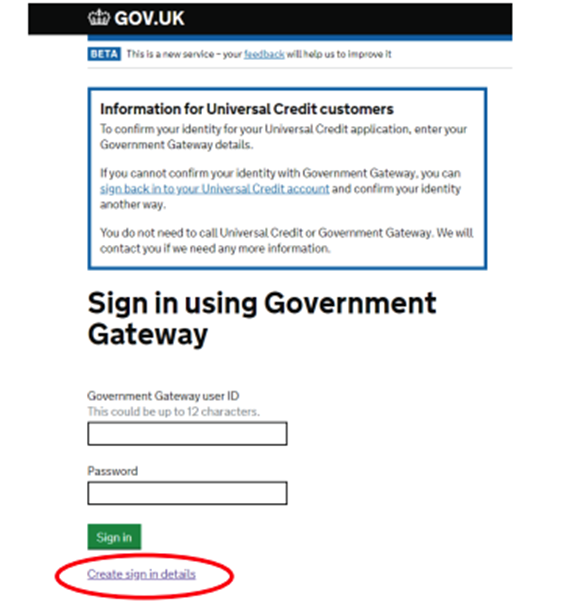
You will need to register online by using this link on the official website of the HMRC to access the personal tax account.  

Click the ‘create sign-in details’ link given below the sign-in button to begin the registration process.  
Then you will have to enter your email address. After doing so, select Continue. 
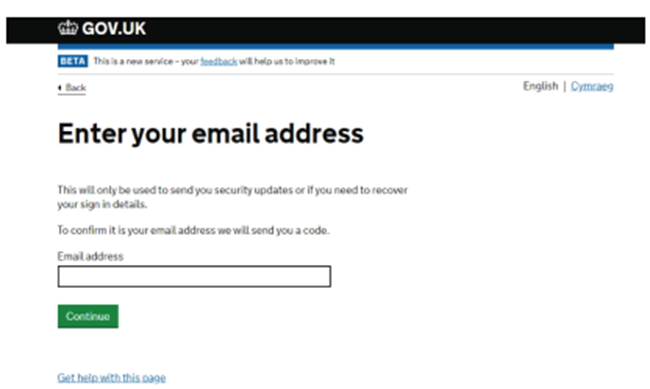
You will receive a code of 6 characters from HMRC at this email address. 

Once you have entered the details in the given box, HMRC will prompt you to enter your full name and create a password. Then you will see your Government Gateway ID number.  

2. Setting up your account 

Here the HMRC will ask you to select the type of account you need. Please select “individual” and then click the green button of “continue”.
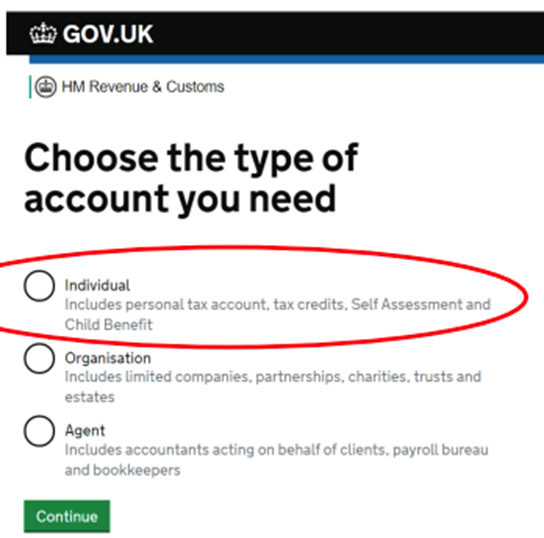
Now the HMRC will ask you to set up a method to receive an access code. It is important to know that select a method you are quite comfortable with because HMRC will use this method to send you an access code, every time you sign by using your Government Gateway user ID. 
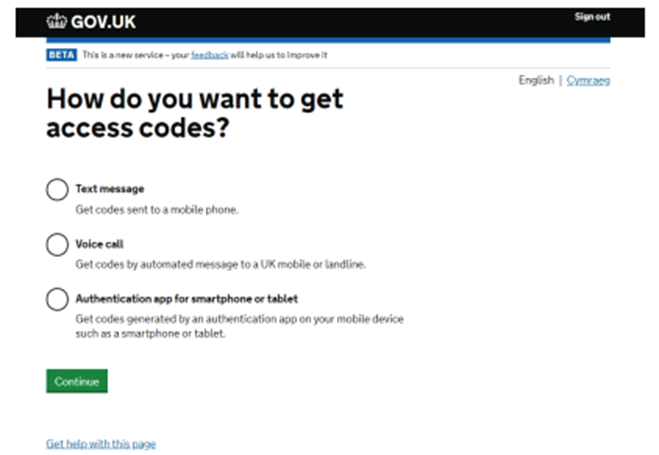
After selecting the method, you are most convenient with, click on the green button of “continue”.  

Then HMRC will ask you to enter the 6 digits access code it has provided you with.  

Kindly, enter the code and then click the green button “continue”.  

Now HMRC will ask you to confirm your identity, please provide the details where asked and then click the green button of “continue”. 

Now HMRC will ask you the way you want your identity o be confirmed by the HMRC. If you are a UK passport holder, you are recommended to use this option.  

HMRC will ask you to share the same detail you have on your passport. Please enter the required details and then click the green button of “continue”.  

Now HMRC will confirm whether the details you entered are correct and whether the personal tax account has been successfully set up. After its confirmation, you will be asked whether you would like to receive your correspondence regarding your tax affairs electronically or post via your Personal Tax Account. please select the option which is most suitable to you and select the green “continue” button.  Now you will be taken to the Personal Tax Account home page.  

3. Recovering Login Details 

If you have previously used the online services of the government Gateway or HMRC to submit your tax returns electronically via the website of HMRC. You must log in by using those account details. But if you have forgotten the details of those accounts then please select one of the links given at the bottom of the sign-in page depending on the details you need to recover.  
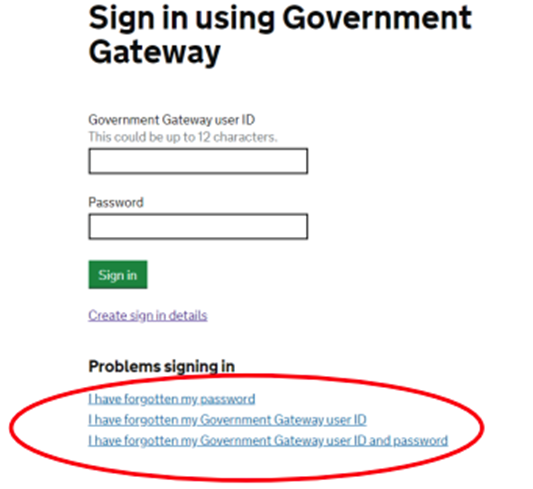
Now HMRC will take you, according to its process to recover your Government Gateway user ID or password. 

If you face any difficulty with the process, you can easily contact HMRC for help.  

Safety and security with your Personal Tax Account 

After completing the registration procedure, you are the only person to have access to your personal tax account with your user ID and password.  

Therefore, that answers your question, how do I set up my personal tax account? 

Can my Personal Tax Account Help Review my National Insurance Record? 

When it comes to reviewing your National Insurance record, your personal tax account can be particularly helpful. You can easily review your national insurance record that covers your entire working history by accessing your personal tax account. Reviewing your National Insurance record helps you ensure that your entire record is accurate and up to date. It also identifies any gaps in your contributions that might need to be addressed.  

After that, when you reach the pension age, you can ensure that you have the correct credits to receive a full pension. If you find any discrepancies and gaps, the best option is to contact HMRC for investigation.  

Can my Personal Tax Account Help Review my Employment Records? 

Yes, your personal tax account gives you the additional benefit of reviewing your employment records.  

It’s another benefit is that if you cannot obtain a copy of your P60 from your employer, you get it from your personal tax account. Once you understand how I set up my personal tax account, you can move forward with these steps.  

Can Personal Tax Accounts Provide Information on PAYE codes? 

Another useful feature of a personal tax account is that it enables you to view the PAYE codes use applied to your employment.  

Moreover, you also have the option to modify your PAYE code directly from your personal tax account.  

Is your Personal Information Secure? 

When it comes to security, HMRC takes it seriously and uses firewall protection for all its systems. This is like a bulwark to provide maximum protection for your information because its detective capacity is strong enough to detect any unauthorized entry. All the data that you share with HMRC is encrypted and nobody can see your data except yourself.  

Furthermore, you also must be conscious and vigilant of your online safety. Avoid sharing your user ID or password with anybody. If you cannot remember it and want to note it down, then ensure to keep it in a discrete place. Surely, you now have a clear idea of how I set up my personal tax account

How Can I Ensure Nobody Accessed My Account? 

One of the easiest ways, you must know whether someone accessed your account or not is the security measure of the system that shows you the time and date you logged into your personal tax account. Check this list frequently, if see any such thing that does not look right, immediately contact HMRC through their website.  

Another safety measure built into the system is automatic logging out of your account if it is not active after 15 minutes. If you are forgetful, don’t worry, the system will secure your account. 

Does HMRC Ask for Personal and Financial Detail? 

It is important to know, and HMRC often emphasizes to be mindful of the procedure of HMRC that it does not ask for any personal or financial details by email, phone, or text. Always be on watch to protect yourself from the scammer, if notice any such thing as suspicious, report it to the HMRC, even if you have not lost anything. Undoubtedly, it is in your best interest to do so.   

Shortly speaking, setting up a personal tax account offers a wide range of benefits by saving you a great deal of energy and time that you can utilize in something more productive and creative.  You can easily check state pensions, national insurance contributions, and many other tax affairs online without standing in long queues on helplines or doing related paperwork. It keeps you updated and informed about your tax status. And through it, you can also keep HMRC timely updated and informed about your circumstances. Most importantly, your financial information is safe and secure. 

FAQs

How do I activate my UTR number?

If your UTR (Unique Taxpayer Reference) is inactive, you can reactivate it by:

  1. Contacting HMRC – Call the Self Assessment helpline and request reactivation.
  2. Providing Personal Details – You may need to confirm your full name, address, National Insurance number, and date of birth.
  3. Waiting for Confirmation – HMRC will confirm reactivation, usually via letter or phone.

How to check income tax?

You can check your income tax by:

  1. Logging into your HMRC Personal Tax Account – View your tax payments, liabilities, and tax code.
  2. Using the HMRC App – Check your tax status on the go.
  3. Contacting HMRC – If you have queries about your tax records, call them for assistance.

How to file income tax?

To file your income tax return:

  1. Register for Self Assessment if you haven’t already.
  2. Gather Necessary Documents – Income records, expenses, and other tax-related details.
  3. Complete Your Tax Return – Log in to your HMRC account and fill out the SA100 form.
  4. Submit Before the Deadline – The deadline for online submissions is usually 31 January.

How do I create a UTR account?

To get a UTR number:

  1. Register for Self Assessment with HMRC.
  2. Provide Personal Information – Full name, address, date of birth, and National Insurance number.
  3. Wait for UTR to Arrive – It is usually sent by post within 10 working days in the UK.

How do I check if my UTR is active?

You can check if your UTR is active by:

  1. Logging into your HMRC account to view your Self Assessment status.
  2. Calling HMRC – Provide your UTR and ask if it is active.

How to set up self-employed?

  1. Register with HMRC for Self Assessment.
  2. Keep Records of your income and business expenses.
  3. Submit Your Tax Returns Annually to pay the correct amount of tax and National Insurance.

How do I check my UTR online?

You can find your UTR number by:

  1. Logging into your HMRC account – Your UTR is listed in your tax documents.
  2. Checking Previous HMRC Letters – It appears on tax returns and payment reminders.

How do I check my active tax status?

  1. Use Your HMRC Personal Tax Account – Check your tax payments and liabilities.
  2. Contact HMRC – If you’re unsure about your status, they can confirm it.

How long does it take to get a UTR?

HMRC usually issues a UTR within 10 working days if you’re in the UK or 21 days if you’re abroad.

How much money do you have to make as a self-employed person?

If you earn over £1,000 per tax year from self-employment, you must register with HMRC and file a tax return.

How do self-employed get money?

Self-employed individuals earn money by:

  • Charging clients/customers directly for services.
  • Selling products online or in-store.
  • Receiving payments through invoices, bank transfers, or platforms like PayPal.

How can I make money from home self-employed?

Options for making money from home include:

  • Freelancing – Writing, graphic design, programming, etc.
  • E-commerce – Selling on platforms like eBay, Etsy, or Amazon.
  • Affiliate Marketing – Promoting products for commissions.
  • Online Courses – Teaching skills through platforms like Udemy or Teachable.

How to earn $1,000 per day from home?

Earning $1,000 per day requires high-income skills or scalable businesses:

  • Dropshipping or E-commerce – Selling trending products online.
  • Stock Trading or Cryptocurrency – Requires experience and risk management.
  • Freelance Consulting – High-ticket services like business coaching.
  • Online Courses & Digital Products – Selling valuable knowledge at scale.

What is the fastest way to become self-employed?

  1. Identify a skill or service you can offer immediately.
  2. Register as self-employed with HMRC.
  3. Find clients through online platforms like Fiverr, Upwork, or LinkedIn.
  4. Start small and reinvest earnings to grow your business.

How to earn money from Google at home?

Google offers multiple ways to make money:

  • Google AdSense – Earn from ads on a blog or YouTube channel.
  • Google Play Store – Develop and sell apps.
  • Google Opinion Rewards – Get paid for surveys.
  • YouTube Partner Program – Monetize videos through ads and memberships.

click here for more

Categories
Articles Blogs News

How to Master HMRC Compliance: 3 Proven Strategies for Landlords and Property Investors

In the dynamic world of UK property investment, understanding and adhering to HM Revenue & Customs (HMRC) regulations is crucial. HMRC compliance assistance isn’t just about ticking boxes—it’s about safeguarding your investments, avoiding hefty fines, and maintaining a reputable standing in the industry. This comprehensive guide will help landlords and property investors navigate the complex terrain of tax compliance for landlords, ensuring smooth sailing in your property ventures.

property investors
property investors

The Importance of HMRC Compliance

Imagine driving a car without understanding the rules of the road. Sooner or later, you’re bound to run into trouble. Similarly, without proper knowledge of property tax compliance UK, landlords and investors risk facing penalties, legal issues, and financial losses.

Why Compliance Matters

  • Financial Security: Avoid unexpected fines and penalties.
  • Legal Protection: Stay within the bounds of the law to protect your assets.
  • Reputation Management: Maintain trust with tenants, investors, and financial institutions.

As Emily Thompson, a seasoned property investor, puts it: “Compliance isn’t just about following rules; it’s about building a sustainable and trustworthy business.”

Understanding Your Tax Obligations

1. Registering for Self-Assessment

If you earn income from property rentals, you must register for self-assessment with HMRC.

  • Deadline: Register by 5th October following the tax year you started renting out property.
  • Process: Complete the online registration on the HMRC website.

2. Filing Self-Assessment Tax Returns

Accurate self-assessment guidance is essential to report your income and expenses correctly.

  • Deadlines:
    • Paper Returns: 31st October following the end of the tax year.
    • Online Returns: 31st January following the end of the tax year.
  • Payments: Any tax owed must also be paid by 31st January.

3. Declaring Rental Income

All rental income must be declared, including:

  • Residential Lettings: Houses, flats, rooms.
  • Commercial Properties: Offices, shops.
  • Holiday Lettings: UK and overseas properties.

Real-Life Example: John, a landlord in Manchester, failed to declare income from his Airbnb property. HMRC’s compliance auditing caught the discrepancy, resulting in fines and backdated taxes.

Allowable Expenses and Deductions

Understanding what expenses you can deduct is key to reducing your tax bill.

Common Allowable Expenses

  • Maintenance and Repairs: Fixing existing issues (not improvements).
  • Property Management Fees: Costs of hiring letting agents.
  • Insurance: Landlord policies covering buildings, contents, and liability.
  • Utilities and Council Tax: If you pay these for your tenants.

Expert Insight: Sarah Mitchell, a tax advisor, notes, “Many landlords overlook allowable expenses, missing out on significant tax savings.”

Important Deadlines and Penalties

Key Deadlines

  • 5th October: Register for self-assessment.
  • 31st October: Paper tax return submission.
  • 31st January: Online tax return submission and payment of tax owed.
  • 31st July: Second payment on account (if applicable).

Penalties for Non-Compliance

  • Late Filing: £100 immediate penalty, increasing over time.
  • Inaccurate Returns: Penalties range from 0% to 100% of the tax due, depending on the severity.
  • Interest Charges: Applied to late payments.

Comparison: Think of HMRC deadlines as train departure times—miss them, and you face delays and additional costs to reach your destination.

Strategies for Staying Compliant

1. Keep Detailed Records

Maintain thorough records of all transactions.

  • Income Records: Rent received, dates, and sources.
  • Expense Receipts: Keep invoices and receipts for all allowable expenses.
  • Digital Tools: Use accounting software to organize and store records.

2. Stay Informed on Tax Changes

Tax laws evolve, and staying updated is vital.

  • HMRC Updates: Subscribe to newsletters.
  • Professional Advice: Regular consultations with a tax professional.

3. Utilize HMRC Compliance Assistance

  • Online Resources: HMRC provides guides and tools.
  • Helplines: Direct support for specific queries.

Analogy: Navigating tax compliance without assistance is like exploring a new city without a map—possible but unnecessarily challenging.

Dealing with Self-Assessment

Understanding Self-Assessment

It’s a system HMRC uses to collect Income Tax. Taxpayers must complete a tax return to declare income and capital gains.

Filling Out Your Tax Return

  • Sections to Complete:
    • Property Income: Declare rental income and expenses.
    • Other Income: Include any additional earnings.
  • Calculations: HMRC will calculate the tax owed based on your return.

Tip: Double-check figures to ensure accuracy and avoid triggering an audit.

The Role of Compliance Auditing UK

What is Compliance Auditing?

An independent review to ensure you’re adhering to tax laws and regulations.

Benefits

  • Identify Issues Early: Catch mistakes before HMRC does.
  • Peace of Mind: Confidence that your affairs are in order.
  • Professional Guidance: Recommendations to improve compliance.

Real-Life Example: After a compliance audit, Linda discovered she had been underclaiming expenses. Correcting this saved her £2,000 in taxes.

Consequences of Non-Compliance

Financial Penalties

  • Fixed Penalties: For late submissions.
  • Percentage Penalties: Based on the amount of tax owed.

Legal Action

  • Prosecution: In severe cases, leading to criminal records.
  • Asset Seizure: HMRC may recover debts through your assets.

Expert Quote: Mark Turner, a legal expert, warns, “Non-compliance can escalate quickly, turning financial missteps into legal battles.”

Addressing Common Misconceptions

“I’m a Small Landlord; HMRC Won’t Notice Me.”

HMRC employs sophisticated data analytics to identify discrepancies, regardless of the size of your portfolio.

“Cash Payments Don’t Need to Be Declared.”

All income, including cash payments, must be declared. Undeclared income is illegal and constitutes tax evasion.

Taking Proactive Steps

Seek Professional Advice

  • Accountants: Specializing in property tax.
  • Tax Advisors: Offering tailored strategies.

Educate Yourself

  • Workshops and Seminars: Learn from experts.
  • Online Courses: Enhance your understanding.

Analogy: Proactively managing compliance is like maintaining your car—regular check-ups prevent breakdowns.

Conclusion: Secure Your Investment’s Future

Navigating HMRC compliance may seem daunting, but it’s an essential part of being a responsible landlord or property investor. By staying informed, organized, and proactive, you can focus on growing your investments without worrying about unexpected hurdles.

Ready to Simplify Your Tax Compliance?

Our experts specialize in HMRC compliance assistance for landlords and property investors. Contact us today to ensure you’re on the right track and make the most of your property ventures.


Frequently Asked Questions

1. What is HMRC compliance assistance, and why do I need it?

Answer: HMRC compliance assistance involves guidance and support to ensure you meet all tax obligations. It’s essential to avoid penalties, legal issues, and to maximize your financial benefits.

2. How do I register for self-assessment as a landlord?

Answer: You can register online via the HMRC website by completing the relevant forms before the 5th October deadline following the tax year you started receiving rental income.

3. What are allowable expenses for landlords?

Answer: Allowable expenses include maintenance and repairs, property management fees, insurance, and utility bills paid on behalf of tenants. Capital improvements are not allowable expenses.

4. What happens if I miss the self-assessment filing deadline?

Answer: Missing the deadline results in an automatic £100 penalty, which increases over time. Additional penalties and interest may apply based on the tax owed.

5. How can compliance auditing UK help me?

Answer: Compliance auditing helps identify any areas of non-compliance, offers recommendations for improvement, and provides peace of mind that your tax affairs are in order.

6. Do I need to declare income from overseas properties?

Answer: Yes, UK residents must declare worldwide income, including rental income from overseas properties, on their self-assessment tax return.

7. Can I handle HMRC compliance on my own?

Answer: While possible, the complexities of tax laws make professional assistance beneficial. Experts can ensure accuracy and help you take advantage of all available tax reliefs.

8. What is the penalty for undeclared rental income?

Answer: Penalties can range from 0% to 100% of the tax due, depending on the nature of the error (careless or deliberate). In severe cases, legal action may be taken.

9. How often should I review my tax compliance status?

Answer: Regularly—ideally annually or when significant changes occur in your property portfolio or tax laws.

10. Where can I find reliable self-assessment guidance?

Answer: HMRC’s official website provides comprehensive guidance. Additionally, professional tax advisors can offer personalized assistance.

Visit felixaccountants.com for more 

Categories
Articles Blogs News

7Powerful Cash Flow Tips for Successful Property Developers

In the fast-paced world of property development, managing cash flow is like keeping the engine running in a high-performance car. Without proper fuel—cash—your projects can stall, no matter how promising they are. Effective cash flow management ensures that your development projects move forward smoothly, unexpected expenses don’t derail your plans, and you maintain the liquidity needed to seize new opportunities. This guide offers actionable tips on cash flow analysis in the UK, tailored specifically for property developers aiming to enhance their financial stability and growth.

property Developers

The Crucial Role of Cash Flow in Property Development

Imagine embarking on an ambitious construction project—a sleek apartment complex in the heart of London. You’ve secured the land, obtained permits, and started building. But halfway through, unexpected costs arise, and your funds start dwindling. Without sufficient cash flow, the project grinds to a halt, leaving you with a half-finished building and mounting debts.

This scenario underscores the importance of financial management for property developers. Proper cash flow management isn’t just about keeping the lights on; it’s about ensuring the longevity and profitability of your business.

Actionable Tips for Effective Cash Flow Management

1. Conduct Regular Cash Flow Analysis UK

Performing regular cash flow analysis is akin to getting routine health check-ups—it helps you spot potential issues before they become serious problems.

How to Implement:

  • Monitor Inflows and Outflows: Keep a close eye on all money coming in and going out.
  • Forecast Future Cash Flows: Anticipate upcoming expenses and income over the next 6-12 months.
  • Adjust Accordingly: If projections show a potential shortfall, take steps to mitigate it.

Expert Insight: John Matthews, a specialist in property developer accounting, advises, “Regular cash flow analysis enables developers to make informed decisions, avoid financial pitfalls, and capitalize on opportunities.”

2. Create Detailed Budgets for Development Projects

A comprehensive budget is your roadmap to project success.

Benefits:

  • Identifies Funding Needs: Understand how much capital is required at each project stage.
  • Controls Costs: Prevents overspending by setting clear financial boundaries.
  • Enhances Decision-Making: Provides a financial framework for evaluating project changes.

Real-Life Example: Sarah, a property developer in Birmingham, avoided a potential £50,000 overspend by sticking to a detailed budget, allowing her to reallocate funds to unexpected but necessary safety upgrades.

3. Plan for Unexpected Expenses

In property development, surprises are the norm rather than the exception.

Strategies:

  • Set Aside Contingency Funds: Allocate 10-15% of your budget for unforeseen costs.
  • Regularly Review Project Progress: Frequent check-ins help identify issues early.
  • Stay Flexible: Be prepared to adjust plans as needed without compromising the project’s integrity.

Comparison: Think of contingency funds as an umbrella—you might not need it every day, but when it rains, you’ll be glad you have it.

4. Maintain Adequate Liquidity

Liquidity is the lifeblood of your business, ensuring you can meet short-term obligations.

Tips:

  • Manage Receivables Efficiently: Encourage prompt payments from clients or buyers.
  • Optimize Inventory Levels: Avoid tying up cash in excessive materials.
  • Secure Flexible Financing Options: Lines of credit can provide a cushion when cash is tight.

5. Leverage Financial Planning for UK SMEs

Adopt financial planning practices common among successful small and medium-sized enterprises.

Key Actions:

  • Set Financial Goals: Define clear short-term and long-term objectives.
  • Implement Robust Accounting Systems: Accurate records support better cash flow management.
  • Seek Professional Advice: Consultants specializing in business performance analysis UK can offer valuable insights.

Expert Quote: “Financial planning isn’t just for large corporations; SMEs and property developers stand to gain significantly from strategic financial management,” says Emily Clark, a financial advisor.

6. Use Technology to Your Advantage

Modern software tools can streamline cash flow management.

Recommendations:

  • Accounting Software: Utilize platforms like Xero or QuickBooks for real-time financial tracking.
  • Cash Flow Forecasting Tools: Predict future cash positions based on various scenarios.
  • Project Management Apps: Coordinate timelines and budgets efficiently.

7. Strengthen Supplier Relationships

Good relationships with suppliers can improve payment terms and cash flow flexibility.

Approaches:

  • Negotiate Payment Terms: Longer payment periods can ease cash outflows.
  • Bulk Purchasing Discounts: Save money by buying materials in larger quantities when feasible.
  • Reliable Partnerships: Trustworthy suppliers may prioritize your needs during tight schedules.

Analogy: Building strong supplier relationships is like having a reliable pit crew during a race—they help keep your operation running smoothly under pressure.

Addressing Potential Challenges

Counterargument: “Focusing on cash flow distracts from the creative aspects of property development.”

Response: While creativity is essential, without solid cash flow management, even the most innovative projects can fail. Balancing both ensures your vision becomes a profitable reality.

Counterargument: “I don’t have the resources to invest in financial management tools.”

Response: Many affordable or free tools are available for SMEs. Investing in these tools can save you money in the long run by preventing costly mistakes.

The Impact of Effective Cash Flow Management

Implementing these tips can lead to:

  • Improved Financial Stability: Ensure you have funds available when needed.
  • Increased Profitability: Better cash flow often translates to better negotiating power and cost savings.
  • Enhanced Reputation: Consistent financial management builds trust with investors, lenders, and partners.

Real-Life Success: After adopting rigorous cash flow management practices, Michael’s development firm in London saw a 25% increase in project completion rates and attracted new investors due to demonstrated financial competence.

Conclusion: Building a Solid Foundation for Success

Effective cash flow management is not just about numbers; it’s about building a solid foundation for your property development business. By taking proactive steps to manage your finances, you position yourself to navigate challenges, seize opportunities, and achieve long-term success.

Take the Next Step Toward Financial Excellence

Don’t let cash flow issues hinder your projects. Contact us today for personalized advice on financial management for property developers. Let us help you build a robust financial strategy that supports your vision and growth.


Frequently Asked Questions

1. Why is cash flow analysis important for property developers in the UK?

Answer: Cash flow analysis UK allows property developers to forecast their financial position, identify potential shortfalls, and make informed decisions to ensure projects stay on track financially.

2. How can property developer accounting improve my cash flow management?

Answer: Proper accounting provides accurate financial data, helps track expenses and income, ensures compliance with tax laws, and supports strategic planning, all of which enhance cash flow management.

3. What strategies can I use to handle unexpected expenses in development projects?

Answer: Set aside contingency funds, regularly monitor project progress, maintain flexibility in your plans, and build strong relationships with suppliers and contractors to negotiate favorable terms.

4. How does financial planning for UK SMEs apply to property developers?

Answer: Financial planning helps property developers set clear financial goals, manage risks, allocate resources effectively, and plan for future growth, much like any other SME.

5. What tools can assist with cash flow management?

Answer: Accounting software like Xero or QuickBooks, cash flow forecasting tools, and project management apps can streamline financial tracking and forecasting.

6. How can I improve my business performance analysis UK as a property developer?

Answer: Regularly review key performance indicators (KPIs), conduct market research, seek feedback from stakeholders, and consider professional consulting services to gain deeper insights.

7. Why is maintaining liquidity crucial for property developers?

Answer: Liquidity ensures you can meet immediate financial obligations, handle unexpected expenses, and take advantage of new opportunities without compromising ongoing projects.

8. Can I manage cash flow effectively without professional help?

Answer: While it’s possible, professional accountants and financial advisors offer expertise and insights that can significantly enhance your cash flow management and overall financial health.

9. How do supplier relationships impact cash flow?

Answer: Strong supplier relationships can lead to better payment terms, discounts, and priority service, all of which positively affect cash flow.

10. What are common cash flow pitfalls to avoid in property development?

Answer: Avoid underestimating project costs, neglecting regular financial reviews, failing to plan for contingencies, and overextending credit without secure financing.

click here for more

Categories
Articles Articles Blogs Guides News Today's article

Top 5 book-keeping mistakes to avoid

As bookkeepers and accountants, we frequently encounter common errors made by businesses who handle their own bookkeeping.

If you’re making the same mistakes in your business bookkeeping, these will cost your business money in either additional tax or penalties. More importantly, you won’t get the ‘right’ numbers on which to base important business decisions.

  • If you can’t see the correct amount of profit you are making, how do you know if you could hire that next (or first) person to join your team?
  • If you are entering costs incorrectly, your tax bill will also be wrong.

1 The obvious one – incorrect entries

The most common error is simply entering the wrong dates, amounts and/or category of a given cost. A simple error can become double-trouble if you’re using accounting software where your bank is connected, and sends a ‘feed’ to the app.

These apps are clever and try to match amounts paid on your bank statement with receipts you have entered into the system. It says, ‘Hey is this amount on your bank statement paying off this receipt?’.

If the values don’t match, the app won’t be able to match up the receipt you’ve entered. In most cases, this leads to the app adding the bank statement line as a cost again. This effectively is double entering that cost, once as an incorrect receipt, and once when seen on the bank statement/feed.

If you are VAT registered this is even worse, as you potentially have a double VAT claim, or at best an incorrect one!

2 Not checking your ‘accounts payable’ / ‘accounts receivable’ reports

One of the best ways to check you have these important accounts right is to bring up a ‘Accounts Payable’ report. This shows who you owe what to on any given day.

Check your Accounts Payable report … and think, “Is this correct at that date?”. If you have items that are negative figures, or you think “I don’t owe that!’”, it’s likely you have a bookkeeping problem.

Another common indicator of a mistake is where this report has negative figures on it, or have incorrect balances. What’s more, this is just one side of the problem. It’s also likely your Profit and Loss report is also wrong, and that’s the one that shows how much money you are making – or not!

Points to look out for are:

  • Personal payments. When you paid a receipt personally, so it didn’t come out of your business bank account. You just need to mark it as paid in your software.
    • Duplicate entries. If you have a balance due to one of your suppliers you know isn’t right, try checking the individual invoice/receipt listing to see if there is a duplicate amount there.
    • A negative figure. This makes it looks like you’ve overpaid. It’s often a dating issue with either the receipt or a payment, but it could be a multiple of other issues.

Now do the same with your accounts receivable report. This shows which customers owe you money. You are looking for the same errors (invoices you know are paid, negative numbers, etc).

3 Entering net wages direct to ‘wages’

You will usually have a few elements of pay to account for such as:

  • Gross wages (what it actually cost you)
    • Net wages (what went to the employees’ bank)
    • Tax/National Insurance (that you pay to HMRC having deducted it from their bank payment)
    • Employers National Insurance costs

You may also have pension costs to deal with.

Wages paid to you or your team that are run through a payroll scheme often require multiple entries. Often, we see just the net wages being put to ‘Wages’. This is incorrect as the true cost is usually much higher than the amount that goes into the employee’s bank account.

When HMRC are paid, that transaction is often put to all sorts of categories! Often the best way  to deal with this is to use a ‘Journal’ and what is known as a ‘control account’ for wages paid, PAYE and pensions.

4 Entering ‘assets’ as an expense item

Items are often treated as business ‘assets’ if they:

  • Will last more than a year
    • Are usually higher value (say over £500)

These items should get put into an asset category, not an expense.

For example, your new MacBook should go to ‘Computer Equipment’ (Asset) or ‘Plant and Machinery’ (!) (Asset) etc, rather than some other expense line. This will help make sure your accounts are correct.

Top 5 book-keeping mistakes to avoid

5 Entering drawings or dividends as a ‘wages’ expense

When you are paying yourself, some owners will put their pay to ‘wages’.

Unless they are wages paid through a payroll scheme, these costs are not technically ‘wages. They won’t be coming off your profits, as they ARE the profits! So, they shouldn’t be shown as a company expense.

  • Generally, these payments should go to accounts such as an ‘equity’ account called Dividends Paid (Ltd company) or Owners Drawing (sole trader).
    • If you’re a limited company, you might also point them at the ‘Directors Loan Account’ and deal with them later.

A final ‘Bonus Mistake’

There’s one final critical common mistake to avoid – make sure your bank balance is correct inside the software! There are many ways to do this, but one would be to bring up a ‘Balance Sheet’ report, go to the bank balance and check if the figure shown there matches your bank statement on that date.

If not, you have some work to do!

Want to avoid making these top 5 mistakes?

Ask your accountant or book a consultation with us. We offer a1-2-1 consultation so you can ask simple questions of an accountant. If you don’t have an accountant or bookkeeper yet, we’d love a chat about how we can help.

 FAQs

1. What are the consequences of making common bookkeeping errors in my business?

   Making bookkeeping mistakes can lead to additional tax burdens or penalties, inaccurate financial data for decision-making, and potential financial losses.

2. How can incorrect entries impact my bookkeeping records, especially when using accounting software?

   Incorrect entries, such as wrong dates or amounts, can lead to double entries and mismatches between bank feeds and receipts, potentially resulting in inaccurate financial reporting.

3. Why is it important to check ‘accounts payable’ and ‘accounts receivable’ reports in bookkeeping?

   Reviewing these reports helps ensure accuracy in what your business owes and is owed, identifying errors like negative balances or incorrect figures that can impact financial statements.

4. Why should net wages not be directly entered as ‘wages’ in bookkeeping records?

   Net wages should not be solely recorded under ‘wages’ as they exclude other components like gross wages, taxes, and National Insurance, which should be accounted for separately to reflect the true cost.

5. How should business assets be categorized in bookkeeping to ensure accuracy?

   Items considered as long-term assets should be categorized as such and not as expenses, distinguishing between assets like equipment or machinery and regular expenses for proper financial reporting.

6. Why should drawings or dividends not be recorded as ‘wages’ expenses in bookkeeping?

   Payments to owners should not be categorized as wages unless part of a formal payroll scheme. Instead, they should be allocated to equity accounts like Dividends Paid or Owners Drawing to accurately represent profits.

7. What is the importance of maintaining a correct bank balance in bookkeeping records?

   Ensuring that the bank balance in your bookkeeping software matches your actual bank statement is crucial for accurate financial reporting and preventing discrepancies that could affect your financial decisions.

Categories
Articles Articles Blogs Guides News Today's article

How often can you pay dividends from your limited company?

For a new small business owner, how to access the funds you need to live on yourself is a crucial question!

One of the primary ways you can take money from a limited company is via dividends. This is basically a payment to you of the profit (or part of it), from your business, after tax and adjustments.

So, how often can I take a dividend?

The short answer:

As often as you want really!

 How often can you pay dividends from your limited company?

BUT

There are some things you’ve got to get right to do so.

The slightly longer answer:

There is a general myth about dividend payments. This dates back to when companies would often only declare ‘final’ dividends at a company’s Annual General Meeting. Indeed, some ‘Articles of Association’ (the document that governs certain legal procedures around the company) might have even required this to be the case.

However, times have changed. Most small limited company owners will instead take regular ‘Interim Dividends’.

Interim Dividends and the law

To make these dividends legal, you still need to take certain steps, including:

  • To ‘declare’ the dividends
  • To keep specific records

  in the meantime, here’s a quick check list. You need:

  • Proof that you had the profits to pay out (usually company accounts or a current Balance Sheet)
  • Meeting minutes declaring the dividend
  • An entry in your records / book-keeping software
  • Production of a Dividend voucher is recommended

At this point you would usually take the money, although you don’t have to. It could instead be marked in your ‘Director’s loan account’ for payment later, for example.

Dividends can be a really useful tool for tax-efficiently extracting money for a limited company.

However, they can also be technically challenging, and planning for the potential personal tax bill on them can cause a major headache.

Any Questions ?

You can book a 1-2-1 consultation with us so you can ask simple questions, and then go on to divvy out the dividends with more confidence yourself. It’s a great way for you to get the help you need, when you need it.

FAQs

1. What are dividends in a limited company?

Dividends are payments made by a limited company to its shareholders out of the company’s profits.

2. How often can you pay dividends from your limited company?

Dividend payments can be made at any time as long as the company has sufficient distributable profits available.

3. Is there a specific frequency for dividend payments in a limited company?

There is no set frequency for dividend payments in a limited company. They can be paid out regularly or on an ad-hoc basis, depending on the company’s financial situation and the decision of the directors.

4. Can dividends be paid if the company is not making a profit?

Dividends can only be paid out of profits, so if the company is not making a profit or does not have sufficient distributable reserves, dividends cannot be paid.

5. How do I determine if my company has enough profits to pay dividends?

It is essential to review the company’s financial statements and consult with an accountant to ensure that the company has enough distributable profits before declaring and paying dividends.

6. Are there any legal restrictions on dividend payments in limited companies?

Yes, there are legal restrictions and guidelines that must be followed when paying dividends, including ensuring that the company has enough distributable profits and complying with statutory requirements.

7. What are the tax implications of receiving dividends from a limited company?

Dividends are subject to dividend tax, which is paid by the shareholders. The tax rates and allowances for dividends can vary, so it is advisable to seek advice from a tax professional.

8. Can dividends be reinvested back into the company?

Yes, shareholders can choose to reinvest their dividends back into the company by purchasing additional shares or through other means as outlined in the company’s dividend reinvestment plan.

What should I do if I have more questions about paying dividends from my limited company?

Categories
Articles Articles Blogs Guides News Today's article

How Property Developers Can Maximize Profits Through Effective Accounting

In the competitive world of property development, turning a profit isn’t just about finding the right plot of land or constructing eye-catching buildings—it’s about managing your finances with precision. Property developer accounting plays a pivotal role in ensuring that every pound invested works hard for you. By adopting robust accounting practices, property developers in the UK can enhance profitability, reduce risks, and set the stage for long-term success.

The Importance of Effective Accounting in Property Development

Imagine navigating a complex maze blindfolded; without clear financial insight, this is what property development can feel like. Effective accounting removes the blindfold, providing a clear map of your financial landscape. Take James, for example, a property developer in London who struggled with unexpected costs eating into his profits. By embracing strategic financial planning for property developers, James was able to identify inefficiencies, control expenses, and ultimately increase his profit margins.

Key Strategies to Enhance Profitability

1. Implement Detailed Cost Analysis

Understanding where your money goes is the first step toward maximizing profits. Cost analysis services UK help property developers identify and control expenses throughout the project lifecycle.

Benefits of Cost Analysis:

  • Identify Unnecessary Expenses: Pinpoint and eliminate wasteful spending.
  • Improve Budget Accuracy: Create realistic budgets that reflect actual costs.
  • Enhance Negotiation Power: Use detailed cost data to negotiate better deals with suppliers and contractors.

Real-Life Example: Sarah, a developer in Manchester, used cost analysis to discover that she was overspending on materials by 10%. By renegotiating with suppliers, she saved £50,000 on her next project.

2. Embrace Accurate Budgeting and Financial Forecasting

Accurate budgeting is like building a strong foundation for your project. Without it, the entire structure can crumble.

Strategies for Effective Budgeting:

  • Historical Data Analysis: Use past project data to inform future budgets.
  • Include Contingencies: Allocate funds for unexpected expenses.
  • Regular Reviews: Adjust budgets as projects progress and circumstances change.

Financial forecasting allows you to anticipate future financial positions and make informed decisions. It’s essential for profitability improvement UK.

Expert Insight: Emily Thompson, a financial advisor, says, “Regular financial forecasting enables developers to anticipate market changes and adjust strategies proactively.”

3. Optimize Cash Flow Management

Cash flow is the lifeblood of any business, but it’s especially critical in property development where projects are capital-intensive.

Tips for Effective Cash Flow Management for Developers:

  • Monitor Cash Flow Regularly: Keep a close eye on cash inflows and outflows.
  • Align Payment Schedules: Match outgoing payments with incoming funds to avoid shortfalls.
  • Manage Debt Wisely: Use financing options strategically to maintain liquidity without overleveraging.

Analogy: Think of cash flow like the fuel in your car; no matter how well-built the vehicle is, it won’t go anywhere without fuel.

4. Leverage Technology and Accounting Software

Modern accounting software can streamline processes, reduce errors, and provide real-time financial insights.

Advantages:

  • Automation of Routine Tasks: Save time on invoicing, payroll, and expense tracking.
  • Real-Time Reporting: Access up-to-date financial data anytime.
  • Better Compliance: Ensure adherence to tax laws and regulations.

Case Study: Michael’s development firm adopted an integrated accounting system, reducing administrative costs by 15% and gaining valuable insights into project profitability.

5. Seek Professional Accounting Assistance

Partnering with experts in property developer accounting ensures that you have the right strategies in place.

Benefits:

  • Specialized Knowledge: Professionals understand industry-specific challenges and regulations.
  • Tax Planning: Optimize tax liabilities through effective planning.
  • Strategic Advice: Receive guidance on financial structuring and investment decisions.

Quote from an Expert: “Property development accounting isn’t just bookkeeping; it’s strategic financial management,” notes Laura Williams, a certified accountant specializing in real estate.

property-developers

Addressing Common Challenges

Counterargument: “I Can Handle Accounting Myself to Save Money”

Response: While handling accounting internally might seem cost-effective, it often leads to missed opportunities for savings and increased risk of errors. Professional accountants can identify tax deductions, ensure compliance, and provide insights that save money in the long run.

Counterargument: “Accounting Doesn’t Impact My Profitability That Much”

Response: Effective accounting directly affects profitability by controlling costs, optimizing cash flow, and informing strategic decisions. Neglecting it can lead to overspending and missed profit opportunities.

The Impact of Effective Accounting on Profitability

Implementing robust accounting practices leads to:

  • Increased Profit Margins: Through cost control and tax optimization.
  • Better Decision-Making: With accurate financial data at your fingertips.
  • Risk Mitigation: Identifying potential financial pitfalls before they become problems.

Statistic: According to the Chartered Institute of Building, developers who prioritize financial management see an average of 20% improvement in project profitability.

Taking Action: Steps to Implement Effective Accounting

  1. Assess Your Current Practices: Identify areas where your accounting processes can improve.
  2. Invest in Training or Hire Experts: Ensure your team has the necessary skills or partner with professionals.
  3. Implement the Right Tools: Choose accounting software that fits your needs.
  4. Regularly Review Financial Performance: Schedule routine check-ins to stay on top of your finances.

Conclusion: Building a Profitable Future

Effective accounting is more than just number-crunching; it’s a strategic asset that can propel your property development business forward. By focusing on detailed cost analysis, accurate budgeting, cash flow management, leveraging technology, and seeking professional assistance, you can maximize profits and achieve sustainable growth.

Ready to Elevate Your Property Development Profits?

Our team specializes in financial planning for property developers and offers tailored solutions to meet your unique needs. Contact us today to discover how we can help you build a more profitable future.


Frequently Asked Questions

1. Why is specialized property developer accounting important?

Answer: Property development involves unique financial challenges such as long project cycles, complex regulations, and significant capital investment. Specialized accounting ensures accurate financial management tailored to these specific needs.

2. How can cost analysis services UK improve my profitability?

Answer: Cost analysis services identify inefficiencies and unnecessary expenses, allowing you to reduce costs and increase profit margins. They provide detailed insights into where your money is going and how to optimize spending.

3. What role does financial planning play in property development?

Answer: Financial planning helps you anticipate future expenses and revenues, manage cash flow, and make informed investment decisions. It lays the groundwork for successful project execution and profitability.

4. How can I improve cash flow management for developers?

Answer: Improve cash flow by monitoring it regularly, aligning payment schedules with income, managing debts effectively, and maintaining a cash reserve for unexpected expenses.

5. Is investing in accounting software worth it?

Answer: Yes, accounting software can automate routine tasks, reduce errors, and provide real-time financial data, which helps in making timely and informed decisions, ultimately saving money and improving efficiency.

6. Can professional accounting services help with tax planning?

Answer: Absolutely. Professional accountants can identify tax-saving opportunities, ensure compliance with tax laws, and help you plan strategically to minimize tax liabilities.

7. How often should I review my financial plans and budgets?

Answer: Regular reviews are crucial. It’s advisable to review budgets monthly and conduct comprehensive financial planning quarterly or when significant changes occur in your business or the market.

8. What are the risks of poor accounting practices in property development?

Answer: Poor accounting can lead to cost overruns, cash flow issues, legal penalties for non-compliance, and ultimately, reduced profitability or even business failure.

9. How does accurate budgeting contribute to profitability improvement UK?

Answer: Accurate budgeting ensures that all costs are accounted for, reducing the likelihood of unexpected expenses. It helps in setting realistic financial goals and keeping the project on track financially.

10. How can I get started with professional property developer accounting services?

Answer: Start by contacting a firm specializing in property development accounting. They can assess your current financial practices and tailor services to meet your specific needs.


Categories
Articles Articles Blogs Guides News Today's article

A Comprehensive Guide to Landlord Accounting in the UK

Managing rental properties can be a rewarding venture, but without proper accounting practices, it can feel like navigating a maze blindfolded. Landlord accounting services are essential for property owners who want to maximize profits, stay compliant with UK tax laws, and ensure smooth rental income management. In this comprehensive guide, we’ll delve into effective strategies for property accounting for landlords, helping you keep your finances in order and your stress levels low.

Understanding the Importance of Proper Accounting

Imagine Sarah, a landlord with a handful of properties in Manchester. She started renting out her inherited family home and quickly expanded her portfolio. However, without a solid grasp of rental income management, she found herself overwhelmed during tax season. Missing receipts, untracked expenses, and confusion over tax obligations led to hefty fines from HMRC. Sarah’s story isn’t unique; many landlords face similar challenges.

By implementing robust accounting practices, you can avoid these pitfalls. Proper accounting isn’t just about crunching numbers—it’s about gaining control over your financial health and ensuring compliance with UK tax regulations.

ACCOUNTING

Getting Started: Essential Accounting Practices for Landlords

1. Separate Personal and Business Finances

One of the first steps in effective property accounting for landlords is keeping your personal and rental finances separate.

  • Open a Dedicated Bank Account: This simplifies tracking income and expenses related to your rental properties.
  • Use Accounting Software: Tools like QuickBooks or Xero can help manage your finances efficiently.

Analogy: Think of your finances as two different gardens. You wouldn’t water your vegetable patch with the same care as your flower bed; each requires specific attention.

2. Keep Detailed Records of Income and Expenses

Accurate record-keeping is the backbone of landlord accounting services.

  • Track Rental Income: Record all payments received, noting the dates and amounts.
  • Document Expenses: Keep receipts and invoices for repairs, maintenance, and other deductible expenses.
  • Maintain a Mileage Log: If you travel for property-related matters, log your mileage for potential tax deductions.

Real-Life Example: John, a landlord in London, uses a simple spreadsheet to track his expenses. At tax time, he easily provides his accountant with organized records, ensuring he claims all allowable deductions.

3. Understand Your Tax Obligations

Staying compliant with UK tax regulations is crucial to avoid penalties.

  • Register for Self-Assessment: If your rental income exceeds £1,000 per year, you must file a self-assessment tax return.
  • Know the Tax Deadlines: Online tax returns are due by 31 January each year.
  • Calculate Taxable Income Correctly: Deduct allowable expenses from your rental income to determine your taxable profit.

Expert Insight: HMRC estimates that a significant portion of tax penalties stem from late or incorrect filings. Staying informed can save you money and stress.

Navigating Allowable Expenses and Deductions

1. Identify Allowable Expenses

Understanding what expenses you can deduct is key to reducing your tax bill.

  • Maintenance and Repairs: Costs for fixing existing issues, like repairing a leaky roof.
  • Utilities and Services: If you cover utilities or council tax for your tenants.
  • Insurance Premiums: Landlord-specific insurance policies are deductible.
  • Professional Fees: Accounting, legal fees, and letting agent commissions.

Important Note: Capital expenses, such as improvements that increase the property’s value (e.g., adding a conservatory), are not immediately deductible but may be used to offset Capital Gains Tax when you sell.

2. Capital Allowances

For furnished properties, you may claim the Replacement Domestic Items Relief.

  • Appliances and Furniture: Deduct the cost of replacing items like sofas, beds, or refrigerators.
  • Restrictions Apply: Only the cost of a like-for-like replacement is deductible.

Example: If you replace a standard washing machine with a high-end model, you can only claim the cost equivalent to the original.

Managing Rental Income Effectively

1. Implement Efficient Rent Collection Methods

Timely rental income is vital for cash flow.

  • Automated Payments: Encourage tenants to set up standing orders.
  • Online Portals: Use property management software to track payments.

2. Handle Late Payments Professionally

Late or missed payments can disrupt your finances.

  • Clear Communication: Remind tenants promptly and professionally.
  • Know Your Legal Rights: Understand the procedures for eviction if necessary.

Comparison: Just as a business invoices clients promptly, landlords should treat rental collection with the same diligence.

Staying Compliant with HMRC Regulations

1. Register for the Right Schemes

  • Non-Resident Landlord Scheme: If you live abroad but rent out UK property, special rules apply.
  • VAT Registration: Generally not required unless you provide additional services beyond standard renting.

2. File Accurate Self-Assessment Tax Returns

  • Include All Income: HMRC cross-references data, so ensure accuracy.
  • Claim All Deductions: Don’t miss out on allowable expenses that reduce your tax liability.

3. Keep Records for the Required Time

  • Minimum of 5 Years: HMRC requires records to be kept for at least five years after the 31 January submission deadline.

Tip: Digital records are acceptable, but backups are essential to prevent data loss.

The Benefits of Professional Landlord Accounting Services

1. Expertise in Property Taxation

Professionals stay updated on tax law changes affecting landlords.

  • Maximize Deductions: Ensure you’re claiming all allowable expenses.
  • Avoid Penalties: Accurate filings prevent costly mistakes.

2. Time Savings

Focus on managing your properties while accountants handle the numbers.

3. Peace of Mind

Confidence that your finances comply with regulations and are optimized for tax efficiency.

Quote from an Expert: “Engaging with a professional accountant can save landlords more than just money—it can save them from legal troubles,” says Lisa Matthews, a certified accountant specializing in property management.

Potential Challenges and How to Overcome Them

Challenge: “I only have one property; do I really need professional accounting?”

Solution: Even with a single property, the complexities of tax laws can lead to unintentional errors. Professional advice ensures compliance and maximizes your return on investment.

Challenge: “Accounting software seems complicated.”

Solution: Many user-friendly options are available, and some accountants offer software training or services to manage the software on your behalf.

Conclusion: Take Control of Your Landlord Finances

Effective property accounting for landlords is not just about meeting legal obligations—it’s about empowering yourself to make informed financial decisions. By implementing these strategies, you can optimize your rental income, reduce stress, and focus on growing your property portfolio.

Ready to Simplify Your Landlord Accounting?

Our expert team specializes in landlord accounting services tailored to your unique needs. Contact us today for personalized advice and take the first step toward financial peace of mind.


Frequently Asked Questions

1. What are the key responsibilities in landlord accounting?

Answer: Key responsibilities include tracking rental income and expenses, maintaining detailed financial records, understanding and meeting tax obligations, and staying compliant with HMRC regulations.

2. Which expenses can landlords claim to reduce taxable income?

Answer: Landlords can claim expenses such as maintenance and repairs, utility bills paid on behalf of tenants, insurance premiums, professional fees, and interest on loans (subject to restrictions).

3. Do I need to file a self-assessment tax return if I have rental income?

Answer: Yes, if your rental income exceeds £1,000 per year, you must register for self-assessment and file a tax return annually.

4. How can professional landlord accounting services benefit me?

Answer: Professional services offer expertise in property taxation, ensure compliance with tax laws, maximize allowable deductions, save you time, and provide peace of mind.

5. What happens if I make a mistake on my tax return?

Answer: Mistakes can lead to penalties and interest charges from HMRC. It’s crucial to file accurate returns, and professional accountants can help prevent errors.

6. How long should I keep my financial records as a landlord?

Answer: You should keep all financial records for at least five years after the 31 January submission deadline of the relevant tax year.

7. Can I deduct mortgage interest from my rental income?

Answer: Mortgage interest relief has been phased out and replaced with a 20% tax credit on interest payments. This affects higher-rate taxpayers more significantly.

8. Is accounting software necessary for managing my rental properties?

Answer: While not mandatory, accounting software can streamline record-keeping, reduce errors, and make tax filing easier.

9. What is the Non-Resident Landlord Scheme?

Answer: This scheme applies if you live abroad and rent out property in the UK. Tax is deducted from your rental income by your letting agent or tenant before it’s paid to you, unless HMRC approves receiving rent without deduction.

10. How can I ensure I’m staying compliant with UK tax laws as a landlord?

Answer: Stay informed about tax regulations, maintain accurate records, file returns on time, and consider engaging professional accounting services for expert guidance.

Categories
Articles Articles Blogs Guides News Today's article

Common Accounting Mistakes Made by Landlords and How to Avoid Them

Managing rental properties can be a lucrative venture, but it comes with its fair share of responsibilities and challenges. Among these, maintaining accurate financial records is paramount. Unfortunately, many landlords stumble over common accounting pitfalls that can lead to financial loss, legal trouble, and unnecessary stress. In this comprehensive guide, we’ll explore the most frequent landlord accounting mistakes and provide practical advice on how to avoid them, ensuring smooth operations and compliance with HMRC regulations.

The Importance of Proper Accounting for Landlords

Imagine you’re sailing a ship without a compass or a map. You might navigate successfully for a while, but eventually, you’ll lose your way. Similarly, neglecting proper property accounting for landlords is like navigating without instruments—it leaves you vulnerable to errors, penalties, and financial instability.

Take Sarah, for example, a landlord who managed three rental properties in London. She thought she could handle her finances without professional help. However, she overlooked allowable expenses and misreported her rental income. This oversight led to an HMRC audit, resulting in hefty fines and sleepless nights.

By understanding and addressing common accounting mistakes, landlords can not only avoid penalties but also optimize their profits and gain peace of mind.

Accounting Mistakes

Common Accounting Mistakes and How to Avoid Them

1. Mixing Personal and Business Finances

One of the most prevalent mistakes is failing to separate personal and rental property finances.

Why It’s a Problem:

  • Confusion in Tracking Expenses: Personal and business expenses become intertwined, making it difficult to track deductible expenses accurately.
  • Tax Compliance Issues: HMRC requires clear records of business transactions for accurate tax assessments.

How to Avoid It:

  • Open a Separate Bank Account: Dedicate a bank account exclusively for rental income and expenses.
  • Use Accounting Software: Tools like QuickBooks or Xero help manage finances and keep records organized.

Expert Insight: “Keeping personal and business finances separate is foundational for any landlord aiming for financial clarity and compliance,” says Jane Smith, a certified accountant specializing in real estate.

2. Failing to Keep Detailed Records

Incomplete or disorganized record-keeping can lead to missed deductions and compliance issues.

Why It’s a Problem:

  • Missed Tax Deductions: Without receipts or invoices, you can’t substantiate expenses, leading to higher taxable income.
  • HMRC Penalty Risks: Inadequate records may trigger audits and penalties for non-compliance.

How to Avoid It:

  • Maintain Receipts and Invoices: Keep all documents related to property expenses, such as repairs, maintenance, and professional services.
  • Digital Record-Keeping: Use digital tools to scan and store receipts, making them easily accessible.

Real-Life Example: Mark, a landlord in Manchester, started using a cloud-based storage system for his documents. When HMRC requested information, he provided it promptly, avoiding any penalties.

3. Misreporting Rental Income

Underreporting or overreporting rental income can lead to serious legal consequences.

Why It’s a Problem:

  • Underreporting: Leads to tax evasion charges, fines, and potential legal action.
  • Overreporting: Results in overpaying taxes, reducing your net income unnecessarily.

How to Avoid It:

  • Accurate Record of Rent Received: Document all rental payments, including late fees or additional charges.
  • Regular Reconciliation: Compare your bank statements with your records monthly to ensure consistency.

4. Overlooking Allowable Expenses

Not claiming all allowable expenses means you’re paying more tax than necessary.

Why It’s a Problem:

  • Increased Tax Liability: Missing out on deductions leads to higher taxable income.
  • Cash Flow Impact: Paying more tax affects your cash flow and profitability.

How to Avoid It:

  •  

Understand Allowable Expenses: Familiarize yourself with HMRC’s guidelines on deductible expenses, such as:

  •  
  • Maintenance and repairs
  • Property management fees
  • Insurance premiums
  • Utilities paid by the landlord
  • Legal and professional fees
  •  

Consult a Professional: Engage with a tax advisor or accountant to ensure you’re claiming everything you’re entitled to.

  •  

5. Not Staying Updated with Tax Law Changes

Tax regulations change frequently, and failing to keep up can lead to non-compliance.

Why It’s a Problem:

  • Unintentional Non-Compliance: Ignorance of new laws doesn’t exempt you from penalties.
  • Missed Opportunities: You may overlook new deductions or reliefs that could benefit you.

How to Avoid It:

  • Subscribe to Updates: Follow HMRC newsletters or industry publications.
  • Regular Financial Review Services: Schedule annual or semi-annual reviews with financial professionals to stay informed.

Expert Quote: “Regular consultations with an accountant can save landlords from costly mistakes due to changing tax laws,” advises Michael Thompson, a tax compliance expert.

6. Incorrectly Handling Security Deposits

Mismanaging tenant security deposits can lead to legal issues.

Why It’s a Problem:

  • Legal Penalties: Failing to protect deposits in a government-approved scheme can result in fines.
  • Disputes with Tenants: Improper handling can damage relationships and lead to disputes.

How to Avoid It:

  • Use Approved Deposit Schemes: Register deposits with schemes like Deposit Protection Service (DPS) or Tenancy Deposit Scheme (TDS).
  • Provide Required Information: Give tenants prescribed information within 30 days of receiving the deposit.

7. Delaying Tax Payments and Filings

Procrastination can result in missed deadlines and penalties.

Why It’s a Problem:

  • HMRC Penalties: Late filings and payments attract fines and interest charges.
  • Cash Flow Disruption: Unexpected penalties can strain your finances.

How to Avoid It:

  • Set Reminders: Use calendars or apps to remind you of important dates.
  • Early Preparation: Start gathering documents well before deadlines.
  • Consider HMRC’s Budget Payment Plan: Spread the cost of your tax bill over regular monthly or weekly payments.

8. Neglecting Professional Help

Trying to handle everything alone can lead to oversights and errors.

Why It’s a Problem:

  • Lack of Expertise: Without professional knowledge, you might miss critical details.
  • Time Constraints: Managing properties and accounting can be overwhelming.

How to Avoid It:

  • Hire Accounting Professionals: Engage experts who specialize in landlord accounting.
  • Invest in Training: If you prefer DIY, invest in courses to improve your accounting skills.

Analogy: Just as you’d hire a plumber for complex repairs, trusting professionals with your accounting ensures the job is done right.

The Benefits of Avoiding Accounting Mistakes

By steering clear of these common pitfalls, landlords can enjoy several advantages:

  • Financial Savings: Optimize tax deductions and avoid unnecessary penalties.
  • Peace of Mind: Confidence that your finances are in order reduces stress.
  • Improved Tenant Relations: Proper handling of finances reflects professionalism, enhancing your reputation.
  • Business Growth: Accurate financial insights enable better decision-making and growth strategies.

Addressing Potential Counterarguments

“I have only one property; professional accounting services seem unnecessary.”

Even with a single property, accounting mistakes can be costly. Professional services ensure compliance and optimize your financial situation, often saving you more than the cost of the service.

“Accounting software is too complicated for me.”

Many user-friendly accounting tools are designed for individuals without accounting backgrounds. Additionally, tutorials and customer support can help you navigate these platforms effectively.

Conclusion: Take Control of Your Landlord Finances Today

Avoiding these common landlord accounting mistakes is not just about compliance; it’s about empowering yourself to make informed financial decisions that enhance your profitability and peace of mind. By implementing the strategies outlined above, you can navigate the financial seas with confidence, ensuring smooth sailing ahead.

Ready to Optimize Your Landlord Accounting?

Our team specializes in financial review services and offers personalized solutions to help you avoid mistakes and stay compliant with HMRC regulations. Contact us today for a consultation and take the first step towards financial excellence.


Frequently Asked Questions

1. What are the most common landlord accounting mistakes?

Answer: Common mistakes include mixing personal and business finances, failing to keep detailed records, misreporting rental income, overlooking allowable expenses, not staying updated with tax law changes, incorrectly handling security deposits, delaying tax payments and filings, and neglecting professional help.

2. How can I prevent HMRC penalties as a landlord?

Answer: Ensure accurate record-keeping, report all rental income correctly, claim allowable expenses appropriately, stay updated on tax laws, meet all filing deadlines, and consider professional accounting assistance to ensure compliance.

3. Why is separating personal and business finances important for landlords?

Answer: Separating finances simplifies tracking income and expenses, ensures accurate tax reporting, and helps avoid confusion that can lead to errors or HMRC scrutiny.

4. What allowable expenses can landlords claim?

Answer: Allowable expenses include maintenance and repairs, property management fees, insurance premiums, utilities paid on behalf of tenants, and professional fees such as legal or accounting services.

5. How can professional financial review services benefit me as a landlord?

Answer: Professional services provide expert insight into your financial health, help identify and correct accounting mistakes, ensure tax compliance, optimize deductions, and offer peace of mind.

6. What happens if I miss the HMRC tax filing deadline?

Answer: Missing the deadline can result in penalties starting from £100, increasing over time, plus potential interest charges on any unpaid tax.

7. How do I stay updated with tax law changes affecting landlords?

Answer: Subscribe to HMRC updates, follow industry news, attend relevant seminars or workshops, and consult regularly with a tax professional.

8. Is accounting software necessary for managing my rental properties?

Answer: While not mandatory, accounting software can greatly simplify record-keeping, reduce errors, and make tax preparation more straightforward.

9. Can I handle landlord accounting on my own without professional help?

Answer: It’s possible, especially for those with a good understanding of accounting principles. However, professional assistance can help avoid mistakes and ensure compliance, potentially saving you money in the long run.

10. What should I do if I’ve made an accounting mistake as a landlord?

Answer: Correct the mistake as soon as possible, update your records, and inform HMRC if necessary. Seeking professional advice can help you address the issue appropriately and minimize potential penalties.

Categories
Articles Articles Blogs Guides News Today's article

Inheritance Tax Planning for Property Owners in the UK

Inheritance is more than just passing on assets; it’s about securing your legacy and ensuring that your hard-earned wealth benefits your loved ones. However, without proper inheritance tax planning in the UK, a significant portion of your estate could end up in the government’s hands. For property owners, this is especially crucial, as property often forms the largest part of an estate’s value. In this comprehensive guide, we’ll explore effective strategies for property inheritance tax mitigation, helping you preserve wealth for future generations.

Tax Planning

Understanding Inheritance Tax in the UK

Imagine building a beautiful home over decades, only for your heirs to face a hefty tax bill that forces them to sell it. This scenario is a reality for many families unprepared for inheritance tax (IHT) implications.

What is Inheritance Tax?

Inheritance Tax is a levy on the estate (property, money, and possessions) of someone who has died. As of the 2021/22 tax year:

  • Nil-Rate Band: The first £325,000 of an estate is tax-free.
  • Tax Rate: Anything above this threshold is taxed at 40%.

Expert Insight: Jane Smith, an estate planning advisor, notes, “Without strategic planning, inheritance tax can significantly reduce the assets passed on to your heirs.”

Strategies for Mitigating Inheritance Tax Liabilities

1. Gifting Assets During Your Lifetime

One of the most straightforward ways to reduce your estate’s value is by gifting assets.

Potential Benefits:

  • Seven-Year Rule: Gifts made more than seven years before death are exempt from IHT.
  • Annual Exemption: You can give away £3,000 each tax year without it being added to the value of your estate.
  • Small Gifts Exemption: Gifts of up to £250 per person per tax year are exempt.

Real-Life Example: David gifted his daughter £300,000 to help buy a house. He lived for eight more years, so the gift was exempt from IHT, saving his family £120,000 in taxes.

2. Setting Up Trusts

Trusts are powerful tools in estate planning advice, allowing you to control how your assets are distributed.

Types of Trusts:

  • Bare Trusts: Beneficiaries have an immediate and absolute right to the assets.
  • Discretionary Trusts: Trustees have discretion over how to use the assets.
  • Interest in Possession Trusts: Beneficiaries have the right to income from the trust but not the assets themselves.

Advantages:

  • Asset Protection: Safeguards assets from potential creditors or divorce settlements.
  • Tax Efficiency: Removes assets from your estate, potentially reducing IHT.

Expert Quote: Michael Thompson, a wealth preservation strategist, says, “Trusts offer flexibility and control, making them an essential component of wealth preservation strategies.”

3. Utilizing Life Insurance Policies

A life insurance policy written in trust can provide funds to cover the IHT bill.

Benefits:

  • Immediate Payout: Provides cash to pay IHT without delaying the estate settlement.
  • Outside of Estate: When written in trust, the payout doesn’t count toward your estate’s value.

4. Leveraging the Residence Nil-Rate Band

Introduced in 2017, the Residence Nil-Rate Band (RNRB) provides an additional threshold.

Key Points:

  • Amount: An extra £175,000 can be added to the nil-rate band when passing on the family home to direct descendants.
  • Tapering: For estates worth over £2 million, the RNRB tapers off.

5. Charitable Donations

Leaving part of your estate to charity can reduce the IHT rate.

Details:

  • Reduced Tax Rate: If you leave at least 10% of your net estate to charity, the IHT rate reduces from 40% to 36%.

Comparison: Think of it as giving a slice to a good cause while shrinking the taxman’s portion.

Addressing Potential Challenges and Nuances

Counterargument: “I don’t have enough wealth to worry about inheritance tax.”

Response: Property values have increased significantly, and many homeowners are surprised to find their estates exceed the IHT threshold. Proactive planning ensures your assets go where you intend.

Counterargument: “Gifting assets is risky; I might need them later.”

Response: Strategies like setting up trusts or making use of exemptions allow you to retain some control or ensure you’re not left without resources.

The Importance of Professional Estate Planning Advice

Navigating the complexities of property inheritance tax requires expertise.

Benefits of Professional Guidance:

  • Customized Strategies: Tailored advice to suit your unique circumstances.
  • Up-to-Date Knowledge: Professionals stay current with tax laws and regulations.
  • Holistic Planning: Integrates inheritance tax planning with overall financial goals.

Analogy: Just as you’d hire an architect to design your dream home, engaging an expert ensures your estate plan is built to last.

Real-Life Success Story

Susan owned multiple properties valued at £3 million. Without planning, her heirs faced an IHT bill of over £1 million. By working with an estate planner:

  • She set up trusts for her grandchildren.
  • Made use of lifetime gifting allowances.
  • Arranged life insurance to cover any remaining tax liability.

Resulting in significant tax savings and peace of mind.

Next Steps: Secure Your Legacy Today

Inheritance tax doesn’t have to erode the wealth you’ve built. With proactive tax planning for property investors, you can:

  • Protect your assets.
  • Provide for your loved ones.
  • Leave a lasting legacy.

Take Action Now

Don’t leave your estate’s future to chance. Contact us today for personalized estate planning advice and discover how we can help you implement effective wealth preservation strategies.


Frequently Asked Questions

1. What is the current inheritance tax threshold in the UK?

Answer: The nil-rate band is £325,000 per individual. Anything above this amount is taxed at 40%. The Residence Nil-Rate Band can add an extra £175,000 when passing on the family home to direct descendants.

2. How does the seven-year rule affect inheritance tax planning?

Answer: Gifts made more than seven years before your death are exempt from inheritance tax. This means planning and making gifts early can reduce your estate’s taxable value.

3. Can setting up a trust help reduce inheritance tax?

Answer: Yes, trusts can remove assets from your estate, potentially reducing the inheritance tax liability. They also allow you to control how and when beneficiaries receive assets.

4. What is the benefit of writing a life insurance policy in trust?

Answer: When a life insurance policy is written in trust, the payout doesn’t count towards your estate’s value, and it can provide funds to cover the inheritance tax bill, easing the financial burden on your heirs.

5. How does leaving money to charity affect inheritance tax?

Answer: Leaving at least 10% of your net estate to charity reduces the inheritance tax rate on the remaining estate from 40% to 36%, benefiting both your chosen cause and your heirs.

6. Do I need professional advice for inheritance tax planning?

Answer: While not mandatory, professional advice ensures that you utilize all available strategies effectively and remain compliant with tax laws, maximizing the benefits for your heirs.

7. Can I still live in my property if I gift it to my children?

Answer: If you continue to benefit from a gifted asset, it may be considered a “gift with reservation of benefit,” and the value could still be included in your estate for IHT purposes. There are complex rules, so professional advice is recommended.

8. How does the Residence Nil-Rate Band taper work?

Answer: For estates exceeding £2 million, the Residence Nil-Rate Band reduces by £1 for every £2 over the threshold, potentially eliminating the additional allowance for very large estates.

9. What are Potentially Exempt Transfers (PETs)?

Answer: PETs are gifts that may become exempt from inheritance tax if you survive for seven years after making the gift. If you die within seven years, the gift may still be taxed.

10. How often should I review my inheritance tax plan?

Answer: It’s advisable to review your plan regularly, especially after significant life events like marriage, divorce, or changes in financial circumstances, to ensure it remains effective and aligned with current laws.

Categories
Articles Articles Blogs Guides News Today's article

Something Every Small Business Should Know: Illegal Dividends

For limited company owners, dividends are often a great method to take out your hard-earned profit in a more tax efficient way.

However, the process of giving yourself money via dividends isn’t totally straightforward. It’s all too easy to make a mistake and give yourself a tax problem instead.

The most common mistake is when limited company owners view their dividends as their monthly ‘pay’. This viewpoint then results in the ltd company owners drawing out a sum of money each month as a ‘dividend’, with no regard to company performanceThat is one big no-no.

So, this blog is about one of the ways your ‘dividend’ could be illegal, and how to avoid it.

Why your dividend might be illegal

There can a few reasons why a dividend might be illegal, including:

  • Misunderstanding who can legally vote the dividend,
  • A lack of documentation
  • Not understanding the need for true profits to be available

As numbers people, we’d like to talk about the profit issue here. For a dividend to be legal there are several things that need to happen, which we cover in this blog on the subject. Just marking a bank payment as ‘dividend’ isn’t enough.

Is there sufficient profit to award a dividend?

There needs to be enough ‘profit’ to be able to pay any dividend. You need to be sure this profit exists. So, you need to review the most up to date set of accounts or reports you have before any dividend is considered.

If you are in the ‘cloud’ accounting world, you may have access to this via a product like Xero or QuickBooks. Log in and scroll down to the bottom of your accounts or Balance Sheet report, where you usually see something like this:

For many small businesses, the bottom figure ‘Total Capital and Reserves’ is often a good indicator of whether a dividend can be paid (and potentially how much). However, the figure can contain values that can’t have a dividend paid from them, such as share ‘capital’ (£2 in the above) or ‘share premium’ (not shown here).

In this example, the company looks in a reasonable position on paper to pay a dividend. However, there are some common pitfalls that mean in reality there could not actually be enough profits to pay money as a dividend.

Is your book-keeping accurate and up to date?

One major pitfall can be if your book-keeping isn’t accurate. Your book-keeping may not have taken into account a lot of adjustments such as:

  • The drop in value of the things (physical assets) your company owns (‘Depreciation’)
  • Timing adjustments
  • Provisions for expenses or income not yet made.

Other issues can include:

  • Dividends in the software are being shown in the ‘Profit and Loss’ report rather than in the Balance Sheet.
  • You are using last year’s accounts, so the data is likely to be out of date.

Get into the Balance Sheet habit

Get into the habit of reviewing the Total Capital and Reserves section of the Balance Sheet. It might not be completely accurate or current, but at least you’ll gain some awareness of whether a payment is likely to be ok as a dividend.

The most common scenario we see where dividend payments has gone wrong is where this ‘capital and reserves’ figure is very small, and the owner has not taken into account the adjustments for future tax, timing or depreciation.

My dividends might be illegal, what do I do?

There isn’t a generic answer we can give here as it varies wildly, based on your individual situation.

What we can say though that in many cases, the payment can often be reflected as a loan to the director instead. In reality, this is the key consequence of getting this wrong. Under the Companies Act, the shareholders could be asked to repay that dividend (essentially the same treatment as a loan).

I’m worried about making legal dividends

Review your figures and ask your accountant for help in understanding how this all works for you and your company. If you don’t have an accountant, or feel you aren’t making the most of dividends and other limited company tax opportunities with your current accountant, we can help. Just get in touch.

  • Call us
  • Send us a message