Good bookkeeping is the difference between a stress-free Self Assessment season and a scramble every January to remember which repair bill belonged to which property. For UK landlords, keeping rental income and expenses organised throughout the year isn’t just good practice — with Making Tax Digital for Income Tax rolling out from April 2026, it’s becoming a legal requirement for many. This guide sets out a practical, low-effort system for organising your rental records properly, whether you own one buy-to-let or a small portfolio.
Want help setting up a bookkeeping system that actually works for your properties? Book a free 15-minute consultation with Felix Accountants. Find a time here.
Why Bookkeeping Matters More Than Ever for Landlords
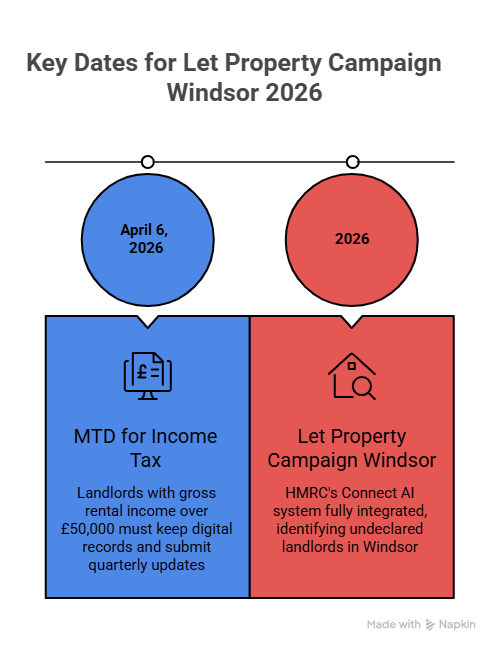
Historically, many landlords managed with a shoe-box of receipts and an annual spreadsheet pulled together just before the Self Assessment deadline. That approach is becoming increasingly risky, and not just because it’s stressful. Making Tax Digital for Income Tax Self Assessment is being introduced from 6 April 2026 for landlords and sole traders with qualifying income over £50,000, dropping to £30,000 from April 2027, and further down again in later years. Under STD, you’ll need to keep digital records of rental income and expenses and submit quarterly updates to HMRC, rather than a single annual return. Our guide on the top five things landlords need to know about STD covers the roll out in more detail.
Separate Your Property Finances From Personal Finances
The single most effective bookkeeping habit is running rental income and expenses through a dedicated bank account, separate from your personal spending. This doesn’t need to be a business account if you’re a sole individual landlord — a simple second personal current account is enough for most people with one or two properties. The benefit is immediate clarity: every transaction in that account relates to the property, so you’re not trying to remember months later whether a payment was rent, a personal transfer, or something else entirely.
What Records You Actually Need to Keep
At a minimum, landlords should retain records covering:
Rental income: the date, amount, and source of every rent payment received
Mortgage interest: statements showing the interest element of mortgage payments, which is treated differently from the capital repayment for tax purposes
Repairs and maintenance: invoices and receipts, kept separate from any capital improvement costs
Letting agent fees and management costs
Insurance: landlord and buildings insurance premiums
Ground rent and service charges, where applicable to leasehold properties
Utility bills, where paid by the landlord rather than the tenant
Travel costs genuinely incurred managing or maintaining the property
Bookkeeping doesn’t need to be complicated to be effective. A sensible approach scales with how many properties you manage:
One property, straightforward finances: a well-structured spreadsheet with a tab per property, updated monthly, may be sufficient — provided it captures every transaction with a date, amount, category and property reference.
Multiple properties or growing complexity: dedicated landlord bookkeeping software (many of which are STD-compatible) makes it far easier to track income and expenses per property, generate reports, and export figures at year end.
Portfolio landlords or those approaching the STD threshold: cloud accounting software linked directly to your bank account removes most manual data entry and creates the kind of transaction-level digital trail STD requires.
Whichever system you choose, the golden rule is consistency: recording transactions weekly or monthly, rather than trying to reconstruct a year’s worth of activity in one sitting.
Getting Ready for Making Tax Digital
If your combined property and self-employment income is likely to exceed £50,000, you’ll need STD-compatible software from April 2026 to keep digital records and submit quarterly updates, followed by a Final Declaration each year. Our April 2026 STD deadline guide explains the practical steps to prepare. Even if you’re currently below the threshold, it’s worth adopting STD-style habits now, since the qualifying income threshold is set to fall to £30,000 from April 2027 and is expected to reduce further in subsequent years, gradually bringing more landlords into scope.
Common Bookkeeping Mistakes Landlords Make
Mixing personal and rental transactions in the same bank account
Confusing capital improvements (which aren’t deductible against rental income in the same way as repairs) with genuine repair and maintenance costs
Losing receipts for cash payments to tradespeople
Failing to record the mortgage interest figure separately, which matters given the restricted way interest relief is now given to individual landlords
Waiting until January to reconcile a full year of transactions in one go
Rather than an elaborate system, most landlords do well with a short monthly routine:
Log into your dedicated property bank account and record any new rent received
Enter any expenses paid that month, categorising each one (repairs, insurance, agent fees, etc.)
Photograph or scan paper receipts and store them digitally, linked to the relevant transaction
Note any capital works separately from routine repairs
Once a quarter, review the running totals against your budget or previous year, to catch anything unusual early
Twenty minutes a month is almost always less painful — and far more accurate — than several hours of reconstruction under deadline pressure.
How Felix Accountants Can Help
We help landlords set up bookkeeping systems that fit their portfolio, whether that’s a simple spreadsheet template or full cloud accounting software integration ahead of Making Tax Digital. We also review historic records to make sure nothing has been missed, and prepare Self Assessment returns based on properly organised figures rather than last-minute estimates. See our guide on how to file taxes as a landlord for how good bookkeeping feeds directly into a smoother tax return.
Frequently Asked Questions
Do I need a separate bank account for my rental property?
It isn’t a legal requirement for individual landlords, but it’s strongly recommended. A dedicated account makes it far easier to track income and expenses accurately and separates rental activity from personal spending.
How long should I keep landlord bookkeeping records?
HMRC generally requires records to be kept for at least five years after the 31 January submission deadline for the relevant tax year, so records should typically be retained for around six years in total.
Do I need accounting software as a landlord, or is a spreadsheet enough?
A well-maintained spreadsheet can be sufficient for a single property, but landlords approaching the Making Tax Digital threshold will need STD-compatible software to keep digital records and submit quarterly updates.
What’s the difference between a repair and a capital improvement for bookkeeping purposes?
A repair restores something to its original condition (such as fixing a broken boiler) and is generally deductible against rental income. A capital improvement enhances the property beyond its original state (such as adding an extension) and is treated differently for tax purposes.
When does Making Tax Digital start affecting landlords?
STD for Income Tax Self Assessment begins on 6 April 2026 for landlords and sole traders with qualifying income above £50,000, with the threshold reducing in later years to bring more landlords into scope.
If you used to let out a property but have since sold it, gifted it, or moved back in yourself, you might assume that any undeclared rental income from those years is now somehow out of reach of HMRC. It isn’t. The good news is that selling the property doesn’t close the door on putting things right — you can still use the HMRC Let Property Campaign to disclose rental income from a property you no longer own, and doing so voluntarily is almost always better than waiting to be found.
Not sure where you stand with a property you’ve already sold? Book a free 15-minute consultation with Felix Accountants and we’ll talk through your situation in plain English, with no obligation. Reserve your free call here.
Does Selling a Rental Property Remove Your Obligation to Declare Past Rent?
No. Your obligation to report rental income relates to the tax years in which you actually received that income, regardless of whether you still own the property today. If you let out a property between, say, 2019 and 2023 and then sold it, you were still legally required to report the rent you received during those years on a Self Assessment tax return. Selling the property doesn’t erase that history — it simply means the disclosure now covers a property that no longer appears on your current asset list.
This is one of the most common misunderstandings we see at Felix Accountants. Landlords often believe that once a property is sold, any loose ends relating to it are automatically tidied up. In reality, HMRC’s Let Property Campaign was specifically designed to capture exactly this kind of situation — current landlords, former landlords, and anyone in between with unreported letting income.
Who Can Use the Let Property Campaign for a Former Rental Property?
The Let Property Campaign is open to individual landlords who have received undeclared rental income from residential property in the UK or abroad. This includes people who:
Sold the rental property some years ago but never declared the rent received while they owned it
Inherited a property, let it out for a period, and later sold it
Moved back into a property that was previously let to tenants
Gifted or transferred a rental property to a family member and stopped receiving rent from it
In every one of these cases, the fact that the property has moved on doesn’t change the underlying tax history. What matters to HMRC is the income you received while you owned and let the property, not whether you still hold the title today.
How Far Back Do You Need to Declare?
The look-back period depends on why the income wasn’t declared in the first place, not on when you sold the property. As a general guide:
Genuine, careless error: typically up to 4–6 years
Failure to take reasonable care: up to 6 years
Deliberate non-disclosure: HMRC can go back as far as 20 years
We’ve written a more detailed breakdown of this in our guide on how many years you need to declare and our companion article on how many years of rental income landlords must disclose. If the property has since been sold, you’ll still need to work out the correct number of years based on when you first started letting it and when the undeclared income actually stopped, which for a sold property is usually the completion date.
What About Capital Gains Tax on the Sale Itself?
A disclosure through the Let Property Campaign covers rental income and any related expenses, not the sale of the property. However, if you sold the property at a profit, you may separately owe Capital Gains Tax on that sale, and UK residential property sales generally need to be reported to HMRC within 60 days of completion. If both the rental income and the sale itself were never reported, it’s sensible to deal with both matters together rather than treating them as separate problems, since HMRC will often be looking at your full history once a disclosure is opened.
Why Voluntary Disclosure Still Matters After the Sale
Coming forward voluntarily, before HMRC contacts you, generally results in significantly lower penalties than a prompted disclosure that follows an HMRC letter or enquiry. Our article on prompted versus unprompted disclosures sets out the practical difference in more detail, but the short version is this: HMRC has extensive data-matching capability drawn from Land Registry records, Stamp Duty Land Tax returns, letting agent reporting and platforms such as Airbnb, so a sold property is not invisible simply because you no longer own it. Making the first move, through our voluntary disclosure guidance, gives you more control over the outcome, the tone of the process and the penalty percentage applied.
What You’ll Need to Gather
Because you no longer own the property, you may not have easy access to the same records a current landlord would. It’s still worth trying to pull together:
Bank statements showing rent received during the letting period
Tenancy agreements or letting agent statements, if available
Records of allowable expenses such as mortgage interest, insurance, repairs and letting agent fees
The completion date of the sale, and the purchase and sale prices, in case a Capital Gains Tax position also needs reviewing
If some records are missing entirely, that’s a common and manageable problem — HMRC accepts reasonable estimates provided they’re clearly labelled and based on a sensible methodology, rather than guesswork presented as fact.
How Felix Accountants Can Help
We regularly help former landlords work through reporting undisclosed rental income to HMRC, including cases where the property has already been sold, gifted, or repossessed. We’ll help you reconstruct a reasonable income and expense history, calculate what’s owed, and manage the notification and disclosure process on your behalf so you’re not dealing with HMRC directly and unrepresented.
Frequently Asked Questions
Can I still be investigated if I sold the rental property years ago?
Yes. HMRC’s ability to open an enquiry into undeclared rental income isn’t affected by a subsequent sale. The tax liability relates to the years you received the income, and HMRC can pursue this regardless of your current ownership status.
Do I need to disclose if the rental profit was very small?
Generally yes. There’s no minimum threshold that exempts small amounts of rental profit from disclosure, although your allowable expenses and personal allowance may mean little or no tax is ultimately due once everything is calculated correctly.
What if I can’t find all my old records for a property I no longer own?
This is common, particularly for properties sold some years ago. HMRC accepts reasonable, clearly explained estimates where original records aren’t available. An accountant experienced with the Let Property Campaign can help you build a defensible estimate.
Will disclosing affect the sale I’ve already completed?
No. The sale itself is a separate, completed transaction. A Let Property Campaign disclosure deals with the historic rental income tax position and won’t unwind or affect the property sale.
Is it too late to make a voluntary disclosure?
It’s rarely too late to disclose voluntarily unless HMRC has already contacted you about the specific property. Acting before any HMRC letter arrives keeps your disclosure classed as unprompted, which generally attracts lower penalties.
Ready to sort out a property you’ve already sold? Felix Accountants specialises in Let Property Campaign disclosures for current and former landlords. Book your free 15-minute consultation and let’s work out exactly where you stand.
Airbnb and other short-term letting platforms now report host income directly to HMRC, so if you’ve been treating your listing as “just a bit of extra cash” rather than taxable rental income, it’s worth checking your position carefully. A common question we hear is whether the Let Property Campaign can be used to put things right — and the answer is generally yes, but with some important nuances.
Yes. Income from letting a property, or even a spare room, on a short-term basis is taxable in the same way as any other rental income, subject to any reliefs you’re entitled to. The only exceptions are the £1,000 property allowance (if your gross rental income is below that threshold) and the Rent a Room Scheme, which lets you earn up to £7,500 tax-free from letting a room in your own home, provided you live there too.
Does the Let Property Campaign Cover Short-Term Lets?
The LPC applies to individual landlords with undeclared tax on residential property income, and this generally includes short-term and holiday-style lettings of residential property, whether booked through Airbnb, Booking.com, Vrbo or direct. What matters for eligibility is that the property is held personally, not through a limited company, and that the income is genuinely rental-style rather than a trading business involving substantial additional services such as daily cleaning, meals or reception.
If your short-term letting activity has grown into something closer to running a guest house, with significant services provided, HMRC may view it as a trade rather than a property business, which changes how it’s taxed and may take it outside the scope of the LPC. This is a grey area worth getting professional input on before you disclose.
What Changed With Furnished Holiday Lets?
Until 6 April 2025, properties meeting certain letting and availability conditions could qualify as Furnished Holiday Lets (FHLs), unlocking more generous tax treatment, including fuller mortgage interest relief and access to certain capital allowances. That regime was abolished from the 2025/26 tax year, and short-term let income is now taxed under the same rules as standard rental property income, including the mortgage interest restriction that already applied to other landlords. If you’ve been disclosing historic years, it’s important to apply the rules that were in force for each specific tax year rather than today’s rules retrospectively.
How Far Back Do You Need to Go?
As with any Let Property Campaign disclosure, the number of years you need to cover depends on your behaviour: whether the non-disclosure was a genuine, reasonable mistake, careless, or deliberate. Our guide on how many years of rental income landlords must disclose sets out the general time limits in more detail.
Accidental Hosts and First-Time Disclosures
Many people who let out a property short-term didn’t set out to become landlords in the tax sense — perhaps you started renting a spare property while working away, or began hosting guests after downsizing. If that sounds like you, our page on becoming an accidental landlord covers how HMRC treats these situations and what you need to do to get compliant.
Practical Steps If You Haven’t Declared Airbnb Income
Pull together booking records, payout statements and platform tax summaries for each relevant tax year
Work out which years the Furnished Holiday Let rules did or didn’t apply, since this affects your allowable deductions
Check whether the Rent a Room Scheme or property allowance already covers part of your income
Consider whether your behaviour is likely to be classed as careless or deliberate, since this affects the penalty rate and the years you must disclose
Make your disclosure before HMRC contacts you, to secure unprompted disclosure treatment and a lower penalty
Common Mistakes Hosts Make
The most frequent error we see is hosts assuming that because Airbnb “already takes its cut” or issues a summary, the income has somehow already been reported to HMRC on their behalf. It hasn’t — platform reporting to HMRC is a compliance tool for HMRC, not a substitute for your own Self Assessment return. Another common mistake is applying FHL-style deductions to years after the regime ended, which can trigger its own correction later.
How Felix Accountants Can Help
We regularly help hosts and landlords work out exactly what’s owed across multiple tax years, apply the correct rules for each year, and submit an accurate Let Property Campaign disclosure that stands up to HMRC scrutiny.
Frequently Asked Questions
Do I need to declare Airbnb income if I only host occasionally?
If your gross rental income from all sources is under £1,000 in a tax year, the property allowance may mean you don’t need to declare it. Above that, it generally needs to be reported, even if hosting is occasional.
Can I still get Furnished Holiday Let tax treatment for a current listing?
No. The Furnished Holiday Let regime was abolished from 6 April 2025, so short-term let income from the 2025/26 tax year onward is taxed under the standard property income rules.
Does the Let Property Campaign cover overseas short-term lets?
It can, in certain circumstances, though overseas income brings in additional considerations such as double taxation relief. It’s best to get specific advice if your undeclared income relates to a property outside the UK.
What if my short-term letting is really more like running a guest house?
If you provide substantial additional services, HMRC may treat the activity as a trade rather than a property business, which can affect both how it’s taxed and whether the Let Property Campaign is the right disclosure route.
If you’ve been renting out property in the UK without declaring all of your rental income to HMRC, you are not alone — and you may still have the opportunity to put things right before the taxman comes to you. The HMRC Let Property Campaign is a government-backed voluntary disclosure scheme specifically designed for residential landlords with undeclared rental income. Understanding it — and acting on it quickly — could save you thousands of pounds in penalties and protect you from serious legal consequences.
In this guide, we explain exactly what the Let Property Campaign is, how it works, what penalties you could face, and how working with an experienced Let Property Campaign accountant can make the whole process as straightforward as possible.
What is the Let Property Campaign? (Featured Snippet)
The Let Property Campaign is an HMRC voluntary disclosure scheme for UK landlords who have undeclared rental income. It allows landlords to come forward, declare outstanding tax liabilities, pay what they owe (including interest), and typically receive lower penalties than if HMRC investigates first. The campaign has been open since 2013 and remains active.
What Is the HMRC Let Property Campaign?
The Let Property Campaign (LPC) was launched by HMRC in September 2013 as a targeted initiative to bring UK residential landlords who owe tax on rental income back into compliance. Unlike a full HMRC investigation — which can be costly, stressful, and result in heavy penalties — the LPC offers a structured, more forgiving route for landlords to disclose unpaid tax themselves.
It applies to landlords who rent out one or more residential properties in the UK and have not correctly declared their income to HMRC. This includes landlords who have filed no tax return at all, those who have understated their income, and those who have claimed ineligible expenses. You can find HMRC’s official guidance on the scheme at gov.uk.
The campaign is not a tax amnesty — you will still pay the tax you owe, plus interest. But landlords who come forward voluntarily under the LPC benefit from reduced penalty rates compared to those who wait for HMRC to come to them.
Who Does the Let Property Campaign Apply To?
The campaign is open to any UK individual landlord letting out residential property. This includes:
Landlords who have never registered for self-assessment
Landlords who filed returns but omitted or understated rental income
Landlords who inherited property and have since rented it out
Landlords with overseas rental income not declared in the UK
Landlords who rent out a room in their main residence beyond the Rent-a-Room allowance
The LPC does not cover commercial property, partnerships, or companies — for those cases, HMRC has separate disclosure routes.
How Far Back Does the Let Property Campaign Go?
One of the most common questions we receive at Felix Accountants is: “How far back does the Let Property Campaign go?” The answer depends on the nature of the non-disclosure.
HMRC applies a tiered look-back period based on the perceived intent of the landlord:
Innocent error (careless): 4 years back from the current tax year
Careless or negligent behaviour: 6 years back
Deliberate non-disclosure: 20 years back
For most landlords who simply didn’t realise they needed to declare rental income, the look-back period is typically 4 to 6 years. However, if HMRC decides the failure was deliberate, they can go back up to 20 years, which can result in a very significant tax bill.
Under UK tax law, completing and returning HMRC’s Certificate of Tax Position carries serious legal implications. While HMRC routinely includes this form with nudge letters regarding undeclared property income, returning it is entirely voluntary.
There is no statutory obligation under the Taxes Management Act 1970 (TMA 1970) or any other UK tax legislation requiring a taxpayer to complete or sign the Certificate of Tax Position.
Why Landlords Should Decline to Sign
Creates High Penalty Exposure Under Schedule 24 Finance Act 2007
The certificate requires a formal declaration that your tax affairs are correct and up to date to the best of your knowledge and belief. If you sign this declaration and HMRC subsequently identifies undeclared income or an error—even an inadvertent mistake regarding allowable expenses or mortgage interest restrictions—HMRC can treat the false declaration as evidence of deliberate misleading conduct. Under Schedule 24 to the Finance Act 2007, deliberate penalties are significantly higher than penalties for a simple failure to take reasonable care, potentially reaching up to 100% of the tax due for domestic income (and up to 200% for offshore assets).
No Reciprocal Legal Protection or Settlement Finality
Signing the certificate creates a binding declaration for the taxpayer without providing any legal immunity or closing agreement in return. It does not prevent HMRC from making a formal discovery assessment under Section 29 TMA 1970 for past tax years, nor does it force HMRC to accept your self-assessment of your tax position as final.
Restricted Binary Statements
The options on the certificate require rigid, binary statements that rarely accommodate complex property transactions. For instance, declaring that all rental income was fully disclosed leaves zero legal room for genuine technical disputes over capital versus revenue repairs, replacement of domestic items relief, or fractional ownership splits. If HMRC later challenges your tax treatment of these items, your signed certificate can be used against you as a false representation.
Unnecessary Risk of Criminal Liability
Submitting a signed statement that turns out to be inaccurate risks exposure under Section 5 of the Perjury Act 1911 (or equivalent common law rules regarding false statements to public officials). While HMRC rarely pursues criminal prosecution for standard property disclosures, signing an unnecessary formal declaration unnecessarily elevates your legal risk.
The Appropriate Response
Instead of returning the certificate, send a formal written response acknowledging receipt of HMRC’s letter. State clearly that you are reviewing your property tax position alongside your professional tax advisor, and confirm that any required adjustments will be submitted through the appropriate statutory mechanism—such as an amended return under Section 9ZA TMA 1970 or a formal submission via the Let Property Campaign. This satisfies your duty of cooperation without signing away your legal protections.
Important:
Coming forward under the Let Property Campaign proactively — before HMRC contacts you — is classified as ‘unprompted’. This gives you the most favourable penalty treatment and signals to HMRC that you are acting in good faith.
Let Property Campaign Penalties: What Will You Actually Pay?
Many landlords delay disclosing undeclared rental income because they worry about the financial hit. But the penalty structure under the Let Property Campaign is designed to reward early, voluntary disclosure — meaning the sooner you act, the less you pay.
Penalty Rates at a Glance
Here is how the penalty rates break down depending on your disclosure type:
Disclosure Type
Penalty Range
Typical Scenario
Unprompted
0% – 30%
Landlord comes forward voluntarily
Prompted
15% – 30%
HMRC contacts landlord first
Prompted (deliberate)
30% – 70%
Deliberate non-disclosure
Offshore/concealment
Up to 200%
Offshore assets or deliberate concealment
In addition to penalties, HMRC charges interest on unpaid tax from the date the tax was due. This is currently calculated at the Bank of England base rate plus 2.5%, which means the longer you leave it, the more the interest builds up. A qualified Let Property Campaign accountant can use HMRC’s online tools to calculate the exact interest and penalty figures before you make a formal disclosure.
Prompted vs Unprompted Disclosure
These two terms matter enormously when it comes to your penalties. An unprompted disclosure means you contact HMRC before they contact you. A prompted disclosure means you only come forward after receiving a nudge letter, a compliance check, or direct contact from HMRC.
The difference can be dramatic: unprompted disclosures for non-deliberate errors attract penalties starting at 0%, while prompted disclosures for the same error can attract 15% or more. If you have received an HMRC nudge letter, do not delay — act immediately.
Step-by-Step: How to Make a Let Property Campaign Disclosure
The process has four main stages. Getting each one right is critical to minimising your tax bill and avoiding further investigation.
At a Glance: Your 30-Day Response Timeline
Days 1 to 7: Gather Documentation
Collect all bank statements, letting agent annual summaries, mortgage interest certificates, and repair receipts across all unfiled tax years. Do not complete or return HMRC’s Certificate of Tax Position.
Days 8 to 14: Review & Behavior Assessment
Calculate your net rental profit for each tax year and assess whether your non-disclosure falls under reasonable care, carelessness, or deliberate behavior to establish your look-back window (4, 6, or 20 years).
Days 15 to 21: Formal Notification
Submit your notification of intent to disclose via HMRC’s online portal. Acquiring your unique disclosure reference number locks in your 90-day window to complete the filing and secures unprompted penalty rates.
Days 22 to 30: Compute & Finalize
Run final tax, interest, and penalty calculations using HMRC’s disclosure tool, prepare your narrative statement explaining the background, and finalize your submission package.
Step 1 – Notify HMRC
Before you can make a formal disclosure, you must notify HMRC of your intention to disclose. You do this online at gov.uk. HMRC will then issue you with a unique disclosure reference number.
Step 2 – Gather All Relevant Records
This is where most landlords need professional help. You will need records of all rental income received, any eligible expenses you wish to claim, bank statements and tenancy agreements, and records of any mortgage interest (though the rules here changed significantly from 2017 onwards).
Step 3 – Calculate the Tax, Interest, and Penalties Owed
Using HMRC’s disclosure calculator — or more accurately, working with an experienced Let Property Campaign specialist — you will calculate the precise amount owed for each tax year in the look-back period. This includes income tax on net rental profit, National Insurance if applicable, interest on the unpaid tax, and any penalties applied at the appropriate rate.
Step 4 – Submit the Disclosure and Pay
Once the figures are agreed and your disclosure reference number is in hand, you submit the full disclosure to HMRC online and make payment. HMRC gives you 90 days from your initial notification to complete the process.
Pro tip from Felix Accountants:
Do not attempt a Let Property Campaign disclosure without professional guidance. Errors in your disclosure — overstating income, missing eligible deductions, or misclassifying expenses — can result in a higher tax bill than necessary, or flag your case for further investigation.
Why You Need a Let Property Campaign Accountant
The LPC process appears straightforward on paper. In practice, calculating the correct figures, understanding which expenses are allowable, navigating post-2017 mortgage interest relief restrictions, and presenting your disclosure in the most favourable light requires genuine expertise. The wrong approach can cost you significantly more than the accountant’s fees.
At Felix Accountants, our Let Property Campaign specialists have helped landlords across London, Windsor, Slough, Reading, and Oxford navigate the process smoothly and cost-effectively. We advise on:
Which tax years need to be included in your disclosure
How to calculate your allowable expenses correctly, including repairs, letting agent fees, and insurance
How mortgage interest restrictions apply to your specific situation
Whether any wear and tear allowances or capital allowances apply
How to present your disclosure to minimise your penalty exposure
How to respond if HMRC asks further questions after your disclosure
Whether you are based in London or use our specialist services in Windsor, Oxford, Reading, or Slough, our team provides clear, fixed-fee guidance so you know exactly what you will pay before we begin.
Let Property Campaign: Reasonable Excuse — Can You Avoid Penalties Entirely?
HMRC does recognise the concept of a “reasonable excuse” — a genuine reason why you failed to declare your rental income. If accepted, it can reduce or even eliminate your penalties entirely. However, HMRC applies the standard strictly.
What HMRC may accept as a reasonable excuse:
Bereavement of a close family member around the time returns were due
Serious or life-threatening illness preventing you from managing your affairs
A fire, flood, or theft that destroyed your financial records
Genuine uncertainty about whether income was taxable (in limited circumstances)
What HMRC will typically not accept:
Not knowing you had to register for self-assessment
Relying on someone else who failed to act on your behalf
Forgetting to file or pay
Lack of funds to pay
If you believe you have a reasonable excuse, document it thoroughly. Our team at Felix Accountants can advise on whether your circumstances are likely to be accepted and how to present your case effectively.
Is the Let Property Campaign Still Running in 2026?
Yes. As of 2026, the HMRC Let Property Campaign is still open and active. There is currently no announced end date for the scheme. However, HMRC has significantly increased its data-matching capabilities in recent years — using information from letting agents, Land Registry records, deposit protection schemes, and overseas disclosures — which means it is becoming increasingly likely that undeclared landlords will be identified proactively.
The window of opportunity to benefit from the most favourable penalty treatment is narrowing. If you are a landlord with any undeclared rental income, now is the time to act — not when an HMRC letter arrives on your doormat.
Pros and Cons of Using the Let Property Campaign
Advantages of Making a Voluntary Disclosure
Lower penalties — potentially 0% for unprompted non-deliberate disclosures
Avoidance of a full HMRC investigation, which can be far more intrusive and costly
Peace of mind and removal of a significant source of financial and legal stress
Ability to correct the record and move forward with a clean compliance history
More control over the process compared to being investigated by HMRC
Potential Drawbacks to Be Aware Of
You will pay all the tax owed plus interest — there is no reduction in the underlying liability
If HMRC finds errors in your disclosure, it can prompt further scrutiny
The 90-day window to complete disclosure after notifying HMRC can feel tight
Without professional help, it is easy to overclaim or underclaim expenses
Property Campaign Windsor
A Real-World Example: What a Let Property Campaign Disclosure Looks Like
Case Study (anonymised):
A landlord in Windsor came to Felix Accountants after letting out two buy-to-let properties for six years without filing self-assessment returns. Combined rental income over the period was approximately £78,000. After allowable expenses, the taxable profit was significantly lower. We prepared a full 6-year look-back disclosure, correctly applied mortgage interest restrictions, and filed an unprompted disclosure with HMRC. The final settlement included back taxes and interest — but zero penalties, saving the client over £4,500 compared to a prompted disclosure at standard penalty rates.
Related Articles You May Find Useful
If you found this guide helpful, you may also want to read our detailed resources on the Let Property Campaign on the Felix Accountants website:
Frequently Asked Questions About the Let Property Campaign
1. How far back can HMRC go under the Let Property Campaign?
HMRC can typically look back 4 years for innocent errors, 6 years for careless non-disclosure, and up to 20 years for deliberate evasion. Most landlords fall into the 4–6 year category, but your specific situation should be assessed by a qualified accountant before you notify HMRC.
2. What are the penalties for not declaring rental income?
Penalties range from 0% for unprompted voluntary disclosures of innocent errors up to 200% for deliberate offshore concealment. In addition to penalties, HMRC charges interest on all unpaid tax from the date it was originally due. Acting voluntarily before HMRC contacts you will always produce the lowest penalty outcome.
3. Can I use the Let Property Campaign if HMRC has already contacted me?
Yes, but your disclosure will be classified as ‘prompted’, which means higher minimum penalty rates apply. Even so, making a full and accurate disclosure remains far better than ignoring HMRC’s contact. If you have received a nudge letter or compliance check notice, contact a Let Property Campaign specialist immediately.
4. How much does it cost to use a Let Property Campaign accountant?
Fees vary depending on the number of years involved, the complexity of your property portfolio, and the work required to reconstruct records. At Felix Accountants, we offer transparent, fixed-fee packages for Let Property Campaign disclosures. A free initial consultation will give you a clear quote before any work begins.
5. What happens after I submit my Let Property Campaign disclosure?
HMRC will review your disclosure and, in most cases, accept it and issue a statement of account for payment. In some cases, they may ask clarifying questions. If your disclosure is accurate and complete, the process typically concludes smoothly. You should retain all supporting records for at least 5 years in case HMRC follows up.
6. Is the Let Property Campaign the same as a tax amnesty?
No. The Let Property Campaign is not an amnesty — you will still pay all the tax you owe plus statutory interest. The benefit is in the reduced penalties compared to what HMRC would impose following a formal investigation. It is best understood as a structured, lenient route back into compliance rather than a debt write-off.
7. Can overseas rental income be disclosed under the Let Property Campaign?
Yes, but it is more complex. Overseas rental income may also be subject to double taxation agreement provisions, foreign tax credits, and additional HMRC reporting requirements. Felix Accountants has specific experience with overseas property disclosures under the LPC — contact us if you have international rental income to declare.
Get Expert Help With Your Let Property Campaign Disclosure Today
Whether you are a landlord in London, Windsor, Slough, Reading, or Oxford — or anywhere else in the UK — Felix Accountants offers specialist Let Property Campaign advice and full disclosure management. Our team combines deep HMRC compliance knowledge with a practical, client-first approach.
Visit us at felixaccountants.com or call our team directly. We make the Let Property Campaign process simple, transparent, and as cost-effective as possible for every landlord we work with.
Felix Accountants are specialist Let Property Campaign accountants serving landlords across London, Windsor, Slough, Reading and Oxford. This article is for general guidance only and does not constitute formal tax or legal advice. Always consult a qualified professional before making a disclosure to HMRC.
Published by Felix Accountants | Let Property Campaign Specialists across London, Windsor, Slough, Reading & Oxford