
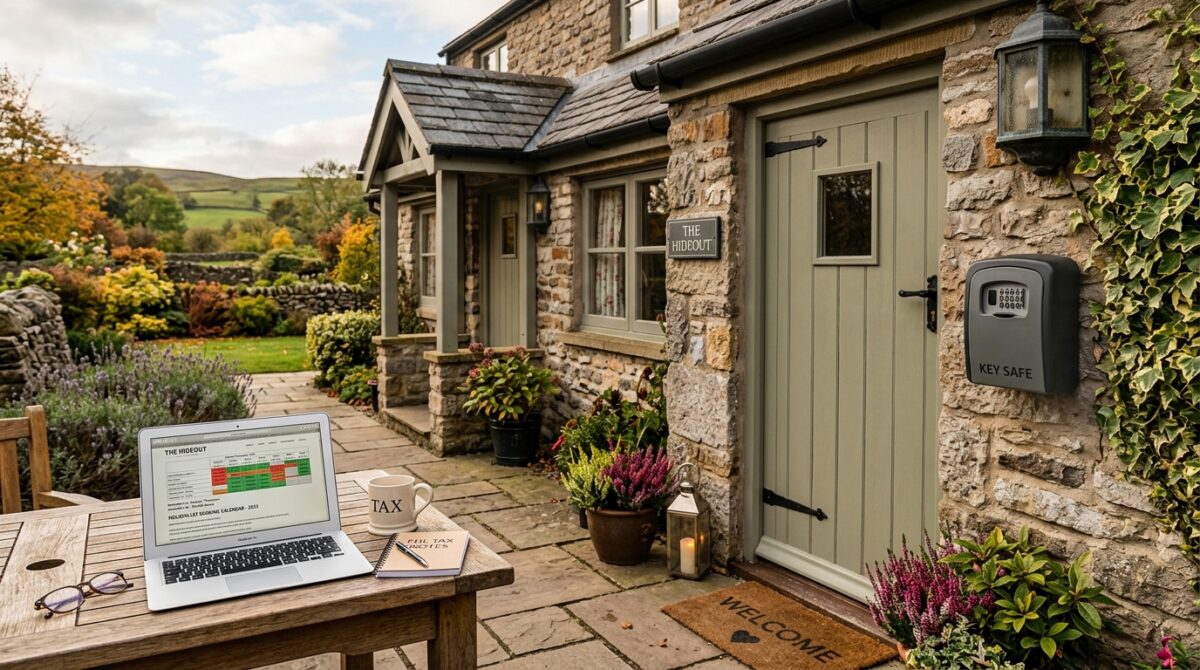
Owners of holiday cottages, coastal Airbnbs and other short-term let properties have historically benefited from more generous tax treatment than standard buy-to-let landlords. That changed significantly from April 2025, when the Furnished Holiday Lettings (FHL) tax regime was abolished. If you have undeclared income from a furnished holiday let, this shift makes it more important than ever to understand exactly which rules apply to which years — because the position before and after April 2025 is genuinely different, and a Let Property Campaign disclosure needs to reflect that.
Undeclared income from a holiday let or short-term rental? Book a free 15-minute consultation with Felix Accountants and we’ll help you work through the detail. Book your free call here.
What Was the Furnished Holiday Lettings Regime?
Until 5 April 2025, properties that qualified as Furnished Holiday Lets benefited from a range of tax advantages not available to standard residential lettings, including full relief for mortgage interest and other finance costs (rather than the restricted basic-rate credit that applies to standard buy-to-lets), the ability to claim capital allowances on furniture and equipment, treatment of profits as relevant earnings for pension contribution purposes, and access to certain Capital Gains Tax reliefs, including Business Asset Disposal Relief, on eventual sale.
What Changed From April 2025?
From 6 April 2025 for Income Tax and Capital Gains Tax (1 April 2025 for Corporation Tax), the FHL regime was abolished, and qualifying properties are now taxed in essentially the same way as any other residential letting. This means finance costs are now restricted to the basic-rate tax credit, new capital allowances claims have generally stopped (with “replacement of domestic items relief” available instead in many cases), and the favourable Capital Gains Tax treatment on disposal has been withdrawn other than in limited transitional circumstances.
Why This Matters for a Let Property Campaign Disclosure
If you’re disclosing undeclared income from a property that qualified as a furnished holiday let, the calculation needs to be split at the April 2025 boundary:
- For years up to and including 2024/25: if the property genuinely met the FHL qualifying conditions, the more generous FHL rules (full finance cost relief, capital allowances, etc.) would have applied
- For 2025/26 onwards: the property is taxed under the standard residential letting rules, meaning restricted mortgage interest relief and the other changes described above
Getting this split right matters because applying the wrong rules to the wrong years can significantly under- or over-state what’s owed. This is a more technical calculation than a standard buy-to-let disclosure, and it’s an area where professional advice is genuinely valuable.
Did Your Property Actually Qualify as an FHL?
Before assuming the FHL rules applied for earlier years, it’s worth checking whether the property genuinely met the qualifying conditions during those periods, which broadly required the property to be available for letting on a commercial basis for a set number of days per year, actually let for a minimum number of days, and not normally occupied by the same tenant for long continuous periods. A property let short-term through platforms like Airbnb doesn’t automatically qualify as an FHL simply because of how it was marketed — the specific letting pattern needs to be checked year by year.
Joint Ownership Changes Are Worth Checking Too
Another change worth being aware of: under the old FHL rules, jointly owned couples could flexibly allocate profits between themselves, reflecting who actually did the work, rather than following the strict ownership split. From April 2025, furnished holiday lets are subject to the same default rules as standard jointly owned property, generally a 50:50 split unless a valid election has been made. If your disclosure involves a jointly owned former FHL, this is worth reviewing carefully for the years either side of the change.
What About VAT for Short-Term Lets?
Separately from Income Tax, holiday accommodation is generally treated as a standard-rated supply for VAT purposes, unlike most long-term residential letting, which is typically exempt. If your short-term let income (combined with any other taxable turnover) exceeds the VAT registration threshold, VAT registration and reporting obligations may also need reviewing alongside the Income Tax disclosure. Our property tax guide covers how different letting types are treated for tax purposes more broadly.
Working Out How Many Years to Disclose
The look-back period for a Let Property Campaign disclosure is generally determined by the reason for non-disclosure rather than the type of letting involved, so the same principles apply to holiday lets as standard buy-to-lets. Our guide on how many years you need to declare sets out the general framework, though the added complexity of the FHL-to-standard-letting transition means the year-by-year calculation itself takes more care to get right.
What You’ll Need to Gather
- Booking records or platform statements showing income received each year
- Evidence of letting pattern (nights let, availability) to confirm FHL qualification for pre-2025/26 years
- Mortgage interest statements and records of capital expenditure on furniture and equipment
- Details of the ownership structure, particularly for jointly owned properties
How Felix Accountants Can Help
Disclosing undeclared income from a former furnished holiday let is genuinely more involved than a standard residential letting disclosure, given the rule change partway through the relevant period. We help holiday let owners establish which years qualified under the old FHL rules, apply the correct treatment either side of April 2025, and manage the disclosure process through our Let Property Campaign guide and wider disclosure services.
Frequently Asked Questions
Does the Furnished Holiday Lettings regime still exist?
No. It was abolished from 6 April 2025 for Income Tax and Capital Gains Tax purposes (1 April 2025 for Corporation Tax). Holiday let properties are now generally taxed in the same way as standard residential lettings.
Do I still get full mortgage interest relief on my holiday let?
Only for years up to and including 2024/25, if the property genuinely qualified as an FHL during those years. From 2025/26 onwards, mortgage interest relief is restricted to a basic-rate tax credit, the same as standard buy-to-let properties.
How do I know if my property actually qualified as an FHL in earlier years?
Qualification depended on meeting specific letting-pattern conditions each year, including availability and actual letting days. It’s worth reviewing this year by year rather than assuming qualification based on how the property was marketed.
Is holiday let income treated differently for VAT?
Yes. Holiday accommodation is generally standard-rated for VAT, unlike most long-term residential letting, which is usually exempt. This may create a separate VAT registration obligation if turnover exceeds the threshold.
Can I still use the Let Property Campaign for undeclared holiday let income?
Yes, the Let Property Campaign covers undeclared residential letting income generally, including furnished holiday lets, though the calculation needs to correctly reflect the rules that applied in each specific tax year.
Get your holiday let’s tax position properly reviewed. Book your free 15-minute consultation with Felix Accountants.