Categories
Articles Blogs FAQs Guides

HMO licensing Reading and the Digital Tax Net

Reading Borough Council’s decision to expand its regulatory reach isn’t just about floor plans and fire doors. As of March 1, 2026, the HMO licensing Reading landscape shifted permanently with the introduction of borough-wide additional licensing. This move effectively brings 3 and 4-person shared houses into the same stringent oversight previously reserved for larger properties. While the council focuses on housing standards, the data generated by these applications provides the perfect fuel for HMRC’s “Connect” AI system.

HMRC is no longer relying on manual “nudge” letters. They’ve moved toward a digital net that cross-references local authority licensing registers with Land Registry data and Self-Assessment filings. If you’ve registered a property for HMO licensing Reading but haven’t declared a corresponding jump in rental income, the system flags the discrepancy automatically.

The Mechanics of Data Sharing

When you apply for a licence in Reading, you provide granular details: the number of occupants, the rent-bearing potential of each room, and the identities of all interested parties. This information is public. HMRC’s Connect system scours these public registers, pulling data from over 30 sources to build a financial profile of every landlord.

For those operating in Reading, the timing is particularly sharp. The rollout of the additional licensing scheme coincides with the first phase of Making Tax Digital (MTD) for Income Tax in April 2026. This creates a dual-pressure environment where landlords must prove physical compliance to the council while maintaining digital, quarterly records for the taxman.

Reading’s New Licensing Thresholds

Under the 2026 rules, almost any property in Reading with three or more unrelated tenants requires a licence. The council’s “Home Safe” portal requires identity documents, floor plans, and safety certificates.

RequirementMandatory Licensing (5+ persons)Additional Licensing (3-4 persons)
Occupancy5 or more people3 to 4 people
Area CoverageNational / All of ReadingBorough-wide (from March 2026)
Application FeeTwo-stage (Part A & Part B)Two-stage (Part A & Part B)
HMRC VisibilityHighHigh (via Public Register)

The trap for many is the assumption that “small” HMOs fly under the radar. In reality, the additional licensing register is often more scrutinized by tax authorities precisely because it captures landlords who historically operated in a “grey area” of tax reporting.

Why MTD for Income Tax Changes the Game

From April 6, 2026, landlords with a qualifying income over £50,000 must transition to MTD. This means no more annual scrambles to find receipts in January. You’ll need HMRC-compatible software to submit quarterly updates. This digital trail makes it nearly impossible to reconcile a licensed 5-bedroom HMO with a tax return that only shows income for a single-family let.

The council’s interest is your tenants’ safety; HMRC’s interest is your turnover. By securing a licence for HMO licensing Reading, you are effectively notifying the government that your property is generating higher-than-average yields. If your reported expenses or income figures don’t align with the market rates for a licensed HMO in the RG1 or RG2 postcodes, an inquiry is likely.

Avoiding the Compliance Squeeze

To survive this “digital net,” you need to treat your Reading HMO as a business, not a hobby. This starts with a “fit and proper person” assessment and ends with rigorous digital bookkeeping.

  1. Audit your floor plans. Ensure your room sizes meet the 6.51 $m^2$ minimum for single adults.
  2. Sync your data. Your licence application figures should match your MTD software entries exactly.
  3. Prepare for the Part B fee. Reading’s fee structure is split; failing to pay the second part on time can invalidate your licence and alert the council’s enforcement team.

The goal is to remain invisible to HMRC’s AI by being perfectly visible and compliant on the council’s register. Discrepancies, not high income, trigger investigations.

FAQs: Your Guide to HMO Licensing Reading

Does a 3 bed house need an HMO licence in Reading?

Yes, as of March 1, 2026, a 3-bed house occupied by three or more unrelated people requires a licence under the additional HMO licensing Reading scheme. Previously, only larger properties with five or more occupants were mandated, but the new borough-wide designation has removed the “small HMO” exemption that many landlords relied on for years.

What are the HMO rules in Reading?

The rules for HMO licensing Reading require properties to meet strict safety and amenity standards. This includes minimum bedroom sizes (6.51 $m^2$ for one adult), annual gas safety checks, and five-yearly electrical inspections (EICR). Landlords must also ensure adequate kitchen and bathroom facilities relative to the number of tenants, alongside providing valid fire safety certifications.

What is the minimum room size for an HMO in Reading?

For HMO licensing Reading compliance, a room used for sleeping by one person aged 10 or over must have a floor area of at least 6.51 $m^2$. If two people over 10 share a room, the minimum increases to 10.22 $m^2$. Any floor area where the ceiling height is below 1.5 metres is excluded from these calculations.

Is Reading an Article 4 area for HMO?

Yes, large parts of Reading are subject to Article 4 Directions. This means you must obtain planning permission to convert a C3 (family home) into a C4 (small HMO), even before you apply for HMO licensing Reading. The licensing scheme and planning permissions are separate; having a licence does not mean you have the required planning consent.

How much is an HMO licence in Reading?

The cost for HMO licensing Reading varies based on the scheme and property size, typically ranging from £500 to over £1,500. Reading operates a two-stage fee system: Part A is paid upon application to cover processing, and Part B is due once the council intends to grant the licence, covering the ongoing management costs.

What happens if you don’t have an HMO licence in Reading?

Operating an unlicensed property subject to HMO licensing Reading is a criminal offence. Penalties include unlimited fines from the courts or civil penalties of up to £30,000 (£40,000 from May 2026). Furthermore, tenants can apply for a Rent Repayment Order (RRO) to reclaim up to 12 months of rent paid during the unlicensed period.

How many people can live in an HMO in Reading?

The maximum number of occupants is determined by the specific conditions of your HMO licensing Reading agreement. The council assesses the property’s size, room dimensions, and the number of available bathrooms and kitchens. You cannot exceed the number of “permitted persons” stated on the face of your issued licence without risking significant legal penalties.

How long does an HMO licence last in Reading?

A licence granted under the HMO licensing Reading framework typically lasts for up to five years. However, the council may grant a shorter licence if there are concerns about the management of the property or if the landlord has a history of non-compliance. You must apply for a renewal before the current licence expires to remain legal.
Learn More

Categories
Articles Blogs FAQs Guides

No More Section 21: Why Legal Possession Now Requires Total Tax Transparency

The landscape of UK buy-to-let has reached a “Big Bang” moment. With the Section 21 abolition officially taking effect as part of the Renters’ Rights Act 2025, the days of “no-fault” evictions are over. For landlords, this isn’t just a shift in tenancy management; it is a fundamental shift in tax compliance.

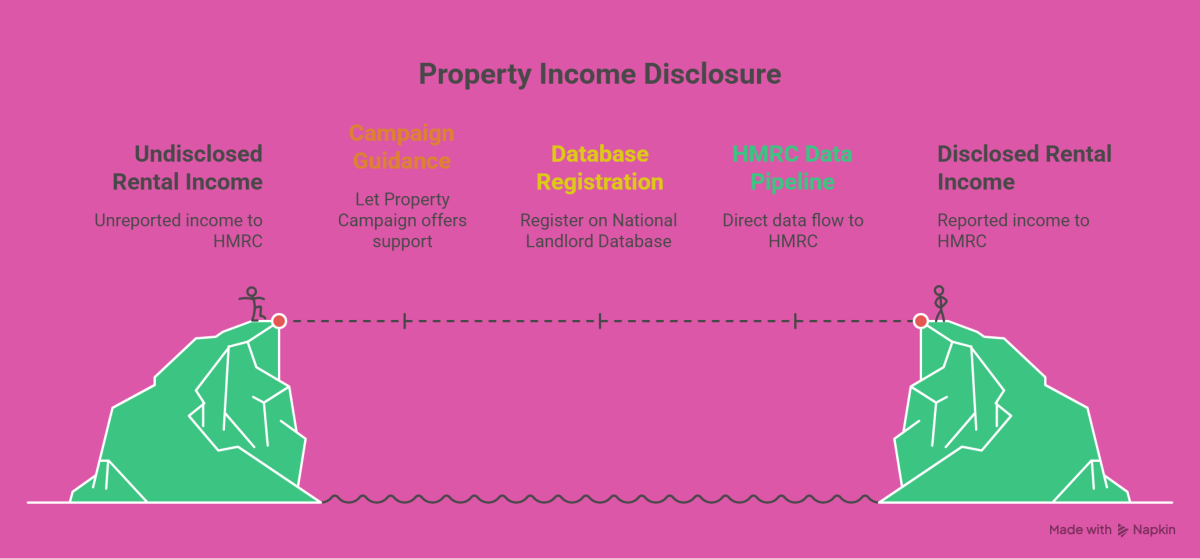
As the Let Property Campaign, I am here to guide you through this transition. The new legislation links your right to regain possession of your property directly to your status on the National Landlord Database, which functions as a direct data pipeline to HMRC. If you have undisclosed rental income, the window to “come clean” under favorable terms is closing fast.

The New Reality: How Tenancy Reform Feeds the Tax Man

The Death of Section 21 and the Rise of the Periodic Tenancy

On 1 May 2026, the Renters’ Rights Act 2025 fully takes effect, mandating the total abolition of Section 21 “no-fault” evictions. Furthermore, all tenancies are being converted into “periodic” or rolling agreements.

The National Landlord Database “Trap”

To serve a valid possession notice under these new rules—even for legitimate reasons like selling the property or moving back in—landlords must be registered on the new National Landlord Database.

  • The Data Link: This database is not just an administrative list; it is a direct data feed to HMRC.
  • The End of Ghost Landlording: It is now virtually impossible to legally manage a property or evict a tenant without your details being cross-referenced against HMRC’s “Connect” system.

Bridging the Gap: The Let Property Campaign

If the Section 21 abolition has made you realize that your tax affairs aren’t quite in order, the Let Property Campaign is your best route to compliance.

What is the Let Property Campaign?

It is a specific opportunity for individual landlords to disclose unpaid taxes on residential properties. By coming forward voluntarily, you secure more favorable terms—including lower penalties—than if HMRC finds you first through their new digital data pipelines.

Eligibility Criteria

You can use this campaign if you are an individual landlord (not a company or trust) renting out:

  • Single or multiple residential properties.
  • A room in your main home that exceeds the Rent a Room Scheme threshold.
  • Holiday lets or inherited properties.
  • UK property while living abroad.

The 3-Step Disclosure Roadmap

StepActionKey Deadline
1. NotifyTell HMRC you intend to make a disclosure.Immediately upon realizing the error.
2. CalculateWork out tax, interest, and penalties for the relevant years.90 days from notification.
3. PayMake a formal offer and pay the full amount electronically.90 days from notification.

How Far Back Do You Need to Go?

The number of years you must disclose depends on why the tax wasn’t paid:

  • Reasonable Care: Maximum of 4 years.
  • Careless (Not taking reasonable care): Maximum of 6 years.
  • Deliberate: Up to 20 years.


2026: The Year of Digital Enforcement

The Section 21 abolition is just one piece of a larger enforcement puzzle.

Making Tax Digital (MTD)

Since 6 April 2026, MTD for Income Tax has been mandatory for landlords earning over £50,000. This requires quarterly digital reporting, meaning HMRC sees your financial data every three months rather than once a year.

Local Council Data Pipelines

Regional enforcement is also tightening. For example, Reading Borough Council now shares HMO licensing data directly with HMRC’s “Connect” system. Automated pipelines verify landlord identities and property details, leaving no room for “accidental” omissions.

Why Voluntary Disclosure is Non-Negotiable

If HMRC discovers your undisclosed income before you notify them, the consequences are severe:

  • Higher Penalties: Up to 100% for UK income or 200% for offshore income.
  • Criminal Risk: Potential for criminal prosecution and being named on the “deliberate defaulters” list.

By contrast, voluntary disclosure through specialists like Marslands Accountants can significantly reduce the burden. Marslands report helping landlords save an average of £7,000 on their final tax bill through the expert application of allowable expenses.

Frequently Asked Questions Section 21 abolition

1. What is the impact of the Section 21 abolition on current landlords?

The Section 21 abolition means you can no longer use “no-fault” notices to end tenancies. To gain possession, you must use specific grounds (like selling or moving in) and be registered on the National Landlord Database. This registration acts as a trigger for HMRC to verify your tax compliance and rental income history.

2. Can I still evict a tenant after the Section 21 abolition?

Yes, but the process is now more rigorous. You must provide a valid reason under the revised grounds for possession. Crucially, your legal standing to evict is tied to your transparency; if you aren’t registered on the National Landlord Database—which feeds into HMRC—your possession notices will likely be deemed invalid by the courts.

3. How does the National Landlord Database link to my taxes?

The database is a digital pipeline that shares your property and identity details directly with HMRC’s Connect system. Once you register to comply with the Section 21 abolition requirements, HMRC can automatically cross-reference your property holdings against your self-assessment filings to identify any gaps in reported rental income or capital gains.

4. What should I do if I haven’t declared rental income before 2026?

You should immediately notify HMRC via the Let Property Campaign. With the Section 21 abolition making “ghost landlording” impossible, a voluntary disclosure is the only way to avoid the maximum 100–200% penalties. Starting the process now allows you to settle unpaid taxes under the campaign’s more lenient voluntary terms.

5. How many years of back-tax will HMRC look at?

If you have been “careless,” HMRC typically goes back 6 years. However, if they deem the omission “deliberate”—which is easier to prove now with the Section 21 abolition and MTD providing digital trails—they can go back 20 years. Voluntary disclosure often helps limit the scope and penalty percentage compared to an HMRC-led inquiry.

6. What expenses are allowable in a Let Property Campaign disclosure?

You can deduct “wholly and exclusively” incurred costs such as repairs, insurance, and management fees. Expert accountants, like Marslands, often help landlords save an average of £7,000 by identifying overlooked allowable expenses. Ensuring these are calculated correctly is vital now that MTD requires quarterly digital transparency for many landlords.

7. Is the Let Property Campaign available for limited companies?

No, the campaign is strictly for individual landlords. If you operate your properties through a limited company and have undisclosed income, you cannot use these specific terms. However, with the Section 21 abolition affecting all residential tenancies, companies must also ensure their digital records match the National Landlord Database to remain compliant.

8. What happens if I ignore the new tax transparency rules?

Ignoring the rules while the Section 21 abolition is in effect is highly risky. HMRC’s “Connect” system now receives data from local councils, the National Landlord Database, and MTD. Failure to disclose can lead to penalties of up to 100%, public naming as a defaulter, and the loss of your legal right to manage or regain your property.

Learn More

Categories
Articles Blogs FAQs Guides

The April 2026 MTD Deadline: Is Your Reading Property Portfolio “Audit-Ready”?

The April 2026 MTD deadline has arrived, marking the most significant shift in property taxation in a generation. For landlords in Reading and across the UK, the transition from annual Self Assessment to quarterly digital reporting is no longer a future concept—it is a mandatory legal requirement for those with qualifying income over £50,000.

As the Let Property Campaign, I am here to ensure you navigate this “Big Bang” moment without falling into the digital traps set by automated enforcement. If the sudden transparency of Making Tax Digital (MTD) has highlighted gaps in your previous filings, the Let Property Campaign remains your primary safety net for voluntary disclosure.

The 2026 Enforcement Trifecta

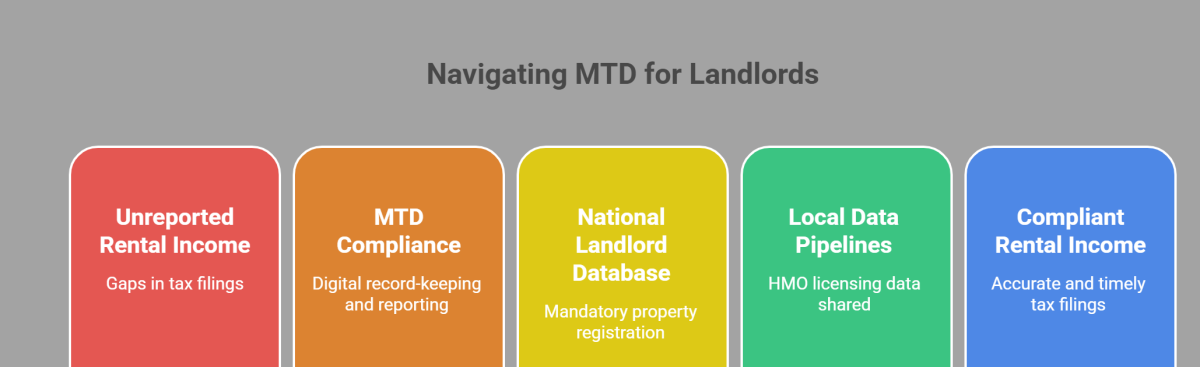
The April 2026 MTD rollout does not exist in a vacuum. It is part of a three-pronged enforcement strategy designed to eliminate “ghost landlording.”

  1. MTD for Income Tax (Active 6 April 2026): Mandatory digital record-keeping and quarterly updates for landlords earning over £50,000.
  2. National Landlord Database (Active 1 May 2026): Under the Renters’ Rights Act 2025, registration is mandatory to legally manage properties or serve possession notices.
  3. Local Data Pipelines (Reading): Since 1 March 2026, Reading Borough Council has extended licensing to small HMOs (3-4 occupants), sharing this data directly with HMRC’s “Connect” system.

Understanding Qualifying Income for the April 2026 MTD Deadline

A common misconception is that the £50,000 threshold applies to profit. It does not. The April 2026 MTD rules apply to your gross qualifying income—the total rent received before any expenses are deducted.

Income TypeIncluded in Threshold?
Gross Rental Income (UK & Overseas)Yes
Self-Employment IncomeYes
Furnished Holiday LetsYes
Jointly Owned Property ShareIndividual Share Only

The Reading “Trap”: Additional Licensing Meets HMRC Connect

Landlords in Reading face a unique challenge. On 1 March 2026, the council’s Additional HMO Licensing scheme became active for properties with 3 or 4 occupants.

This is more than a safety check. This licensing data serves as a direct feed to HMRC. If you apply for a license in Reading but have not declared that rental income for previous years, the April 2026 MTD digital trail will likely trigger an automated tax enquiry.

Voluntary Disclosure via the Let Property Campaign

If the new digital landscape has made you realize your past filings were “careless” or incomplete, the Let Property Campaign allows you to “come clean” under favorable terms.

  • Reasonable Care: HMRC may only look back 4 years.
  • Careless: HMRC can investigate the last 6 years.
  • Deliberate: Up to 20 years of back-tax, interest, and penalties.

By notifying HMRC voluntarily, you avoid the maximum 100-200% penalties associated with prompted enquiries. Specialists like Marslands Accountants report saving landlords an average of £7,000 on their final bill by identifying valid allowable expenses that landlords often overlook.

Frequently Asked Questions

1. What is the impact of the Section 21 abolition on current landlords?

The Section 21 abolition, effective 1 May 2026, removes the ability to end tenancies without a specific reason. To regain possession, landlords must use new grounds and be registered on the National Landlord Database. This registration links directly to the April 2026 MTD framework, ensuring total tax transparency before any legal possession can be granted by the courts.

2. Can I still evict a tenant after the Section 21 abolition?

Yes, but you must use Section 8 grounds, such as the new Ground 1A for selling the property. However, your legal standing is now tied to compliance. If you are not registered on the National Landlord Database—which feeds into the April 2026 MTD data net—your eviction notices will likely be ruled invalid.

3. How does the National Landlord Database link to my taxes?

The database acts as a digital pipeline to HMRC’s “Connect” system. When you register to comply with the Renters’ Rights Act, HMRC cross-references your identity against your April 2026 MTD submissions. Any discrepancy between the properties you claim to manage and the income you report will trigger an immediate compliance check.

4. What should I do if I haven’t declared rental income before 2026?

You should immediately notify HMRC through the Let Property Campaign. With the April 2026 MTD deadline now active, “ghost landlording” is no longer viable. Making a voluntary disclosure before HMRC’s automated systems flag your Reading licensing data can significantly reduce your penalties and the risk of criminal prosecution.

5. How many years of back-tax will HMRC look at?

The look-back period depends on your behavior. If you were “careless,” HMRC typically reviews 6 years. If they deem the omission “deliberate”—a conclusion easier to reach given the April 2026 MTD digital requirements—they can go back 20 years. Voluntary disclosure is the best way to limit this window and secure lower penalty rates.

6. What expenses are allowable in a Let Property Campaign disclosure?

You can deduct “wholly and exclusively” incurred costs, such as property repairs, insurance, and management fees. In the context of the April 2026 MTD shift, keeping digital receipts for these expenses is vital. Specialists like Marslands often help landlords identify overlooked deductions, saving an average of £7,000 on their final settlement.

7. Is the Let Property Campaign available for limited companies?

No, the campaign is strictly for individual landlords. While companies are not eligible for these specific voluntary terms, they are still subject to the transparency brought by the April 2026 MTD era and the National Landlord Database. Companies with undisclosed income should seek professional advice to rectify their position outside of this specific campaign.

8. What happens if I ignore the new tax transparency rules?

Ignoring the April 2026 MTD and licensing rules is high-risk. HMRC’s “Connect” system now synthesizes data from MTD, the National Landlord Database, and Reading’s HMO licensing. Failure to comply can result in penalties up to 100% of the tax due, being named a “deliberate defaulter,” and losing the legal right to manage or evict tenants.

Note: For more information on making a disclosure, visit the official GOV.UK guide or contact felixaccountants for specialist support.


Categories
Articles Articles Blogs FAQs Guides Property Tax News Resources Today's article

Why You Need a Let Property Campaign Expert

HMRC isn’t guessing anymore. Between the Land Registry, bank data, and even sites like Airbnb or Zoopla, the tax office has a digital map of who owns what and who’s likely collecting rent without telling them. If you own rental property in London, Slough, or the surrounding Thames Valley and haven’t fully disclosed your income, you’re sitting on a ticking financial clock and need to contact a Let Property Campaign Expert immediately. The Let Property Campaign is your one-way escape hatch, but navigating it alone is a recipe for overpaying or, worse, triggering a full-scale forensic audit.

Don’t wait for the letter to arrive. If you have undisclosed rental income in London, Slough, Windsor, Reading, or Oxford, taking the first step today is the only way to stay in control of your finances.

SCHEDULE A CALL WITH AN EXPERT

You’re about to learn exactly how the disclosure process works, why local market nuances in places like Windsor and Oxford matter to your tax bill, and how an expert ensures you pay the absolute legal minimum in penalties and interest.

What is a Let Property Campaign Expert?

A Let Property Campaign expert is a specialist tax advisor who manages the voluntary disclosure of undeclared rental income to HMRC. They calculate exact tax liabilities, identify all allowable property expenses to reduce the bill, and negotiate the lowest possible penalty percentages based on the landlord’s specific circumstances and “quality of disclosure.”


The Reality of HMRC Surveillance in the M4 Corridor

HMRC’s “Connect” system is an AI-driven database that cross-references billions of data points. For a landlord in Reading or London, this means HMRC knows when a property title changes, when a deposit is protected, and when a tenant claims housing benefits at your address.

The Let Property Campaign (LPC) is a specific opportunity for landlords who have failed to disclose their rental income to come forward. It’s not a “get out of jail free” card, but it is a “stay out of court” card. If you come to them before they send you a “nudge letter,” the penalties are significantly lower. If you wait until they find you, those penalties can reach 100% of the tax owed—or lead to criminal prosecution.

Why Location Matters: From Oxford Students to Slough Corporates

Your tax disclosure isn’t just about spreadsheets; it’s about the reality of your rental market. HMRC’s benchmarks for “reasonable” rental income vary wildly across the South East.

  • Oxford and Windsor: High-value areas with complex HMO (House in Multiple Occupation) setups or short-term holiday lets. These often involve higher management costs and maintenance fees that many landlords forget to deduct.

  • London and Slough: High churn rates and corporate lets. If you’ve had periods of vacancy or spent heavily on “repair vs. improvement” (a massive distinction in tax law), an expert ensures these are categorized to your advantage.

  • Reading: An area with high professional rental demand where landlords often move from a primary residence to a “buy-to-let” without realizing the CGT (Capital Gains Tax) implications of their future plans.

An expert understands that a £2,000 monthly rent in Slough looks different on a balance sheet than £5,000 in Kensington. They use local market data to justify your figures if HMRC questions the “commerciality” of your arrangements.

The Danger of the “DIY” in Let Property campaign Disclosure

Many landlords think the Let Property Campaign is as simple as filling out a form and cutting a check. It’s not. The biggest risk isn’t the tax itself; it’s the interest and the penalty classification.

HMRC classifies your “failure to notify” into three buckets:

  1. Reasonable Excuse: You had a genuine reason (illness, bereavement) for not filing.

  2. Careless: You didn’t take enough care to get it right.

  3. Deliberate: You knew you owed tax and chose not to pay.

A DIY filer might accidentally admit to “deliberate” behavior through poor phrasing, or fail to argue for a “reasonable excuse.” An expert acts as a shield, framing your history in the most favorable light supported by evidence. They also ensure you aren’t paying tax on “capital” items that should actually be deducted from your future Capital Gains bill rather than your current Income Tax bill.

Step-by-Step: How an Expert Navigates Your Let Property campaign

Disclosure

1. The Portfolio Audit

Before speaking to HMRC, your advisor will reconstruct your financial history. This involves gathering bank statements, letting agent statements, and receipts for every tap fixed or wall painted over the last several years. They don’t just look for income; they hunt for “missing” expenses like mortgage interest (subject to Section 24 restrictions), insurance, and service charges.

2. The Notification Phase

Once the figures are ready, your expert notifies HMRC of your intent to disclose. This creates a “standstill” period of 90 days. During this time, you are protected from certain enforcement actions while the final report is prepared.

3. Technical Calculations

Calculating the tax is the easy part. The hard part is calculating the Section 24 interest relief and the tapered penalties. Since 2017, mortgage interest isn’t a direct deduction from rental income for individual landlords; it’s a 20% tax credit. Many DIY landlords still try to deduct the full interest, which is an immediate red flag for HMRC.

4. The Disclosure Submission

The final report is sent via the Official Government Gateway. This isn’t just a number; it’s a narrative. An expert includes a “disclosure letter” explaining why the omission happened, which is vital for minimizing penalties.

5. Payment and Settlement

Your expert helps arrange payment. If you can’t pay the full amount (which often happens when multiple years of back-tax are due), they negotiate a “Time to Pay” arrangement, allowing you to spread the cost without HMRC freezing your assets.

Comparison: Expert Disclosure vs. HMRC Discovery

FeatureExpert-Led DisclosureHMRC Discovery (Audit)
Penalty RateOften 0% – 20%35% – 100%+
Look-back PeriodLimited by “reasonable care”Up to 20 years
ControlYou lead the narrativeHMRC dictates the investigation
Stress LevelManaged by professionalsHigh (legal/criminal threats)
CostFixed fee + lower taxHigher tax + compound interest + huge penalties

The “Repair vs. Improvement” Trap

This is where most London and Windsor landlords lose money. If you replace a broken wooden window with a double-glazed uPVC window, HMRC usually views that as a “repair” (deductible from income tax). If you build an extension or install a high-end designer kitchen where a basic one existed, that’s an “improvement” (deductible from Capital Gains Tax when you sell).

Without an HMRC Let Property Campaign expert in Slough or London, you might try to claim an extension against your rental income. HMRC will reject it, charge you a penalty for a “careless” error, and you’ll still owe the tax. An expert knows how to categorize these costs to maximize your current cash flow while protecting your future tax position.

Is it too late if I already received a Let Property campaign letter?

If you’ve received a “nudge letter” from HMRC mentioning the Let Property Campaign, the window for a “voluntary” disclosure is closing, but it isn’t shut. You can still use the campaign, but your penalty will likely be higher than if you had come forward unprompted. However, responding with a professional report from a London tax specialist shows HMRC that you are now taking your obligations seriously. This often prevents them from digging into other areas of your finances, like your primary business or offshore investments.

Strategy Framework: The Felix Approach to Let Property campaign

We don’t just crunch numbers. We look at the “Three Pillars of Protection”:

  1. Documentation: Creating a “bulletproof” trail of expenses to offset income.

  2. Mitigation: Arguing for the lowest possible penalty tier based on your life circumstances.

  3. Future-Proofing: Setting up your digital records to comply with Making Tax Digital (MTD) for landlords, so you never end up in this position again.

Whether you’re a landlord with one flat in Reading or a portfolio in Oxford, the goal is the same: total compliance with minimum financial damage.

Further Reading on Let Property campaign

To better understand your specific situation, explore our dedicated regional guides:

FAQ: People Also Ask

How many years does the Let Property Campaign go back?

HMRC can go back up to 20 years if they believe the failure to pay was deliberate. If it was a “careless” mistake, they usually look back 6 years. If you took “reasonable care” but still got it wrong, the limit is typically 4 years. An expert helps determine which limit applies to you.

What are the penalties for the Let Property Campaign?

Penalties range from 0% to 100% of the tax owed. For voluntary disclosures where the landlord was “careless” but helpful, penalties are often between 0% and 15%. If HMRC finds you first, those rates jump significantly.

Can I include mortgage interest in my Let Property campaign disclosure?

Yes, but only according to the current rules. Since April 2020, you cannot deduct mortgage interest from your rental income to calculate profit. Instead, you receive a 20% tax credit. Failing to apply this correctly in a disclosure is a common reason HMRC rejects DIY submissions.

Do I have to pay the Let Property campaign full amount immediately?

Not necessarily. While HMRC prefers immediate payment, a Let Property Campaign expert can often negotiate a payment plan (Time to Pay arrangement) if you can demonstrate that a lump sum payment would cause “undue hardship.”

Does the Let Property campaign apply to holiday lets or Airbnb?

Yes. The Let Property Campaign covers all residential property, including specialized lets like Airbnb, student housing, and holiday rentals in areas like Oxford or Windsor. It does not cover commercial property (shops or offices).

What expenses can I claim to reduce my tax bill?

You can claim letting agent fees, property insurance, maintenance and repairs (not improvements), utility bills you paid, council tax during void periods, and professional fees like accountancy or legal costs related to the tenancies.

Categories
Articles Blogs FAQs Guides

How to Use the Let Property Campaign Penalty Calculator (Step-by-Step)

If you have undisclosed rental income, the sheer weight of “not knowing” is often worse than the tax bill itself. You might be wondering: How much do I actually owe? How far back will they go? Is there a way to estimate the damage before I talk to HMRC? This is where understanding the Let Property Campaign penalty calculator methodology becomes your most powerful tool. By learning how to calculate these figures, you move from a place of panic to a place of strategy.

In this guide, we will walk you through the exact process of using the Let Property Campaign framework to estimate your liabilities. We’ll cover the difference between tax, interest, and penalties, and provide a step-by-step roadmap to ensure you don’t pay a penny more than is legally required. Whether you are a landlord in Windsor, Oxford, or London, this manual is designed to give you total clarity.

Featured Snippet: What is the Let Property Campaign penalty calculator?

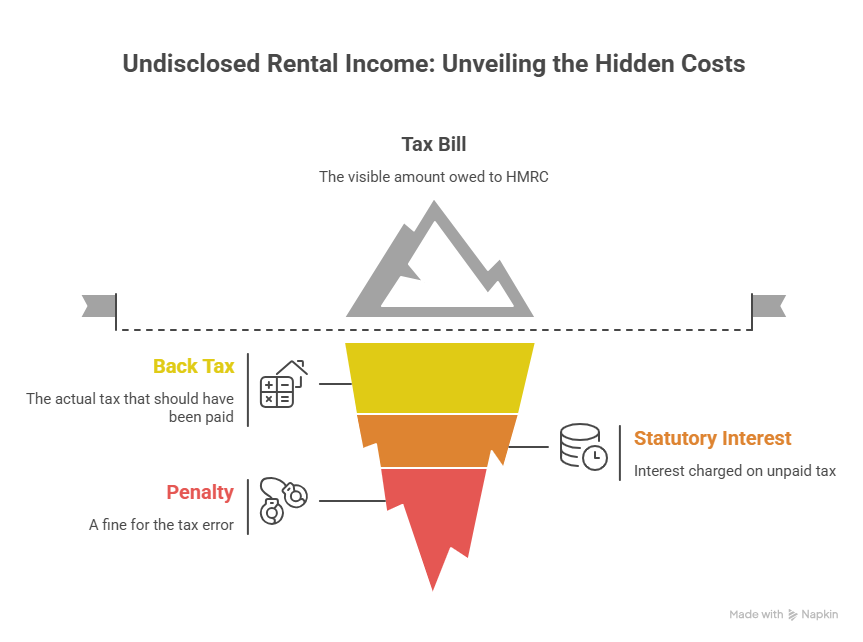
The Let Property Campaign penalty calculator is a framework used to estimate the total cost of disclosing unpaid rental tax. It combines the total tax owed per year, statutory interest (calculated from the date the tax was due), and a percentage-based penalty (0%–100%) determined by the taxpayer’s behavior and the timing of the disclosure.

Understanding the “Cost” Pillars of a Disclosure

Before you start plugging numbers into a spreadsheet, you must understand that your final bill to HMRC isn’t just one number. It is built on three distinct pillars. If you miss one, your estimate will be dangerously low.

Pillar 1: The Back Tax (The Principal)

This is the actual amount of tax you should have paid on your rental profits. To find this, you must take your gross rental income and subtract “allowable expenses” (like repairs, insurance, and management fees). If you are a higher-rate taxpayer, you also need to account for the mortgage interest tax credit restrictions (Section 24).

Pillar 2: Statutory Interest

HMRC views unpaid tax as an interest-free loan you took from the government. To rectify this, they charge interest from the date the tax should have been paid until the date you actually pay it. With interest rates currently at decade-highs, this can add 20% or more to an old tax debt.

Pillar 3: The Penalty

This is the “fine” for the error. The percentage is applied to the tax amount (not the interest). This is the area where a specialist accountant provides the most value, as we can often argue for lower categories based on your circumstances.

Step-by-Step: How to Use the Penalty Calculator Framework

Since HMRC does not provide a single “one-click” calculator that handles every nuance, you must follow this structured framework to get an accurate estimate.

Step 1: Determine the Relevant Tax Years

How far back are you going?

  • 4 Years: If you took “Reasonable Care” but made an honest mistake.
  • 6 Years: If you were “Careless.”
  • 20 Years: If the non-disclosure was “Deliberate.”

Step 2: Calculate Annual Net Profit

For each year, list your gross rent. Subtract your allowable expenses.

Note: Do not subtract the full mortgage payment. You can only deduct the interest element (and for individuals, this is now a 20% tax credit rather than a direct deduction from income).

Step 3: Determine Your Tax Band

Your rental profit is added to your other income (Salary, Dividends, etc.). If your total income crosses the £50,270 threshold (for 2025/26), you will owe 40% tax on the portion of rental profit sitting in the higher-rate band.

Step 4: Apply the Penalty Percentage

Use the table below to decide which percentage to apply to your tax total.

BehaviorUnprompted (You told them)Prompted (They found you)
Reasonable Care0%0% – 30%
Careless0% – 30%15% – 30%
Deliberate20% – 70%35% – 70%

Step 5: Calculate Interest

You must apply the HMRC late payment interest rate to each year’s tax. Because rates change, it is best to use a specialized interest calculator or ask your HMRC Let Property Campaign expert in Slough to run the professional software.

Strategy Framework: Minimizing the “Penalty” Variable

The penalty is the only part of the equation that is negotiable. To minimize this, you must demonstrate the “Quality of Disclosure.”

  1. Telling: Did you tell HMRC everything, or did you wait for them to ask?
  2. Helping: Did you provide your spreadsheets and receipts quickly?
  3. Giving Access: Did you allow HMRC to check your records?

Landlords in Reading and London who provide a “Full and Unprompted” disclosure can often see their penalties for carelessness reduced to 0%.

Real-World Example: The “Careless” Disclosure

Imagine a landlord in Oxford who didn’t declare £10,000 in rental profit per year for the last 4 years. They are a basic-rate (20%) taxpayer.

  • Tax Owed: £2,000 per year x 4 years = £8,000
  • Interest: (Estimate) £1,200
  • Penalty (Unprompted/Careless): Let’s say 10% = £800
  • Total Bill: £10,000

If this same landlord had waited for a “nudge letter,” the penalty could easily double or triple, and HMRC might insist on looking back 6 or 20 years instead of 4.

Pros and Cons of DIY Calculation vs. Professional Assistance

DIY Calculation

  • Pros: Free; gives a rough “ballpark” figure immediately.
  • Cons: High risk of missing tax credits; often results in overpaying tax or underestimating penalties; no protection if HMRC challenges the figures.

Professional Specialist (Felix & Co.)

  • Pros: Access to professional-grade Let Property Campaign penalty calculator software; expert negotiation of penalty categories; identifying obscure allowable expenses (e.g., specific proportions of home office/travel).
  • Cons: Upfront accountant fee. However, the tax savings usually far exceed the fee.

Why Location Matters: High-Value Service Areas

If you own property in Windsor or London, the stakes are higher. Rental yields are higher, and the likelihood of being pushed into the 40% or 45% tax bracket is almost certain. In these areas, HMRC’s “Connect” system is particularly aggressive in cross-referencing Land Registry data with high-value stamp duty records.

Our specialists in Reading, Slough, and Oxford understand the local market nuances, such as HMO (House in Multiple Occupation) regulations and how they impact your “Allowable Expenses” calculation.

Overview: Quick Calculator Summary

  • Formula: (Back Tax) + (Interest) + (Penalty %) = Total Liability.
  • Penalty Range: 0% to 100% of the tax due.
  • Interest: Always mandatory; currently based on base rates + 2.5%.
  • Timeline: You have 90 days to pay once you notify HMRC of your intent to disclose.
  • Expert Advice: Always aim for “Unprompted” status to keep penalties at the minimum floor.

FAQ: People Also Ask

1. Can I use an online calculator for the Let Property Campaign?

There are basic tools online, but they rarely account for the complexities of Section 24 mortgage interest restrictions or changing interest rates. For an accurate disclosure, a manual calculation by a specialist is recommended to avoid HMRC rejecting your figures.

2. What happens if the calculator shows I owe more than I have?

Do not let this stop you from disclosing. Once the liability is calculated, we can help you negotiate a “Time to Pay” arrangement with HMRC, allowing you to pay the debt in monthly installments.

3. Does the penalty apply to the interest as well?

No. The penalty percentage is only applied to the “Tax Lost” (the principal). Interest is a separate charge that is added to the total.

4. How does the “10% rule” work for offshore property?

If the property is abroad, the rules change. Penalties for offshore income can be significantly higher (up to 200%) depending on the “territory” and the information-sharing agreements in place.

5. If my calculator shows £0 tax due, do I still need to disclose?

If your expenses and personal allowance mean no tax is due, you may not need to use the campaign, but you should still ensure your records are up to date. Making a “Nil” disclosure can sometimes be a strategic move to prevent future HMRC inquiries.

6. Is the calculator different for prompted disclosures?

The formula is the same, but the “Penalty %” will have a higher minimum. For example, a careless mistake that is prompted has a minimum penalty of 15%, whereas an unprompted one can be 0%.

From Uncertainty to Action

Using the Let Property Campaign penalty calculator methodology is the first step toward taking back control of your finances. While the numbers might seem daunting, remember that HMRC rewards those who come forward. By identifying your tax, interest, and penalty liabilities now, you can build a disclosure that is accurate, honest, and optimized to save you money.

Don’t let the fear of a calculation keep you in the dark. Whether you are in Slough, Windsor, or London, the best time to calculate your disclosure was yesterday; the second best time is today.

Stop guessing and start solving.

SCHEDULE A CALL WITH OUR SPECIALISTS We help you protect your reputation and pay only what you legally owe.


Categories
Articles Blogs Guides

The Master Guide to the Let Property Campaign in Windsor

Let Property Campaign Windsor: The Definitive 2026 Disclosure Handbook for Royal Borough Landlords

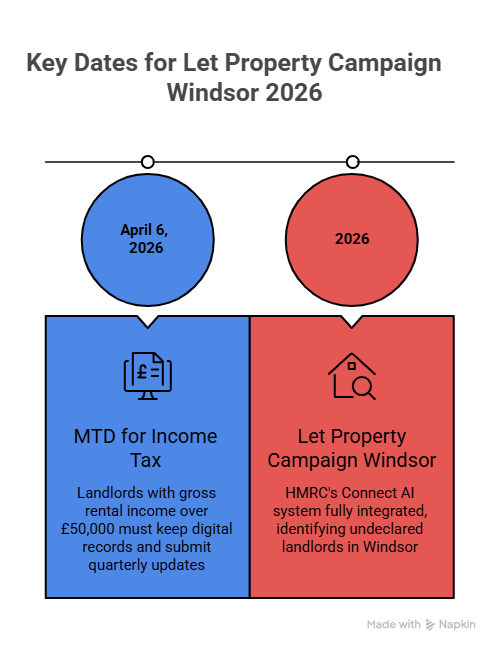
The Let Property Campaign Windsor is currently the most significant tax compliance initiative for property owners in the Royal Borough of Windsor and Maidenhead. As we move through 2026, the era of “invisible” rental income has officially ended. HM Revenue & Customs (HMRC) has fully integrated its “Connect” AI system, a multi-billion pound data-mining tool that cross-references over 30 different data sources to identify undeclared landlords. For those owning prestigious assets in the SL4 and SL5 postcodes, the high rental yields that make Windsor attractive also make it a primary target for tax enforcement.

The Property Campaign Windsor Market and Why HMRC is Watching

Windsor is not a standard rental market; it is a high-wealth ecosystem. Properties here range from historic Grade II listed townhouses near Windsor Castle to modern luxury apartments in Eton.

The Short-Term Let Surge

Windsor’s status as a global tourist destination means short-term rentals via platforms like Airbnb are at an all-time high. In 2024, HMRC mandated that these platforms share host data directly. If you have been letting out a spare room or a whole property for the Royal Ascot or summer tourism without declaring the income, the Let Property Campaign Windsor is your only route to avoiding a full-scale criminal investigation.

The Impact of Making Tax Digital (MTD) 2026

From April 6, 2026, the rollout of MTD for Income Tax has changed the game. Landlords with a gross rental income over £50,000 must now keep digital records and submit quarterly updates. This shift to real-time reporting is exposing years of historical “gaps” in tax filings.

Step-by-Step: Navigating the Let Property Campaign

Participating in the campaign is a structured process. It is not as simple as sending a check; it requires a detailed forensic look at your finances over several years.

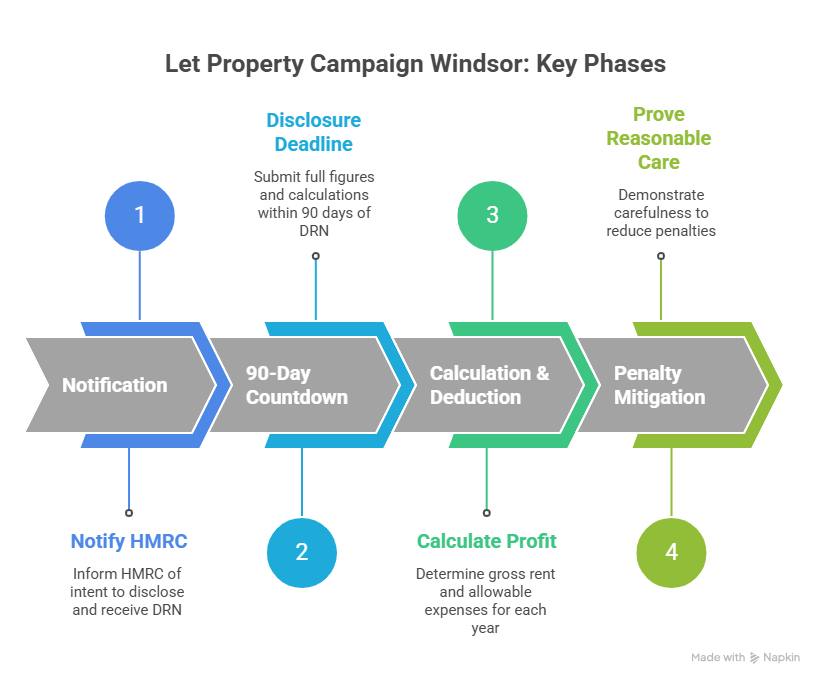
Phase 1: The Notification

The first step is to notify HMRC of your intent to disclose. Once this is done, you are assigned a Disclosure Reference Number (DRN). This “stops the clock” on certain more aggressive enforcement actions, but it starts a new 90-day countdown to provide the full figures.

Phase 2: Calculating Undeclared Income and Deductions

This is where professional precision is required. You must calculate your gross rent for every year you failed to file. However, you are only taxed on the profit. In Windsor, where property maintenance is exceptionally high, identifying every “allowable expense” is vital.

  • Repairs vs. Improvements: Replacing a Victorian sash window like-for-like is a deductible repair. Installing a brand-new conservatory is a capital improvement, which is handled differently.
  • Management Fees: Premium Windsor letting agents often charge 12%–15%. We ensure every penny of this is deducted.

Penalty Mitigation and “Reasonable Care”

HMRC’s penalty regime in 2026 is based on “behavioral” assessments. If we can prove you acted with “Reasonable Care” or that your failure was “Careless” rather than “Deliberate,” we can reduce penalties from 100% down to 0%–20%.

To ensure your blog provides maximum value and answers the most common queries your clients have, I have developed 6 unique, highly detailed FAQs for each of the three articles. These are tailored to the 2026 tax landscape and the specific needs of Windsor property owners.

Property Campaign Windsor

FAQs for Property Campaign Windsor

  1. What exactly triggers an HMRC “nudge letter” in Windsor?

    In 2026, the trigger is usually an “anomaly” found by the Connect AI system. For example, if the Land Registry shows you own a second property in SL4, but your tax return shows no rental income, or if a deposit was protected with a scheme but no corresponding tax was paid, a letter is automatically generated.

  2. Can I use the Let Property Campaign if I have multiple properties in the Royal

    Borough?
    Yes. The campaign is designed for individual landlords regardless of whether they own a single studio in Clewer or a large portfolio of HMOs (Houses in Multiple Occupation) across Windsor and Maidenhead.
  3. Is there a minimum amount of rental income before I need to disclose?
    You have a £1,000 “Property Allowance” each year. If your gross rental income (before expenses) is over £1,000, you must declare it. For most Windsor rentals, where monthly rents exceed this annually, disclosure is almost always mandatory.
  4. How does the 2026 Making Tax Digital (MTD) rollout affect my disclosure?
    MTD requires real-time digital record-keeping for those earning over £50,000. If you are moving onto MTD software now, any “missing years” in your digital history will be immediately obvious to HMRC, making a voluntary disclosure via the campaign even more urgent.
  5. What if I let my property to family members at a “mate’s rate”?
    Even if you charge below-market rent, the income is still taxable. However, you cannot claim a tax loss if your expenses exceed the subsidized rent. The campaign allows you to regularize these informal arrangements.
  6. Will HMRC visit my Windsor property as part of the campaign?
    Generally, no. The Let Property Campaign is a “desk-based” disclosure. By providing a full and accurate digital disclosure, you significantly reduce the chance of an intrusive face-to-face audit or property inspection.
    Learn More
Categories
News

Prompted vs. Unprompted: How Coming Forward Voluntarily Saves You Thousands

If you are a landlord with undeclared rental income, you are standing at a digital crossroads. On one path, you wait for HMRC to find you; on the other, you step forward first. In the world of UK tax, the label HMRC attaches to your disclosure—“Prompted” or “Unprompted”—is the single biggest factor in determining whether your penalty is a slap on the wrist or a financial catastrophe.

At Felix Accountants, we help landlords navigate the Let Property Campaign (LPC). Our goal is always to secure “Unprompted” status for our clients, as this simple distinction can save you tens of thousands of pounds in unnecessary fines.

1. The Definitions: What’s the Difference?

The distinction between these two terms is simpler than it sounds, but the timing is everything.

What is an Unprompted Disclosure?

An unprompted disclosure occurs when you tell HMRC about a tax irregularity before they have any reason to believe you have a problem. You are the one who initiates the conversation. Even if you only come forward because you heard about HMRC’s “Connect” system in the news, as long as they haven’t contacted you yet, it is unprompted.

What is a Prompted Disclosure?

A disclosure is “prompted” if you only come forward after HMRC has contacted you. This includes receiving a “nudge letter,” a notification of a compliance check, or a formal tax enquiry. HMRC’s view is that you aren’t being “honest”; you are simply “getting caught.”

2. The Penalty Gap: A Financial Comparison

HMRC uses a sliding scale for penalties based on your behavior and the “quality” of your disclosure. The difference between moving first (Unprompted) and moving second (Prompted) is stark.

Behaviour CategoryUnprompted Penalty RangePrompted Penalty Range
Reasonable Care0%0% – 30%
Careless0% – 30%15% – 30%
Deliberate20% – 70%35% – 70%
Deliberate & Concealed30% – 100%50% – 100%

Note: For offshore property income, penalties can reach as high as 200%.

The Real-World Impact:

Imagine you owe £20,000 in back-tax from a “Careless” error.

  • Unprompted: With a good accountant, we can often negotiate this down to 0%, meaning you pay just the tax and interest.

  • Prompted: You are guaranteed a minimum penalty of 15% (£3,000), plus the tax and interest.

3. Why the “Quality of Disclosure” Matters

Even within those ranges, your final penalty depends on three factors HMRC calls “Helping, Telling, and Giving.”

  1. Telling: Did you fully explain the error?

  2. Helping: Did you calculate the tax accurately?

  3. Giving: Did you provide all the bank statements and records requested?

By being unprompted and providing a “high-quality” disclosure via Felix Accountants, you give HMRC very little room to charge anything above the minimum.

4. The “Connect” Threat: Why You Can’t Wait

In 2026, the window for unprompted disclosures is closing fast. HMRC’s Connect system is now fully integrated with:

  • The Land Registry: They know when you buy or sell.

  • Letting Agents: They receive annual lists of all landlords and the rent they collect.

  • Digital Platforms: Airbnb and Booking.com share host data directly with HMRC.

  • Bank Interest: HMRC sees the interest you earn on your savings, which often flags “extra” wealth.

Once the system flags you and a nudge letter is printed, you lose the ability to make an unprompted disclosure. You have effectively “lost” the 0% penalty option.

5. Benefits of the Unprompted Let Property Campaign

Beyond just the lower fines, moving voluntarily through the LPC offers:

  • No “Naming and Shaming”: HMRC maintains a public list of “Deliberate Tax Defaulters.” By coming forward voluntarily, you almost always avoid being added to this list.

  • Immunity from Prosecution: While not a legal “guarantee,” HMRC rarely pursues criminal charges against those who make a full, honest, unprompted disclosure.

  • Control of the Narrative: You get to explain the situation first, rather than defending yourself against HMRC’s assumptions.

6. How Felix Accountants Secures the Best Outcome

When you choose to disclose voluntarily, we don’t just send a cheque. We build a comprehensive Case for Leniency:

  • Technical Analysis: We determine if your error was “Careless” or “Reasonable,” rather than “Deliberate.”

  • Statutory Interest Calculation: We ensure you aren’t overpaying on interest.

  • Representation: We act as your formal agent, meaning HMRC speaks to us, not you.

Frequently Asked Questions (FAQs)

Q1: I received a “Nudge Letter” yesterday. Is it too late for an unprompted disclosure?

Technically, yes. Once the letter arrives, the disclosure is “prompted.” However, by responding immediately and using the Let Property Campaign correctly, we can still argue for the absolute minimum of the prompted penalty range.

Q2: Can I be unprompted if I only disclose some of my properties?

No. A disclosure must be “Full and Complete.” If you disclose one property but hide another, and HMRC finds the second one later, they will view the entire disclosure as “Deliberate and Concealed,” which carries the highest penalties.

Q3: What if I didn’t know I had to pay tax?

This is often classed as “Careless” or “Failure to Notify.” If it’s unprompted, we can often get the penalty down to 0% or 10% by showing that it was a genuine misunderstanding of the rules.

Q4: Does unprompted disclosure take longer?

No. The process is identical: you notify HMRC, and then you have 90 days to submit the figures. The only difference is the “Unprompted” flag on your file, which makes the final bill much smaller.

Q5: Will HMRC audit my other business interests if I disclose my rental income?

Generally, no. The Let Property Campaign is a “ring-fenced” disclosure facility. While HMRC reserves the right to look elsewhere, if your LPC disclosure is professional and accurate, they usually accept it and close the file.

Don’t Wait for the Nudge

The difference between an Unprompted and Prompted disclosure is often the difference between a manageable settlement and financial ruin. If you know your tax affairs aren’t up to date, now is the time to act.

Contact Felix Accountants today. Let’s get your unprompted disclosure started before HMRC finds you.

Start My Voluntary Disclosure

Categories
Articles Blogs FAQs Guides

Let Property Campaign for Overseas Properties: What UK Landlords Need to Know

Many UK residents believe that if their rental property is located in another country, the income is “off-limits” to HMRC. This is a dangerous misconception. If you are a UK tax resident, you are generally taxed on your worldwide income. This includes that holiday home in Spain, the apartment in Dubai, or the family home in India. The Let Property Campaign is not just for domestic landlords; it is a critical lifeline for those with international portfolios to regularize their tax affairs before the “Worldwide Disclosure Facility” or automated data sharing catches up with them.

In this deep-dive guide, we will explore the specific complexities of disclosing foreign rental income, how Double Taxation Agreements (DTAs) work in your favor, and why the penalties for overseas non-disclosure under the Let Property Campaign can be significantly harsher than for UK-based properties. Whether you are in Windsor, Oxford, or London, if your assets are abroad, this guide is for you.

Featured Snippet: Does the Let Property Campaign apply to overseas property?

Yes, the Let Property Campaign applies to UK tax residents who have undisclosed rental income from overseas properties. While the campaign is the primary route for domestic disclosure, it can also be used for foreign residential lets. However, failure to disclose overseas income can lead to “Requirement to Correct” penalties, which can reach 200% of the tax due.

The Global Dragnet: How HMRC Finds Your Overseas Income

The days of “hidden” offshore bank accounts and untraceable foreign property titles are effectively over. HMRC now employs a sophisticated digital dragnet to identify UK residents with interests abroad.

1. The Common Reporting Standard (CRS)

Over 100 countries now participate in the CRS, an automated system that shares financial account information across borders. If you have a bank account in France or South Africa receiving rent, that information is automatically flagged to HMRC’s “Connect” system.

2. The Worldwide Disclosure Facility (WDF)

While the Let Property Campaign is excellent for residential property, HMRC also runs the WDF for general offshore income. However, for many landlords, the LPC remains a viable and often more specialized route if the income is strictly residential.

3. Requirement to Correct (RTC)

The RTC legislation introduced a legal obligation for taxpayers to correct any offshore tax non-compliance. Missing the deadline for this has created a new penalty regime where the starting point is often 150% to 200% of the tax owed.

Key Challenges for Overseas Landlords

Disclosing foreign income under the Let Property Campaign involves more than just converting currency. You must navigate a minefield of international tax laws.

Foreign Tax Credits and Double Taxation

If you have already paid tax on your rental income in the country where the property is located, you shouldn’t have to pay it all over again in the UK. This is managed through Double Taxation Agreements (DTAs). You can usually claim Foreign Tax Credit Relief (FTCR) to offset the tax paid abroad against your UK liability.

Note: You cannot claim more credit than the UK tax due on that same income.

Currency Conversion Hurdles

HMRC requires all figures to be reported in GBP. This means you must convert your rental income and expenses using the exchange rates applicable at the time the income was received or the expense was incurred. Using a single “end-of-year” rate is often inaccurate and can be challenged by HMRC.

Non-UK Allowable Expenses

Not all expenses allowed in a foreign country are allowed in the UK. For example, some countries allow for “depreciation” of the building, which is strictly prohibited for UK residential property tax calculations.

Comparison: UK vs. Overseas Disclosure Penalties

The stakes are much higher when the property crosses a border. HMRC categorizes countries into “territories” based on how much information they share.

FeatureUK Property DisclosureOverseas Property Disclosure
Data SharingHigh (Land Registry/Banks)Very High (CRS/Automatic Exchange)
Max Penalty100% of tax dueUp to 200% (Category 2 & 3 territories)
Look-back PeriodUp to 20 yearsUp to 20 years (Standard RTC rules apply)
ComplexityModerateHigh (DTAs, FTCR, Currency)


Step-by-Step: Disclosing Foreign Income via the Let Property Campaign

If you have a property in Slough, Reading, or London but the income is coming from an apartment in Spain, here is the roadmap to compliance.

Step 1: Determine Your Tax Residency

Are you a UK resident? If you spend more than 183 days in the UK, or if your “only home” is here, you are likely taxed on your worldwide income. This is the foundation of your disclosure.

Step 2: Collect International Records

You need foreign bank statements, local tax returns filed in the property’s country, and receipts for repairs. These must be translated if necessary.

Step 3: Calculate the “Net” in GBP

Apply the correct HMRC exchange rates. Subtract UK-allowable expenses from the gross rent.

Step 4: Apply Foreign Tax Credit Relief

Identify the tax already paid to the foreign government. This will be deducted from your UK tax bill, but it will not reduce the interest or penalties charged by HMRC.

Step 5: Draft the Narrative

Explain why the income wasn’t declared. Many landlords in Windsor or Oxford genuinely believed the DTA meant they didn’t have to tell HMRC at all. While this isn’t a “Reasonable Excuse,” it can be argued as “Careless” rather than “Deliberate,” saving you 50% or more in penalties.

Strategy Framework: The “Territory” Assessment

When using the Let Property Campaign for overseas assets, you must identify your “Territory Category”:

  • Category 1: Countries like the USA, France, and Germany (High info sharing). Penalties are similar to UK rates.
  • Category 2: Countries with less robust sharing. Penalties are higher.
  • Category 3: Countries that do not share information. Penalties are the most severe.

By identifying your category early, your Let Property Campaign expert in Slough can provide a more accurate estimate of your potential fine.

Why High-Net-Worth Areas are at Higher Risk

Landlords in Windsor, London, and Oxford often have diverse international portfolios. HMRC’s “High Net Worth Unit” specifically looks for discrepancies between a taxpayer’s lifestyle in the UK and their reported global income. If you own a high-value home in London but report minimal income, HMRC may use their “Connect” system to look for foreign property ties that haven’t been declared.

The risk isn’t just a fine; it’s a full-scale investigation into all your global assets. The Let Property Campaign acts as a “firebreak,” allowing you to settle the property aspect before it leads to a wider audit.

Overview: Overseas Disclosure Summary

  • Rule: UK residents are taxed on worldwide rental income.
  • Relief: You can usually deduct tax paid abroad from your UK bill (Foreign Tax Credit Relief).
  • Currency: All income must be converted to GBP using HMRC-approved rates.
  • Penalties: Can reach 200% if the property is in a non-cooperative territory.
  • Opportunity: The Let Property Campaign is the best way to voluntarily disclose residential foreign lets.

FAQ: People Also Ask

1. If I paid tax in Spain, why do I owe HMRC?

UK tax rates are often higher than foreign rates. You pay the difference to HMRC. For example, if you paid 19% in Spain but your UK marginal rate is 40%, you owe HMRC the remaining 21%. Furthermore, you are legally required to report the income even if no tax is due.

2. What if the property is owned by a foreign company?

The Let Property Campaign is for individuals. If the property is owned through an offshore company or trust, different (and often more complex) disclosure rules apply. You should seek specialized advice immediately.

3. Can I claim travel expenses to visit my overseas property?

HMRC is very strict here. You can only claim the “wholly and exclusively” part of the trip. If you spent 2 days at the property and 12 days on the beach, the flight cost is generally not deductible.

4. Does the 90-day deadline apply to overseas disclosures?

Yes. Once you notify HMRC via the Digital Disclosure Service, you have 90 days to prepare the calculations and pay the debt. International disclosures often take longer to prepare due to the need for foreign records, so start gathering data before you notify.

5. What is the “Requirement to Correct” (RTC)?

It was a piece of legislation that required everyone with offshore tax issues to disclose by September 2018. Because that deadline has passed, any disclosure made now is automatically subject to the much higher “Failure to Correct” penalty regime.

6. My foreign property is at a loss. Do I still disclose?

Yes. Reporting a foreign loss is beneficial as it can often be carried forward to offset future profits from the same foreign property business.

Bringing Your Global Wealth Home

Handling an overseas property disclosure alone is a recipe for disaster. Between currency fluctuations, treaty overlaps, and the looming threat of 200% penalties, the technical margin for error is zero.

The Let Property Campaign is your opportunity to bring your international affairs into the light on your own terms. By acting now, you protect your UK reputation, secure your assets in London, Windsor, or Reading, and ensure that your foreign investments remain a blessing, not a legal curse.

Don’t let a border be the reason you face a 200% fine.

SCHEDULE A CALL WITH OUR INTERNATIONAL TAX EXPERTS

We help you navigate global tax complexities and pay only what is legally due.


Categories
News

Last-Minute Tax Savings for the 2025-26 Tax Year: The Definitive Guide for Small Businesses

With the end of the tax year rapidly approaching, many business owners in the UK find themselves in a race against the clock. At Felix & Co. Chartered Accountants we are all about tax savings and we know that the difference between a “good” financial year and a “great” one often comes down to the small, strategic moves made in these final weeks.

Whether you are running a limited company, operating as a sole trader, or simply looking to protect your personal wealth, the 2025-26 tax year offers several avenues for relief. However, these opportunities disappear after April 5th. This guide breaks down the essential steps you must take to ensure you aren’t leaving money on the table.

1. Limited Company Strategies: Dividends and Payroll

If you are a limited company director, your remuneration strategy is one of your most powerful tax-saving tools.

The Dividend Allowance

Every individual has a dividend allowance. For the current tax year, it is vital to ensure you have utilized your £500 dividend allowance. If you haven’t drawn this amount yet, doing so before the deadline allows you to take that income tax-free. For further details on how dividends are taxed, you can refer to the HMRC Guidance on Tax on Dividends.

Director’s Payroll and Trivial Benefits

Reviewing your salary levels is equally important. Ensure your salary is optimized for National Insurance purposes while remaining tax-efficient. Additionally, don’t forget Trivial Benefits. Directors can receive non-cash gifts (up to £50 each, capped at £300 annually for directors of “close” companies) that are exempt from tax and NI. You can check the eligibility criteria at the HMRC Employment Income Manual on Trivial Benefits.

Expert Tip: If you’re feeling overwhelmed by the paperwork, check out our Last-Minute Tax Saving Checklist for Small Business Owners for a streamlined workflow.

Dividend and Trivial Benefits (Limited Company Owners) - - Tax Saving


2. Capital Investments and Equipment

The end of the tax year is the ideal time to look at your business’s physical needs. If you were planning to upgrade your office technology, machinery, or vehicles in the summer, consider bringing those purchases forward.

Under the Annual Investment Allowance (AIA), most businesses can claim 100% tax relief on qualifying plant and machinery investments. By making these purchases before the tax year ends, you can reduce your taxable profits for this period rather than waiting another year to see the benefit. View the full list of qualifying items on the HMRC Capital Allowances page.

Annual Investment Allowance (AIA) - Tax Saving


3. The Shift to ‘Making Tax Digital’ (MTD)

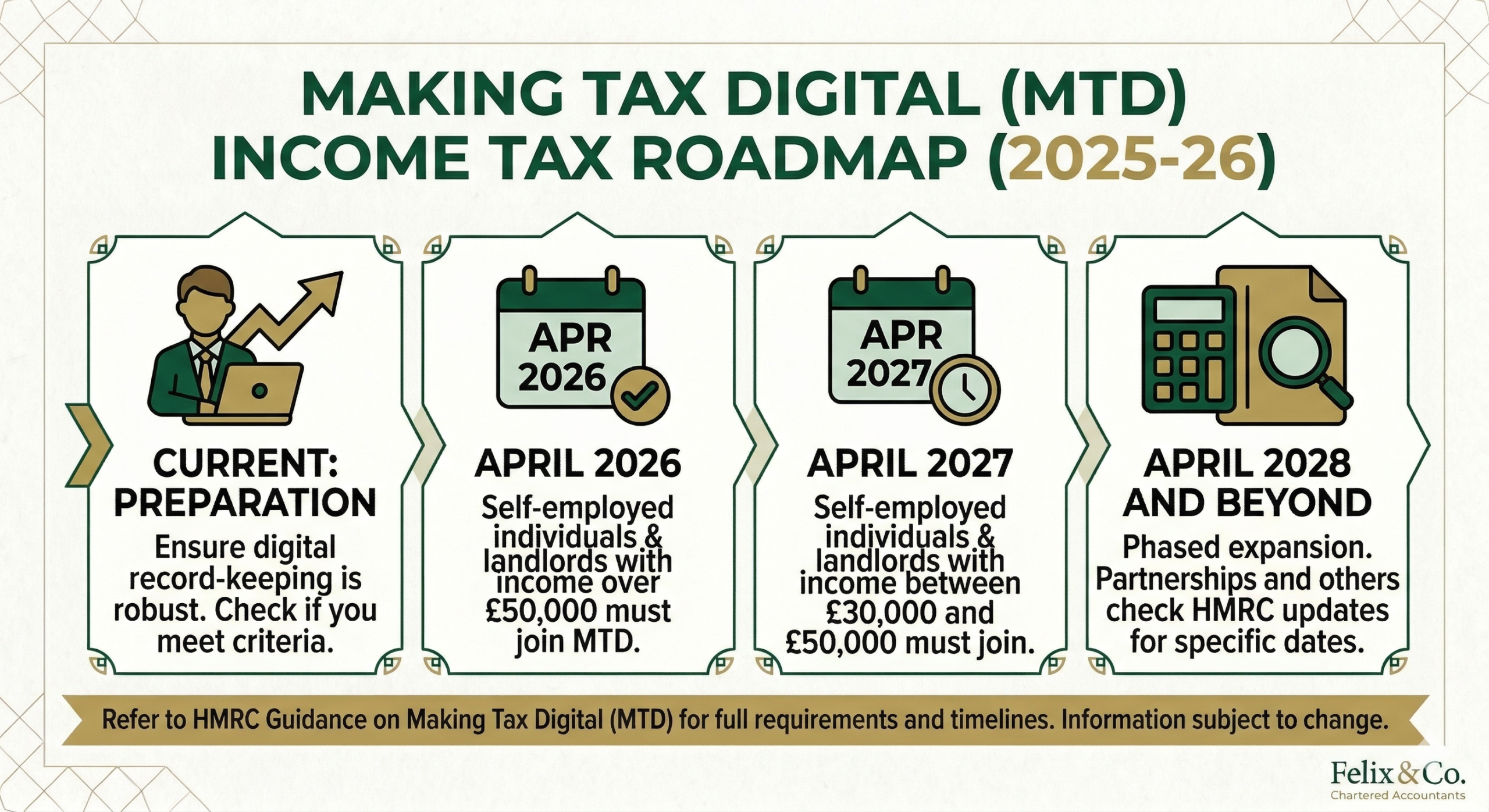
Digital transformation is no longer optional. Under the new HMRC roadmap, many landlords and sole traders are now required to report their income quarterly.

If your income exceeds the current thresholds, you must ensure your record-keeping is compliant with MTD-compatible software. Failing to transition can lead to penalties. You can check if you are required to join the scheme via the HMRC Making Tax Digital overview.

Making Tax Digital (MTD) Roadmap - Tax Saving


4. Personal Tax Planning: Protecting Your Wealth

Tax planning isn’t just for your business; it’s for your household.

Personal Allowances and ISA Limits

Most UK taxpayers have a standard Personal Allowance of £12,570, which is the amount of income you do not have to pay tax on. Furthermore, ensure you have maximized your ISA (Individual Savings Account) allowance. You can save up to £20,000 across various ISAs each year, and any interest or capital gains earned within the ISA are tax-free. Learn more at HMRC’s Individual Savings Accounts (ISAs) guide.

Capital Gains and Gift Aid

  • Capital Gains Tax (CGT): Consider using your annual CGT allowance. If you have assets (like shares or property) that you intend to sell, doing so before the deadline could utilize this year’s tax-free threshold.

  • Gift Aid: Donations to charity are not only a social good but also tax-efficient. If you are a higher-rate taxpayer, you can claim back the difference between the tax the charity recovers and the higher rate of tax you paid. Details are available on the HMRC Tax relief when you donate to a charity page.


5. Marriage Allowance and Family Claims

Are you and your partner making the most of your joint status? The Marriage Allowance allows you to transfer a portion of your unused personal allowance to your husband, wife, or civil partner, potentially reducing their tax bill by up to £252.

 The Marriage Allowance Transfer - Tax Saving   

Additionally, high-income households should review any Child Benefit claims. If one partner earns over a certain threshold, the High Income Child Benefit Charge may apply. Use the HMRC Child Benefit Tax Calculator to see how this affects you.


Don’t Wait Until April 6th

The “Heelan Herald” recently noted that this time of year is hectic, but speaking with an advisor is the only way to ensure you are maximizing these benefits. At Felix & Co., we specialize in helping small businesses in Maidenhead and beyond navigate these complexities with ease.

Ready to secure your tax savings?

Don’t leave your financial health to chance. Book a consultation with our expert team today to review your 2025-26 position.

👉 Book Your 30-Minute Tax Review via Calendly


Frequently Asked Questions (FAQs)

What is the deadline for the 2025-26 tax year? The UK tax year ends on April 5th, 2026. All investments, dividend payments, and pension contributions must be processed by this date to count toward the 2025-26 period.

How much can I put into my pension to save on tax?

Most people can contribute up to £60,000 (the Annual Allowance) into their pension and receive tax relief, provided it doesn’t exceed their total earnings. You can verify your specific limits on the HMRC Pension Tax Relief page.

Can I still claim the Marriage Allowance if we are retired?

Yes, as long as one of you has an income below the Personal Allowance and the other is a basic-rate taxpayer.

What happens if I miss the Making Tax Digital deadline? HMRC has a points-based penalty system for late submissions and payments. It is best to switch to compatible software as soon as possible to avoid these charges.


Contact Felix & Co. Chartered Accountants

Address: Belix House, 19 Raymill Road East, Maidenhead, SL6 8SW

Phone: 01895 348 097 | Mobile: 07877 284 111

Email: accounts@felixaccountants.com

Categories
Articles Blogs Guides News

Let Property Campaign Accountant Fees: What Does It Actually Cost?

If you have undisclosed rental income, the Let Property Campaign is your best route to making things right with HMRC before they find you first. But for most landlords, the biggest hurdle isn’t just the back taxes—it’s the fear of the unknown, specifically: “How much is an accountant going to charge me to fix this?”

In this comprehensive guide, we break down the reality of Let Property Campaign accountant fees, what factors influence the price, and why the “cheapest” option might end up being the most expensive mistake you ever make.

What is the Let Property Campaign?

The Let Property Campaign is an ongoing disclosure opportunity by HMRC that allows individual landlords who have failed to declare their rental income to come forward voluntarily. By doing so, landlords can benefit from lower penalty rates compared to those HMRC catches through their own investigations.

Featured Snippet Answer:

Accountant fees for the Let Property Campaign typically range from £500 to £2,500+, depending on the number of tax years involved, the complexity of your property portfolio, and the quality of your records. A specialist accountant ensures you claim all allowable expenses, potentially saving you thousands in tax and penalties.

Why You Need a Specialist for Your Disclosure

You might be tempted to handle the disclosure yourself or ask a high-street accountant who handles general retail accounts. However, the Let Property Campaign is a specialized area of tax law.

HMRC’s “Connect” computer system pulls data from the Land Registry, estate agents, and even social media. When you submit a disclosure, it needs to be bulletproof. A specialist doesn’t just “fill in forms”; they provide a shield between you and HMRC, ensuring that the “reasonable care” argument is used to minimize penalties.

Breaking Down Accountant Fees: What Are You Paying For?

When you receive a quote for Let Property Campaign assistance, the fee usually covers several critical stages of work. Understanding these will help you compare quotes accurately.

1. Initial Assessment and Scoping

Before an accountant can give you a fixed price, they must review the “health” of your tax affairs.

  • How many years have been missed?
  • Are you a UK resident or a non-resident landlord?
  • Is the property owned individually, jointly, or through a company?

2. Data Reconstruction and Calculation

This is the most labor-intensive part of the process. If you haven’t kept perfect records, your accountant will need to reconstruct your profit and loss statements. This involves:

  • Analyzing bank statements for rental income.
  • Identifying every possible allowable expense (repairs, insurance, management fees, etc.).
  • Calculating the finance cost restriction (Section 24) if you are a higher-rate taxpayer.

3. The Disclosure Submission

The digital disclosure involves more than just numbers. It requires a narrative. Your accountant must explain why the tax wasn’t paid. Was it a “failure to take reasonable care,” or was it “deliberate”? The way this is phrased can be the difference between a 0% penalty and a 70% penalty.

4. Negotiating the Settlement

After submission, HMRC may ask follow-up questions. A specialist accountant includes representation in their fee, ensuring they handle the “back-and-forth” so you don’t have to.

Average Fee Structures for Landlord Disclosures

While every case is unique, here is a general framework of what you can expect to pay for professional Let Property Campaign services.

Complexity LevelDescriptionEstimated Fee Range
Low1 Property, 1–3 years missed, good records£500 – £950
Medium1–2 Properties, 4–10 years missed, partial records£1,000 – £1,800
HighMultiple properties, 10–20 years, poor records, non-resident£2,000 – £5,000+

Factors That Increase the Cost:

  • Missing Records: If the accountant has to manually download and categorize five years of bank statements, the hourly or fixed rate will climb.
  • Capital Gains Issues: If you sold a property during the period of non-disclosure, the complexity triples.
  • HMRC Inquiry: If HMRC has already sent you a “nudge letter,” the stakes are higher and the work is more urgent.

The “Cost” of Not Hiring a Specialist

It is a common mistake to view accountant fees as a pure expense. In reality, a specialist in the Let Property Campaign often pays for themselves through:

  • Expense Optimization: Many landlords don’t realize they can claim for things like property specific proportions of phone bills, travel to the property, or certain legal fees.
  • Penalty Mitigation: HMRC penalties are based on your behavior. An expert can argue for the lowest possible percentage by proving your disclosure is “unprompted” and “full.”
  • Interest Calculations: HMRC interest rates fluctuate. Accountants use specialized software to ensure you aren’t overcharged on the statutory interest.

Step-by-Step: The Process of Working with an Accountant

If you choose to work with a firm like Felix & Co., here is the roadmap you can expect:

Step 1: The Discovery Call

You’ll discuss the timeline of your rental income. It is vital to be 100% honest here. The Let Property Campaign only protects you if your disclosure is full and accurate.

Step 2: The Formal Quote

Based on the number of years and properties, you’ll receive a fixed-fee quote. This provides peace of mind—you won’t be hit with “hidden hours.”

Step 3: Information Gathering

You’ll provide bank statements, mortgage interest certificates, and receipts for repairs.

Step 4: Draft Calculations

Your accountant will show you the estimated tax, interest, and penalties due. You’ll review these before anything is sent to HMRC.

Step 5: Submission & Payment Plan

Once you approve, the disclosure is submitted. If you cannot afford the lump sum, your accountant can help negotiate a Time to Pay arrangement with HMRC.

Comparison: DIY Disclosure vs. Professional Representation

FeatureDIY DisclosureProfessional Accountant
AccuracyHigh risk of missing expensesMaximum tax efficiency
Penalty RiskHMRC may challenge “Reasonable Care”Expertly negotiated penalties
Stress LevelHigh (dealing with HMRC directly)Low (Agent handles all comms)
Time Investment20–40+ hours of research/mathMinimal (just providing documents)
OutcomePotential for future auditsPeace of mind and “Full Disclosure”


Serving Landlords Across the UK

Whether you are a local landlord or an expat living abroad, tax laws apply the same way. We provide specialized support for the Let Property Campaign in these key areas:

  • Windsor: Specialized advice for high-value rental portfolios and HMOs.
  • Oxford: Expert tax planning for academic and professional lets.
  • London: Navigating the complexities of the capital’s rental market and non-resident landlord status.
  • Reading & Slough: Localized support for landlords facing HMRC nudge letters.

Google AI Overview: Quick Facts

  • What is the Let Property Campaign? A voluntary disclosure scheme for landlords to report unpaid tax on rental income.
  • Who can use it? Individual landlords (not companies or trusts) renting out residential property in the UK or abroad.
  • What are the costs? You must pay the back tax, interest, and a penalty. Accountant fees are separate but highly recommended to ensure accuracy.
  • How far back does HMRC go? Up to 20 years depending on why the tax wasn’t paid (innocent mistake vs. deliberate evasion).

    To better understand your obligations, explore these resources.


Frequently Asked Questions (People Also Ask)

1. Can I use the Let Property Campaign if HMRC has already contacted me?

Yes, but it may be considered a “prompted” disclosure. This usually results in higher penalties than an “unprompted” disclosure. However, using the campaign’s framework is still better than waiting for a full tax investigation.

2. What happens if I can’t afford to pay the tax due?

HMRC is often willing to set up a payment plan (Time to Pay) if you disclose voluntarily. A specialist accountant can help present your financial position to HMRC to secure a manageable monthly installment.

3. Does the campaign cover commercial property?

No. The Let Property Campaign is strictly for individual landlords letting out residential property. If you have undisclosed income from commercial property, you must use the Digital Disclosure Service under a different category.

4. Will I go to jail for not declaring rental income?

Criminal prosecution for rental tax is rare for those who come forward voluntarily. HMRC’s primary goal is to collect the tax, interest, and penalties. The Let Property Campaign is specifically designed to bring people back into the system without criminal proceedings, provided the disclosure is honest.

5. How long does the process take?

Once you notify HMRC of your intent to disclose, you have 90 days to calculate and submit your figures. An accountant typically needs 2–4 weeks to prepare a high-quality disclosure depending on the volume of data.

6. Are accountant fees for the disclosure tax-deductible?

Generally, the cost of preparing a tax return is not deductible against rental income for individuals. However, the peace of mind and the tax savings found through professional expertise far outweigh the lack of deductibility.

Investment vs. Expense

Navigating the Let Property Campaign alone is like walking through a minefield without a map. While the accountant fees might seem like an added burden, they are a vital investment in your financial security. A mistake in your disclosure can lead to HMRC opening a full inquiry into all your financial affairs—not just your property.

By hiring an expert, you ensure that every allowable expense is claimed, every penalty is challenged, and your reputation with HMRC is restored.

Don’t wait for the “nudge letter” to arrive. SCHEDULE A CALL WITH OUR LANDLORD TAX EXPERTS TODAY