
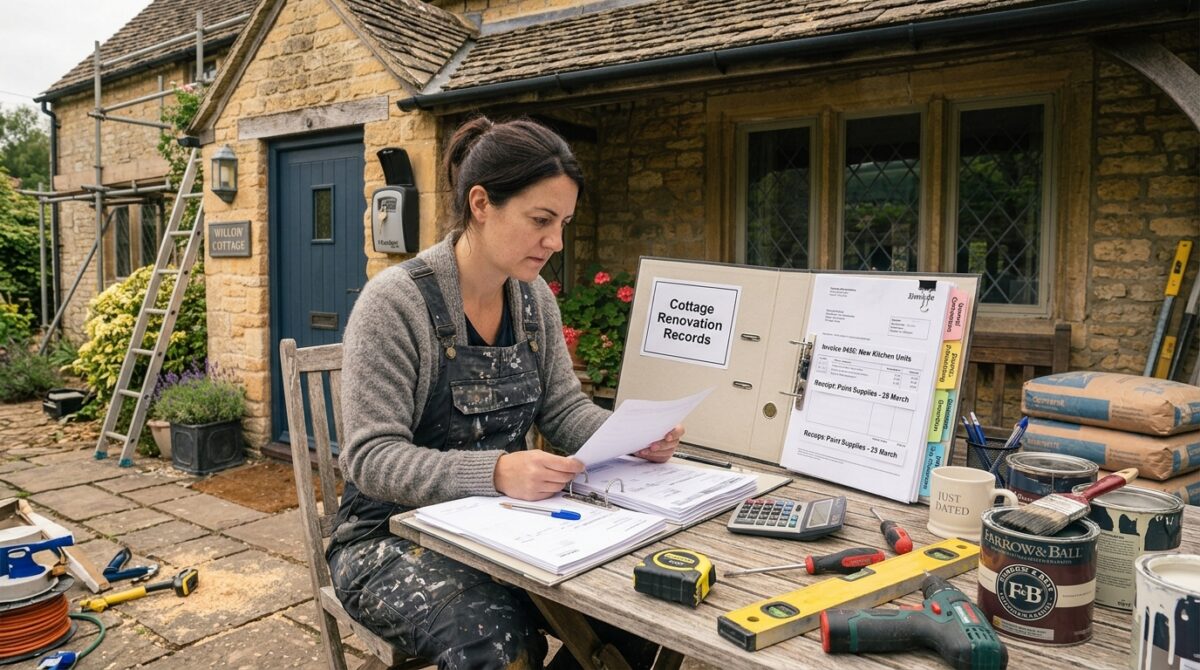
Renovation work is where a lot of Let Property Campaign disclosures get genuinely complicated. Unlike straightforward running costs such as insurance or letting agent fees, renovation spending often sits in a grey area between “repair” (generally an allowable expense against rental income) and “capital improvement” (treated very differently for tax purposes). Getting this distinction right — and having the records to support it — makes a real difference to your disclosure.
Carried out renovation work and not sure what’s claimable? Book a free 15-minute consultation with Felix Accountants. Book your free call here.
Repairs vs Capital Improvements: The Core Distinction
This is the single most important distinction to understand before including renovation costs in a Let Property Campaign disclosure:
- Repairs and maintenance restore the property to its previous condition, or replace something on a “like for like” basis. Examples include fixing a broken boiler, repairing a leaking roof, or replacing a worn carpet with a similar one. These are generally deductible against rental income in the year the cost is incurred.
- Capital improvements go beyond restoring the property and instead enhance it, extend it, or add something that wasn’t there before — a loft conversion, an extension, or converting a single dwelling into two flats, for example. These aren’t deductible against rental income; instead, they’re generally added to the property’s cost base and only become relevant when calculating Capital Gains Tax on an eventual sale.
Why This Distinction Gets Genuinely Tricky
Many renovation projects mix both categories in a single job. Replacing a dated kitchen with a similar, modern equivalent is generally a repair; replacing that same kitchen while also knocking through a wall to create an open-plan layout introduces a capital element into the same project. Similarly, replacing single-glazed windows with double glazing has historically been accepted by HMRC as a repair, on the basis that double glazing is now the modern equivalent of a like-for-like replacement, even though it’s technically an improvement in performance.
This is exactly the kind of judgement call where professional advice earns its keep — getting the split wrong in either direction either understates a genuine deduction or overstates one, and both create problems in a disclosure.
What About a Property Bought in Poor Condition?
A particularly important rule to be aware of: if a property was purchased in a state of disrepair and renovation work was needed before it could be let at all, HMRC generally treats those costs as capital rather than revenue, even if the individual repairs would otherwise look like straightforward like-for-like work. This is because the cost of bringing a run-down property up to a let-table standard is seen as part of the acquisition cost, not an ongoing running expense of an already-established rental business. If your disclosure involves a property that needed significant work before its first tenancy began, this rule needs particular care.
Capital Allowances: A Separate Consideration
Certain capital expenditure — particularly on furniture, fixtures and equipment in furnished lettings, or on qualifying items in some commercial-adjacent scenarios — may separately qualify for capital allowances, which provide tax relief in a different way from either a straightforward repair deduction or Capital Gains Tax treatment. Our guide on maximising capital allowances for a property investor covers this in more detail, and it’s worth reviewing alongside any wider renovation spending.
What Records You’ll Need
Because the repair-versus-capital distinction depends heavily on the specific nature of the work, the quality of your records matters more here than almost anywhere else in a disclosure. Ideally, you’d retain:
- Itemised invoices from contractors, breaking down the work done rather than a single lump-sum figure
- Before-and-after photographs, which can help demonstrate whether work was genuinely like-for-like or represented a real change to the property
- Planning permission or building control records, where relevant, which often clearly indicate whether work went beyond a simple repair
- Dates of the work relative to the start of the letting, since per-letting renovation is treated differently from ongoing repairs during an established tenancy
- Bank statements or payment records confirming amounts paid and to whom
Our broader record keeping guide sets out what to retain across all categories of landlord expenditure, and our allowable expenses guide covers how different cost types are treated.
What If the Original Invoices Are a Single Lump Sum?
It’s common, particularly for older renovation work, to have only a single invoice covering a whole project without a breakdown between repair and capital elements. Where this happens, a reasonable, well-documented apportionment can be made — for example, based on quotes for comparable individual elements of the work, or a contractor’s recollection of the scope, clearly labelled as an estimate. This isn’t ideal, but it’s a workable and accepted approach where the original itemisation genuinely doesn’t exist.
How Renovation Costs Fit Into the Wider Disclosure
Renovation costs need to be allocated to the correct tax year — generally the year the cost was incurred, or in some cases spread differently depending on the nature of the work — and correctly categorised as repair or capital before they can be included in your Let Property Campaign calculation. Our guide on how many years you need to declare is a useful companion resource for understanding the overall disclosure period this fits within.
How Felix Accountants Can Help
Renovation costs are one of the areas we most commonly see get miscategorised in self-prepared disclosures — sometimes understating a genuine repair deduction, sometimes incorrectly claiming capital works against rental income. We review renovation spending line by line, apply the correct treatment, and help you build the record trail to support it, as part of our wider LPC disclosure guidance.
Frequently Asked Questions
Can I claim the cost of a new kitchen against my rental income?
Generally yes, if it’s a like-for-like replacement of an existing kitchen. If the work also involves structural changes, such as an extension or knocking through walls, that capital element isn’t deductible against rental income.
Are double glazing replacement windows a repair or a capital improvement?
HMRC has generally accepted replacing single glazing with double glazing as a repair, treating double glazing as the modern equivalent of the original, even though it’s technically an improvement.
Can I claim renovation costs incurred before my property was first let?
Generally no, if the property needed significant work to bring it up to a let-table standard before the rental business began — this is usually treated as a capital cost of acquisition rather than a revenue expense.
What if I don’t have itemised invoices for old renovation work?
A reasonable, documented apportionment between repair and capital elements can be used where original itemisation genuinely isn’t available, based on the best evidence available.
Do capital improvements ever reduce my tax bill?
Yes, but differently — capital improvement costs are generally added to the property’s cost base and reduce any Capital Gains Tax due when the property is eventually sold, rather than reducing rental income tax in the year the work was done.
Let’s review your renovation costs before you disclose. Book your free 15-minute consultation with Felix Accountants.